The government spokesperson has announced a September 2026 D-Day for the new electricity tariff structure under the "use less, pay less" policy, with the first 200 units capped at no more than 3 baht per unit, reducing the burden on more than 21 million households in a drive toward fairness and sustainability.
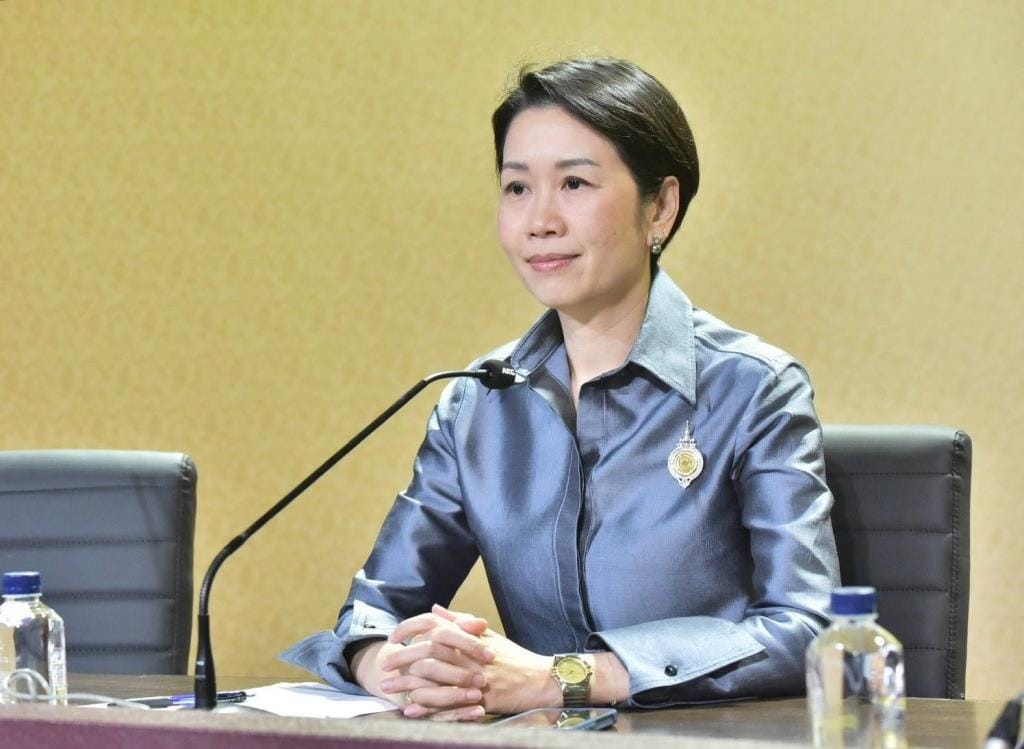
Today (30 Aug.), Ms. Rachada Thanadirek, Spokesperson for the Prime Minister's Office, revealed that starting from the September 2026 billing cycle onward, the public will begin to benefit from the new electricity tariff structure, in line with the government's policy aimed at reducing the cost of living by addressing the root causes of electricity costs and tariff structure in a sustainable manner — particularly for low-consumption users, who will pay at a lower rate.
For residential households, electricity charges will be calculated using a progressive rate. The first 200 units will be charged at no more than 3.00 baht per unit; units 201–400 at 4.1584 baht per unit; and units 401 and above at 4.3583 baht per unit — so that electricity billing reflects actual levels of consumption and prioritises assistance to households that use relatively little electricity.
At the same time, the average electricity rate across all categories, including the Ft charge, will be reduced from 3.95 baht to 3.86 baht per unit — a decrease of 9 satang per unit. Public lighting costs will also be separated out from household electricity bills, reducing the burden by a further 0.0634 baht per unit. It is expected that more than 21 million households will benefit, representing total savings of approximately 18,000 million baht.
The Spokesperson for the Prime Minister's Office stated that another significant change is the expansion of eligibility to cover people who are actually residing in a property even if they do not yet have a permanent household registration there — provided they have been continuously using electricity for residential purposes and have a payment history of no less than 6 months, they will also be entitled to the new electricity rate.
"The guiding principle is clear: those who use less electricity should pay less, and those who actually reside in a property must be able to access their entitlements. The government wants this electricity cost reduction to produce tangible results on the public's bills, while making the tariff structure fair and sustainable over the long term," Ms. Rachada said.