The Prime Minister says CP's exercise of its right to terminate the three-airport rail link contract is not something that can be done easily, noting that no private company has ever before asked to walk out on the state first. He points out that Prime Minister's Office regulations require the party responsible for the termination to cover any cost difference, and warns the company could be blacklisted if it abandons the project. He says he will summon the EEC Secretary-General for talks next week.
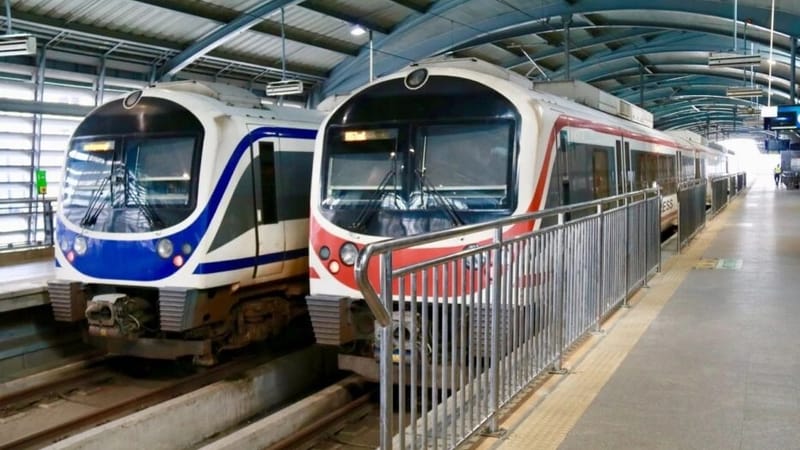
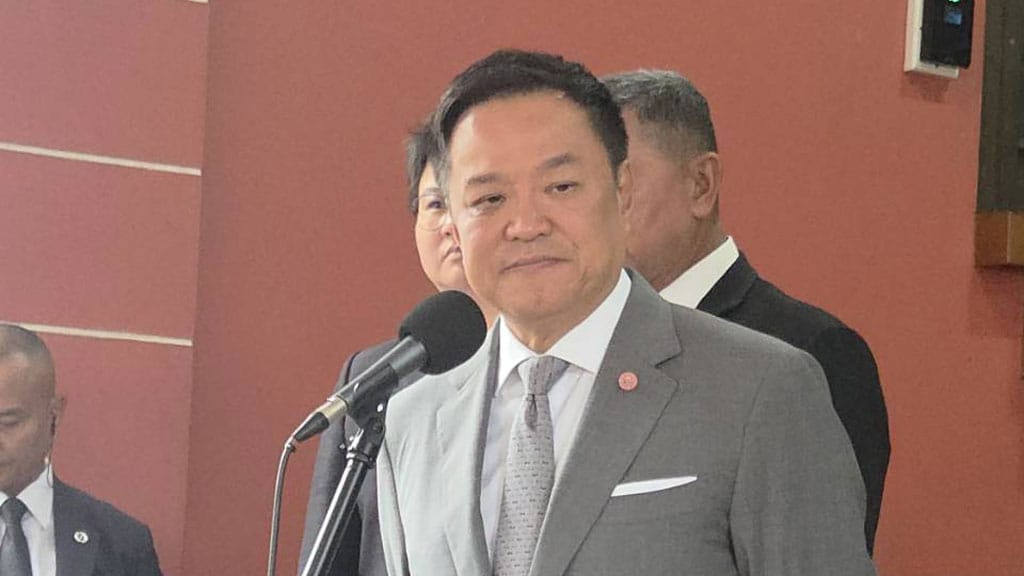
Today (28 Aug.), Anutin Charnvirakul, Prime Minister and Minister of Interior, spoke about the case in which the State Railway of Thailand is preparing to negotiate with Asia Era One Company (a CP Group affiliate) to resolve problems surrounding the high-speed rail project linking three airports (Don Mueang–Suvarnabhumi–U-Tapao), after the CP Group company sent a letter invoking its right to terminate the contract and halt Airport Rail Link operations on 30 September. He said he had not yet been briefed on the details, but that next week he would invite Chula Sukmanop, Secretary-General of the Eastern Special Development Zone Policy Committee (EEC), to meet and discuss the matter, as there are many issues still to be progressed and many issues on which rules have been issued through the EEC committee and presented as acts or legislation.
When asked whether the discussion would also cover the halting of Airport Rail Link operations on 30 September, Anutin said there would inevitably have to be talks about it, adding that a contract with the public sector is not something that can simply be cancelled.
When asked whether a cancellation could be considered if the reasons were sufficient, Anutin said he had only ever seen the state cancel contracts — he had never seen a private company request a cancellation, because terminating a contract with the public sector carries a great many consequences, such as being blacklisted, being accused of abandoning a project, or being held liable. He said the thing he was particularly concerned about was the following scenario: suppose a contract is signed for a certain amount, and then it is cancelled — if the project goes back out to tender and the price comes in higher, the Prime Minister's Office regulations stipulate that the party that caused the original contract to be terminated must be responsible for the difference, and that is no simple matter, with many other conditions attached as well.
"I think this is still not something that can be done easily. I will invite the EEC Secretary-General to meet first. But in reality, the contracting party should also be the State Railway of Thailand, which is an agency under the Ministry of Transport, and it must comply with the Prime Minister's Office regulations on procurement," Anutin said.