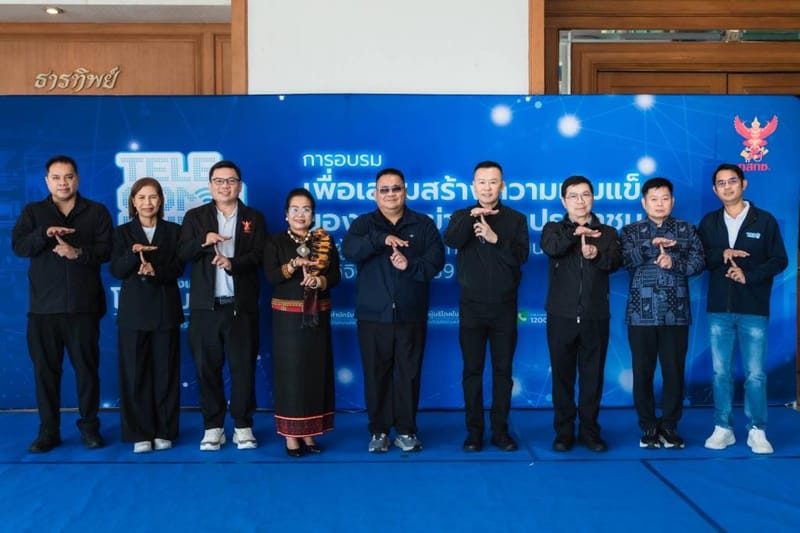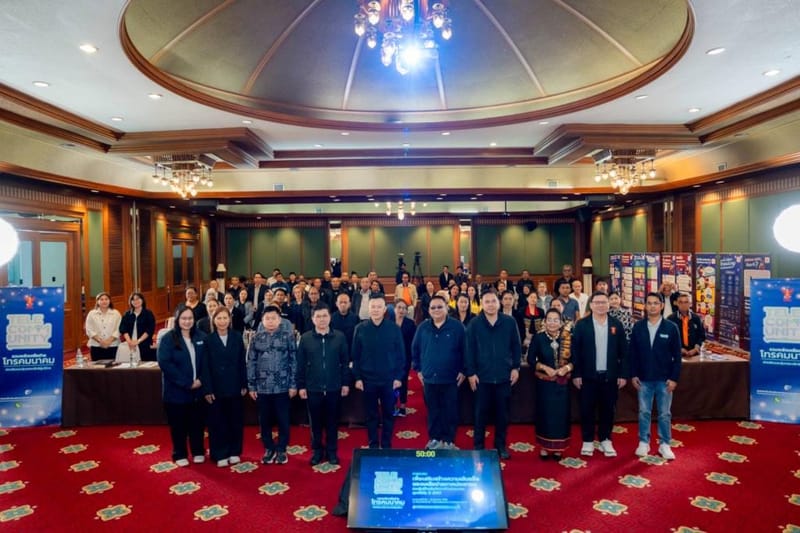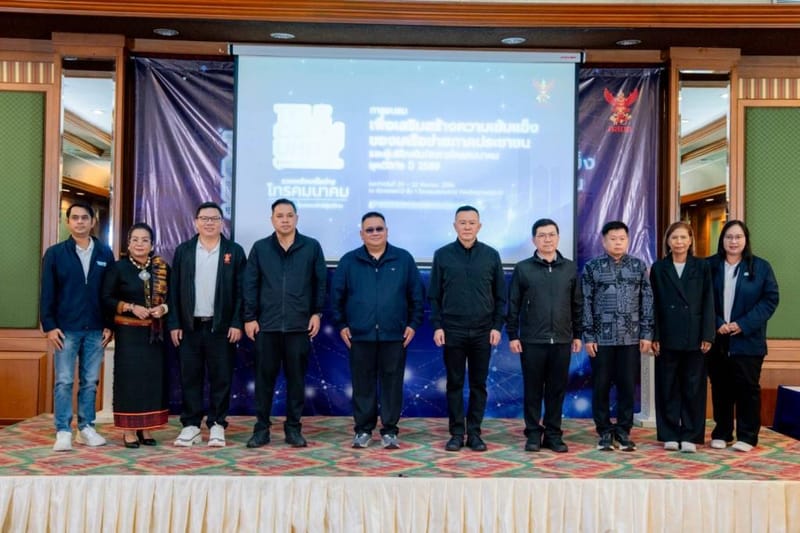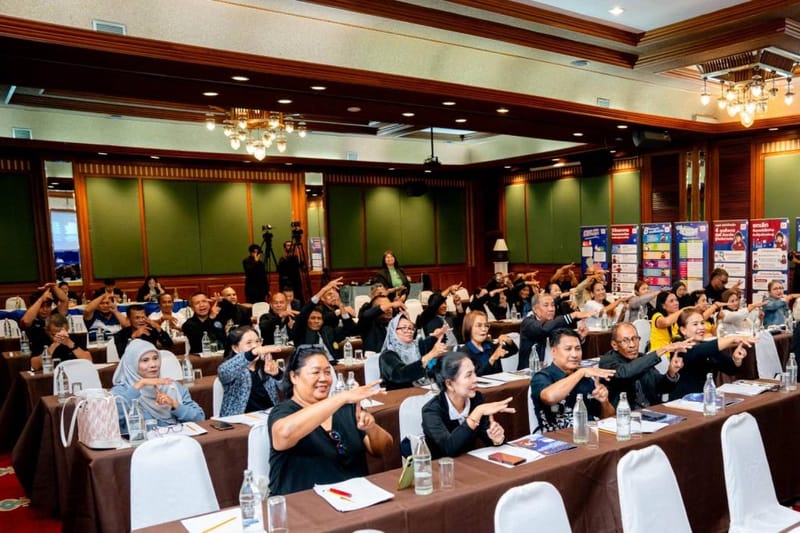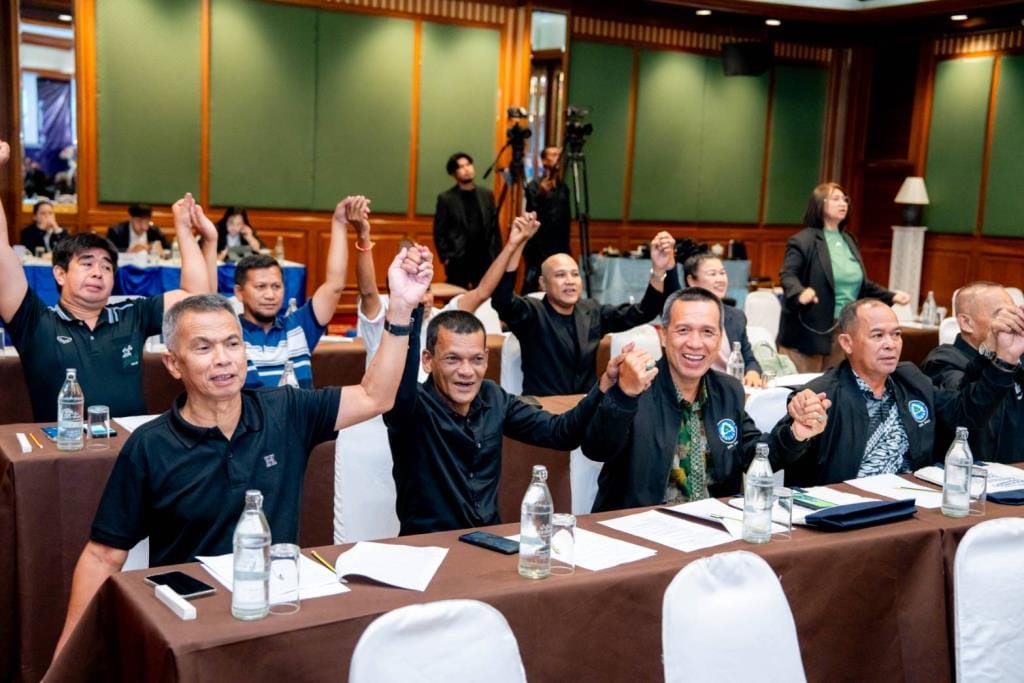
The NBTC Office staged a major workshop to elevate consumer-protection mechanisms in the telecommunications sector, led by an NBTC commissioner, legal experts, senior executives, and local investigative police officers who together shared their knowledge on blocking online scams and on building "digital network leaders" to expand rights-protection efforts sustainably from the provincial level to the district level across the country.
The Office of the National Broadcasting and Telecommunications Commission (NBTC), through its Telecommunications Consumer Complaints and Protection Bureau, organised the project "Training to Strengthen Civil-Society Networks and Consumers in the Digital Telecommunications Sector 2026" from 20 to 22 August 2025 at the Thepthani Room, 1st Floor, Siam Thani Hotel, Surat Thani Province. Executives, speakers, and civil-society network leaders participated and delivered content intensively across every dimension.
**Promoting Rights, Freedoms, and MIDL Policy to Raise Community Immunity**
Mr. Torpong Selanon, NBTC Commissioner for the Promotion of People's Rights and Freedoms and Presiding Officer at the opening ceremony, stated that this undertaking is a continuation of the mission set out in the Third Telecommunications Master Plan and the NBTC's key policy priorities for 2025–2026, which focus on developing the public's knowledge and skills in using technology with awareness (Media, Information and Digital Literacy: MIDL). "Civil-society network leaders are the vital heart of driving consumer protection at the grassroots level. Strengthening them cannot stop at the provincial level — it must proactively expand to the district and community levels so that every citizen can access information equally, safely, and with full awareness of new forms of threats."
**Laying Out the Legal Framework on Technology Offences to Counter Security Threats**
Police General Dr. Natthathorn Prohsunthorn, NBTC Commissioner for Legal Affairs, delivered a special lecture on the topic "Legal Provisions Concerning Telecommunications Technology Offences and National Security." He outlined the elevation of legal measures and NBTC regulations to crack down on illegal telecommunications networks — such as ghost SIMs, unlicensed signal towers, and SIM Box devices — as well as the development of more stringent law-enforcement measures to close loopholes that prevent transnational criminal groups from exploiting Thai telecommunications channels to defraud the public, which directly affects national security and the personal assets of citizens.
**Unveiling the Bureau's Mechanisms to Drive Consumer Rights Toward "Digital Citizen Competency"**
Mr. Tree Boonchua, Director of the Telecommunications Consumer Complaints and Protection Bureau, delivered a lecture on the topic "Staying Aware of Online Threats" and provided an overview of the Bureau's role. He emphasised that since 2010 the Bureau has continuously built consumer networks, and that in 2026 the focus is on developing "Digital Citizen Competency." He also outlined the complaint-filing process through NBTC channels, such as the 1200 hotline, so that network leaders can use it as a guide and tool to assist local residents who experience violations of their rights or exploitation by telecommunications services.
**Deep-Diving into Local Scammer Tactics: Decoding Modern SCAM Threats**
Police Lieutenant Colonel Singha Samranjing, Investigation Inspector at Khun Thale Police Station, Mueang Surat Thani District, delivered a lecture on the topic "Update on Cyber Threats and Modern Scams (SCAM)." He drew on investigative data and actual cases from the southern region to illustrate the latest behaviour of call-centre gangs, money-draining links, and fraud schemes conducted via social media. He also provided techniques for spotting warning signs and for initial responses, enabling network leaders to issue accurate and timely community-level warnings at the village level.
In addition, a team of facilitators and representatives of network leaders conducted the programme through workshops to build sustainable networks. The process focused on analysing telecommunications service problems at the local level, practising the planning of community-awareness activities, and drawing lessons in order to design solutions tailored to the specific context of each area — all with the goal of creating a self-reliant, sustainable civil-society consumer-protection mechanism. This training represents an important step in uniting the power of civil society and the regulatory body to strengthen Thailand's telecommunications consumer-protection system, equipping it to handle technological change and to collectively build a safe digital society for everyone.