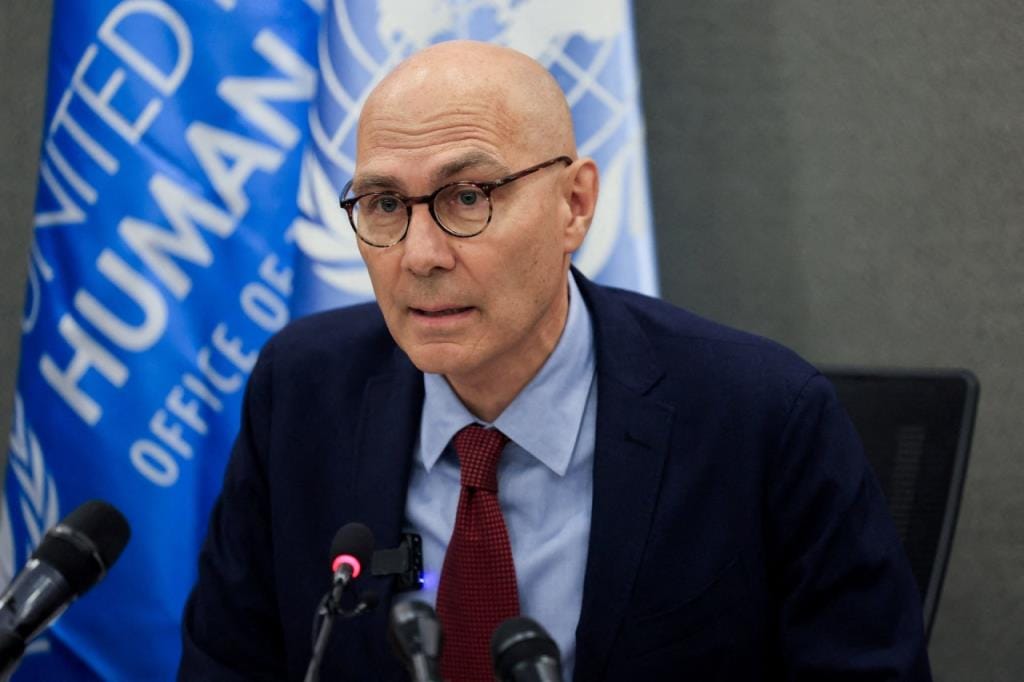
REUTERS — The United Nations has stated that the human rights situation in Myanmar has fallen to a new low, with widespread violations against the Rohingya minority and a flourishing illicit economy — driven in part by illegal rare earth mining — that is intensifying civilian suffering.
A report by the UN Human Rights Office covering the period from June 2025 to May 2026 states that protracted conflict, military violence, and the expansion of a conflict-driven economy are subjecting civilians to severe hardship. Both the Myanmar military and the Arakan Army (AA), which controls much of Rakhine State, have carried out widespread and systematic abuses against Rohingya communities, including killings, torture, forced conscription, forced labour, arbitrary detention, and displacement.
Nine years after the 2017 crackdown that forced hundreds of thousands of Rohingya to flee, and following further abuses since the 2021 coup that ousted Aung San Suu Kyi's government, Rohingya communities continue to face systematic discrimination, the UN stated.
The military has continued to rely on airstrikes, arson, and restrictions on humanitarian aid to instil fear and maintain control for more than five years since the coup, resulting in at least 8,075 civilian deaths since 2021, including 1,774 women and 1,074 children — figures the UN says are likely to be far higher.
Previously, the Myanmar military said it had conducted limited airstrikes against military targets in response to insurgent groups seizing towns and villages, and against what it described as terrorists.
The UN stated that the number of internally displaced persons has risen to 3.6 million, while 12.4 million people face acute hunger, and around 400,000 mothers and children are suffering from acute malnutrition.
In northern Rakhine State, the UN accused the Arakan Army of carrying out arbitrary arrests, torture, sexual violence, forced labour, and land seizures targeting the Rohingya, as well as blocking displaced Rohingya from returning while resettling non-Rohingya individuals on their land. Satellite imagery revealed approximately 2,000 acres of seized land, with witnesses describing children as young as six years old being used for labour, and former detainees reporting torture and deaths in custody.
The report also highlighted the rapid expansion of illegal rare earth mining in Kachin State and Shan State, where the collapse of the rule of law has fuelled illicit industries that serve as a source of funding for the conflict. Satellite imagery shows 302 new mining sites in Kachin State since 2021, while the number of mines in Shan State has grown from 12 before the coup to 85 after it.
The UN stated that the rare earth trade reached a peak value of approximately 1.4 billion US dollars in 2023, with the majority exported to the Chinese market. Toxic substances flowing into water sources and agricultural areas have caused contamination, leading to miscarriages and chronic illness among local populations. The contamination has also reached rivers flowing into Thailand, where testing has detected arsenic, lead, mercury, and manganese exceeding standard limits.