Mueang Thai 360 Degrees
The incidents of violence and orchestrated unrest across the southern border provinces, beginning on the evening of 22 August, struck 51 locations across multiple areas in rapid succession. This must be called a "failure" — on the part of the security forces, and especially on the part of the "upper-level policy" apparatus, namely the government. The attacks were carried out simultaneously at many sites, and crucially involved a large number of perpetrators, potentially numbering in the dozens. Yet more than 48 hours have now passed, and not a single member of the "insurgent group" has been arrested.
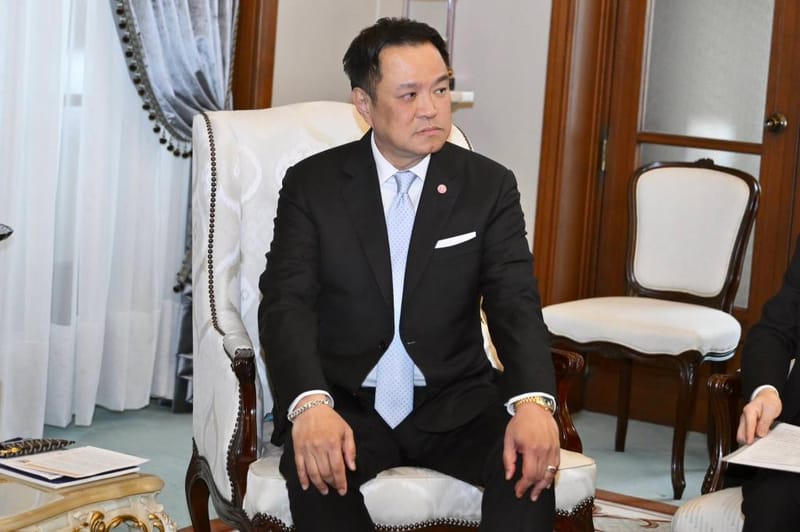
What is even more painful is the statement made on 24 August by Deputy Prime Minister and Minister of Foreign Affairs Sihasak Phuangketkaew, who also serves as Chairman of the Special Government Representative Committee on Resolving the Southern Border Problem. He acknowledged that "intelligence had advance knowledge" of the attack — and yet it still happened — and said it was necessary to consider how to respond in a more timely manner. He also acknowledged the reality that the situation is "worrying."
Earlier, the Internal Security Operations Command Region 4 Forward (ISOC Region 4 Forward) summarized the multiple incidents that occurred across the southern border provinces beginning at 20:00 on 22 August 2025, totalling 51 incidents in all: 22 incidents in Narathiwat province, 11 incidents in Pattani province, and 18 incidents in Yala province. The details are as follows.
Narathiwat province — 22 incidents, broken down by district: Chanae, 4 incidents; Si Sakhon, 1 incident; Waeng, 1 incident; Bacho, 3 incidents; Mueang Narathiwat, 1 incident; Cho-airong, 1 incident; Ra-ngae, 5 incidents; Su-ngai Kolok, 1 incident; Tak Bai, 2 incidents; Yi-ngo, 1 incident; Rueso, 1 incident; and Su-ngai Padi, 1 incident. Preliminary reports indicate 2 civilians were injured.
Pattani province — 11 incidents, broken down by district: Yarang, 3 incidents; Yaring, 2 incidents; Nong Chik, 3 incidents; Sai Buri, 1 incident; Thung Yang Daeng, 1 incident; and Khok Pho, 1 incident. Preliminary reports indicate no injuries.
Yala province — 18 incidents, broken down by district: Than To, 8 incidents; Bannang Sata, 6 incidents; and Raman, 2 incidents. Preliminary reports indicate no injuries.
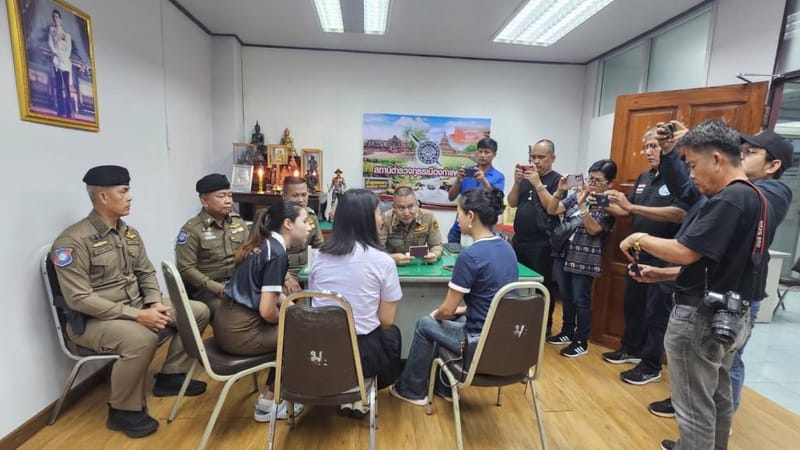
Based on the overall picture, officials are now urgently moving to inspect and assess the situation at each location, while securing the relevant areas and attending to civilians and those affected. Priority is being given to preventing further harm, and to rapidly gathering relevant information and evidence to support proceedings under due process of law. The Commander of the Fourth Army Region continues to closely monitor the situation and has ordered all units to urgently inspect and secure the affected areas, look after civilians and those impacted, and work to restore normalcy as quickly as possible. Officers have been instructed to carry out their duties with care and with the safety of the public as the foremost consideration.
At the same time, on the Army's side, Major General Winthay Suwari, the Army spokesman, issued a statement clarifying what he described as distorted news — such as allegations that the military had used helicopter-mounted weapons to fire on civilians — which the Fourth Army Region Commander had already addressed with the facts. He stressed that the southern border provinces have long been subject to persistent news distortion, or what is known as "spinning" news stories, in order to damage the image of officials. In recent times, ISOC Region 4 Forward has adjusted its communications approach. In this particular case, the more than 51 near-simultaneous incidents across multiple areas did not involve lethal violence or target civilian lives, but were rather operations intended to achieve a psychological effect through the use of communications. He acknowledged that the three southern border provinces are a battleground in terms of law enforcement and information, and that the situation during the incidents was quite chaotic with large numbers of people on the move, while some officials were stationed in place and others were deployed to address the situation on the ground. As a result, discrepancies in accounts were possible, and most of these stemmed from information being shared without verification — such as statements made at the political level.
It is clear that the "southern insurgent group's" attacks were intended to create unrest in the area, to undermine the morale of the population, and to send a symbolic, psychological message. It must be acknowledged that most of the targeted locations are in rural and forested terrain that is difficult to monitor. Nevertheless, for coordinated attacks at more than 50 locations carried out simultaneously or in near-simultaneous fashion, the fact that more than 48 hours have passed without a single suspect or perpetrator being arrested is a serious matter.
Although it has most recently been reported that four suspects were arrested in Yala province along with AK-47 rifles, there has been no indication as to whether they are connected to the attacks on the night of 22 August. As for the overall situation in the southern border provinces as assessed up to this point, it must be considered "worrying," as Deputy Prime Minister and Minister of Foreign Affairs Sihasak Phuangketkaew — who currently holds responsibility for the area — has stated. At the same time, it must be emphasized that this represents a "failure" of the government under the leadership of Anutin Charnvirakul. Even though the situation is more "sensitive" and complex than elsewhere in the country, when one looks at the trend of events, no clarity or concrete practical results have yet been seen.
Nevertheless, a counter-argument has been raised that the attacks by the "southern insurgent" group were provoked by pressure from officials through sustained crackdowns and follow-up operations targeting long-standing smuggling networks — illegal goods, tax-evaded merchandise, and narcotics — which have long been intertwined with the southern border region, to the point where arrests and seizures of large quantities of contraband including cigarettes, drugs, and cash have been made, affecting and cutting into the financial networks of the southern insurgent movement. That may well be true. But regarding the attacks that have just taken place, it must still be said that the "state" has failed in its handling of the situation — and in particular, the tracking down and arresting of perpetrators remains slow and untimely!!