Mueang Thai 360 Degrees
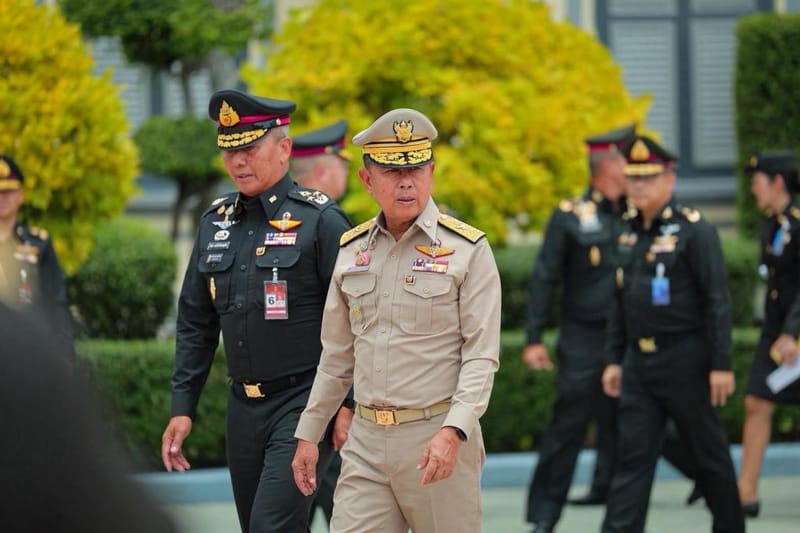
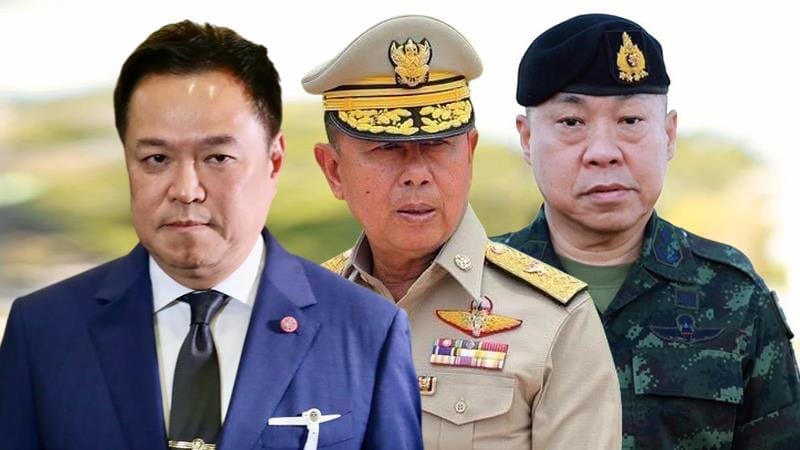
In the end, it has unfolded exactly as earlier reports indicated — that Chatchai Bangchuad would be moved out of his position as Secretary-General of the National Security Council (NSC). Most recently, on 25 August, the Cabinet approved his transfer to serve as Permanent Secretary of the Prime Minister's Office. Chatchai is due to retire from government service in 2027. At the same time, reports have emerged that General Chaiyapruek Duangpraphat, Army Chief of Staff and Secretary of the Internal Security Operations Command (ISOC), will be moved in to replace him as NSC Secretary-General.
Nevertheless, both transfers carry significant implications for the government's security policy and for the interconnected operational roles of the military — particularly regarding the situation in the southern border provinces and other border areas from this point forward.
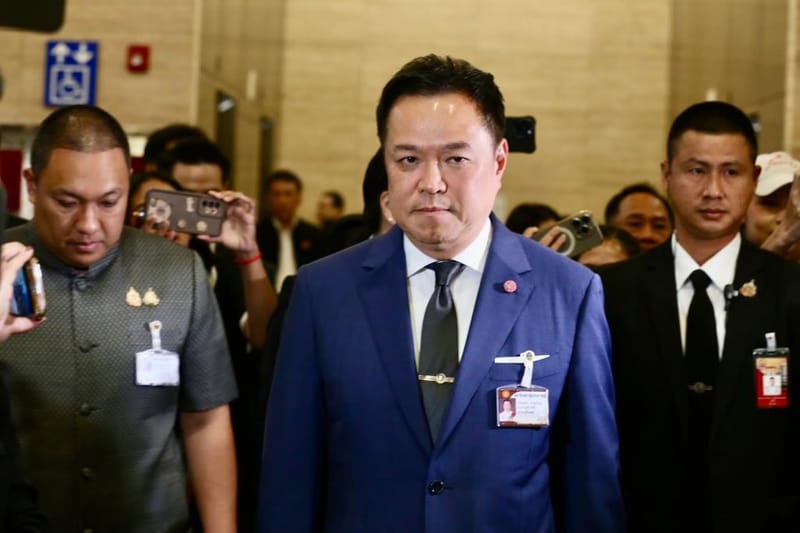
Earlier, Prime Minister and Interior Minister Anutin Charnvirakul addressed the question of what principle guided the transfer of NSC Secretary-General Chatchai Bangchuad to the position of Permanent Secretary of the Prime Minister's Office. He said that Permanent Secretary Yupa Thawiwatthanakitbowon is set to retire on 30 September, and since he himself is now based at Government House, he needs someone familiar with the work. Bringing Chatchai in to assist as the next Permanent Secretary of the Prime Minister's Office, he said, would allow ongoing work at the Office to continue seamlessly. Moreover, when he engages in security-related work and various security negotiations, having the Permanent Secretary as an additional aide — someone who can offer close guidance and a broader perspective — would be valuable. He also asked Chatchai to represent him in meetings, deliberations, and decisions on various matters, given that they have worked together for one year and are able to communicate effectively and pick up on each other's cues.
When asked whether he had spoken with Army Commander General Phana Khlaewplottook about requesting General Chaiyapruek Duangpraphat, the Army Chief of Staff, to become the new NSC Secretary-General, Anutin laughed before responding: "Oh, leading question. Today we're only moving the NSC Secretary-General to become the Permanent Secretary of the Prime Minister's Office first."
When asked about southern policy going forward — whether it would now shift to the military leading politics — Anutin said there is no one leading the other; they hold hands and move forward together, building peace for the country, working together, in unity and cooperation.
Those words amount to nothing more than a nicely packaged explanation for moving Chatchai out of the NSC Secretary-General's chair. For if one listens to what Chatchai himself said beforehand — though he showed no signs of resistance — he merely remarked that, if given the choice, he would have preferred to retire in the position of NSC Secretary-General.
Nevertheless, when one considers the current situation — particularly the continuing unrest in the southern border provinces and the trajectory of the situation going forward — it may be serving as a catalyst for changes in certain positions, so as to achieve greater "tightness" and more seamless coordination than before.
At the same time, even though no official announcement has yet been made regarding the new NSC Secretary-General, insiders already know full well that it will unquestionably be General Chaiyapruek Duangpraphat.
Beyond that, moving General Chaiyapruek from the position of Army Chief of Staff to the NSC Secretary-General's chair considerably "eases" the atmosphere surrounding personnel reshuffles within the Royal Thai Army — particularly with respect to the positions known as the "Five Tigers of the Army," which include the Army Chief of Staff among the key posts.
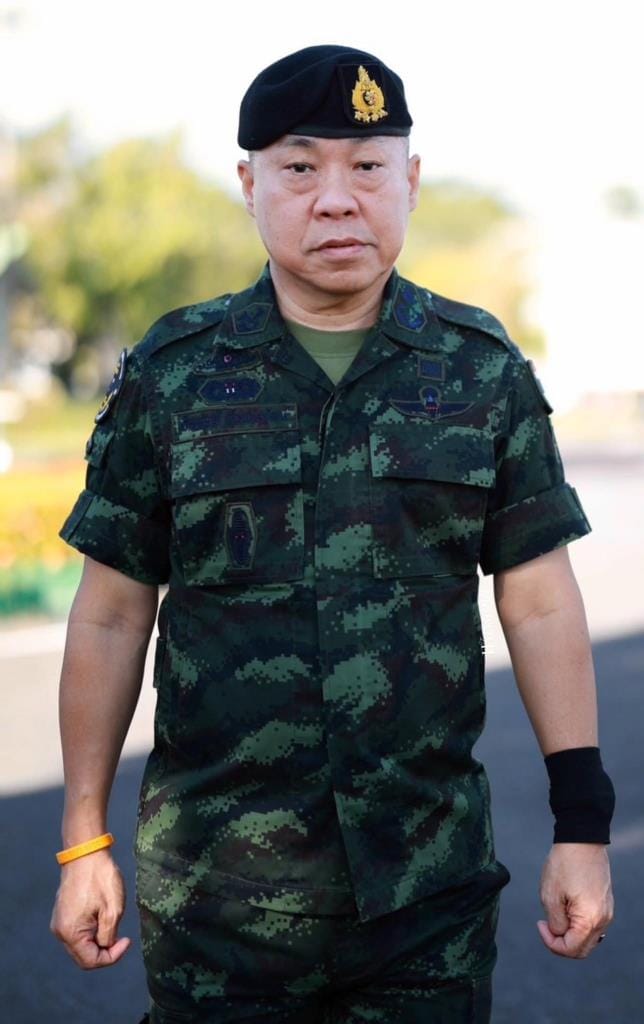
At the same time, what is worth considering is that both his background and his past roles mean General Chaiyapruek is well placed to bridge the government, the military, and the security apparatus more smoothly than before. Beyond being a "Chulachomklao Class 26" graduate — the same class as Defence Minister Lieutenant General Adun Bunthamcharoen — he is also a classmate of Army Commander General Phana Khlaewplottook and Air Force Commander Air Chief Marshal Seksan Kantha.
Furthermore, General Chaiyapruek had previously been drawn in to serve as Secretary of ISOC, working alongside Prime Minister Anutin Charnvirakul in his capacity as ISOC Director. Throughout this government's tenure, General Chaiyapruek — known by his nickname "Sae Poo Duang" — has frequently acted as the representative of the Army Commander and the government's representative on security and military affairs across multiple areas, including the eastern border region facing Cambodia and even the southern border area, to the point where the notable phrase "hunting down southern insurgents" became associated with him.
On the political side, returning to Prime Minister Anutin Charnvirakul's response to the question of whether policy would henceforth follow a "military-leads-politics" approach — even as he insisted it is a matter of "holding hands and walking forward together," implying that politics and the military go in tandem — when the situation on the ground has seen "southern insurgents" carry out attacks on more than 100 points across three consecutive nights, and when a military figure is once again being appointed as NSC Secretary-General, this is unmistakably a signal of far more intensive "centralization" of security work than before.
At the same time, from the political side — and particularly for Anutin as Prime Minister — looking at it from another angle, it is as though he is "offloading the burden of security work," especially regarding the southern border, onto the military to handle in full. And yet it is simultaneously a signal indicating that the management of this situation will have to be far more intense than ever before‼