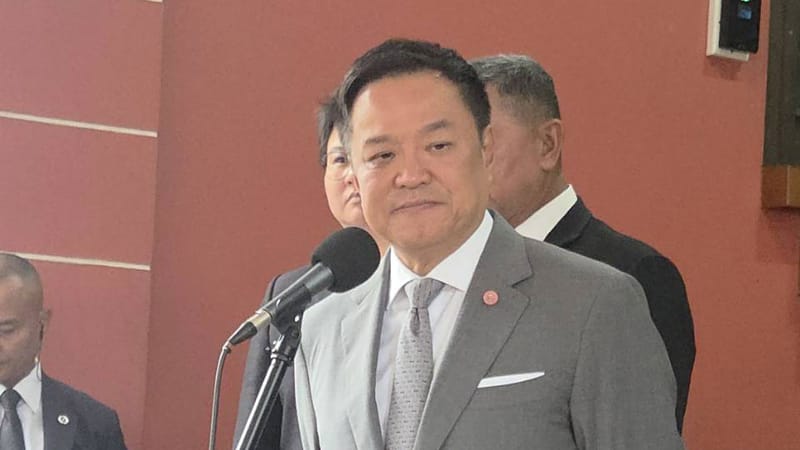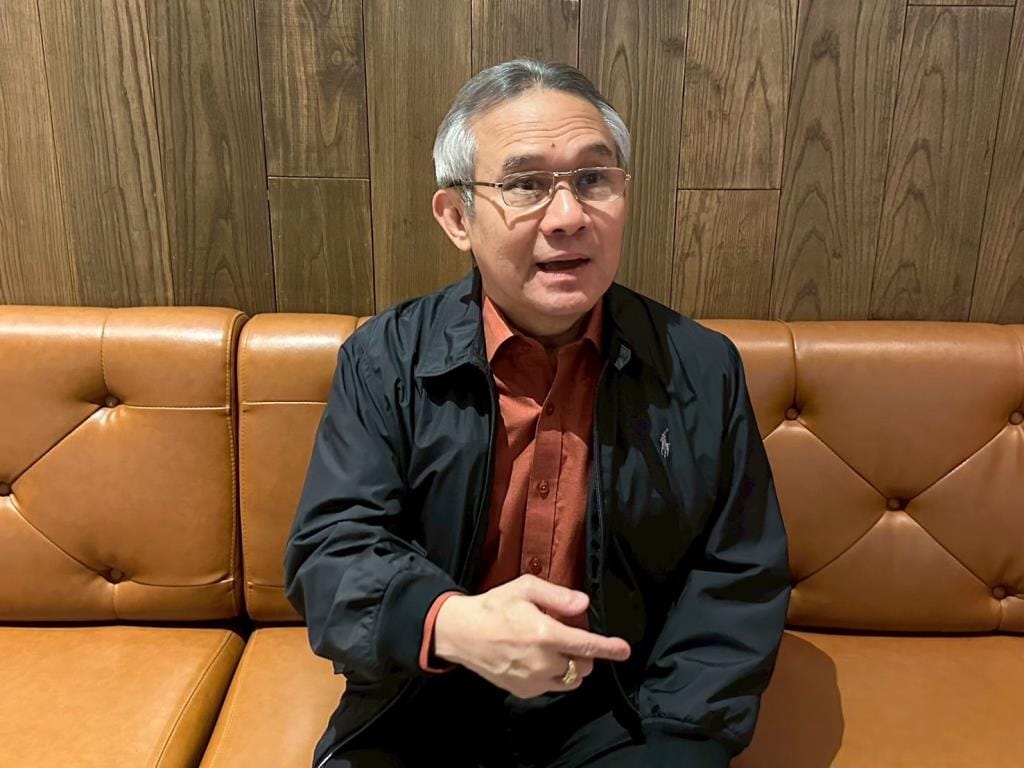
Today (28 Aug.), Mr. Suradet Yasawat, an independent politician, former senator, former member of parliament, and former deputy leader of the Palang Pracharath Party, spoke about the unrest situation in the southern border provinces where disturbances broke out at 51 locations. He noted that he has observations regarding the technology deployed in the area — specifically CCTV cameras — for which the government has allocated a substantial budget, yet problems persist with cameras malfunctioning and being out of service. He questioned who is responsible for maintaining them — local authorities or which government agency — and whether the integrated approach that is always spoken of is genuinely being implemented. He said this must be examined across the military, the police, and civilian officials — namely the Department of Provincial Administration — from provincial governors and district chiefs on down, who are all required to combine forces and work together in a truly integrated manner, not each operating independently.
Mr. Suradet said that regarding CCTV cameras in the area, they have been in use for a long time — he had proposed their use since his time as a senator — and that technology has now advanced considerably, to the point where government officials can view CCTV footage directly from their mobile phones. He questioned whether the technology has been upgraded, or whether those at the operational level have been neglecting it. He asked who is responsible for oversight and whether that oversight is conducted in an integrated manner, or whether the military watches its own cameras, the police theirs, and the administrative side its own — because that approach is unacceptable. Everyone must work together and coordinate, especially at the local level — subdistrict headmen and village headmen must be brought in as genuine, active participants. There must also be an audit of how many CCTV cameras are actually functional, because this incident involved 51 locations, yet the cameras were unable to capture images of the perpetrators who were disguised on a pickup truck — unable to zoom in and identify their faces. He said this is very surprising indeed.
Mr. Suradet further suggested that there should be units that infiltrate the population. At present, the military and police already have personnel embedded with villagers, but among the general population it is unclear who is who — some are insurgents living undercover — and the authorities must stay ahead of these individuals. The perpetrators operate underground, lying in ambush, planning carefully, and then striking together when the time comes, which makes it difficult for the government to respond. He believes that the most recent multi-point attack was planned well in advance. Government agencies must continuously upgrade themselves and must always bear in mind that the southern border provinces remain unsettled, with individuals who persistently intend to cause unrest — sometimes disguising themselves as ordinary law-abiding citizens. Deep-level intelligence on this must be obtained.
Mr. Suradet also stated that, in addition, he would like to propose the creation of incentives to bring the public in as allies of the state — through bounty rewards and tip-offs — which he considers extremely important. Given that the economy in the southern border provinces is poor due to sustained unrest over the years, many people are unemployed, and the unemployed are at risk of being drawn in by those committing illegal acts, with insurgents exploiting this vulnerability to recruit them. The state must therefore have a budget for public incentives — if anyone can provide information leading to the capture of a perpetrator, a cash reward should be given; and if information leads to the arrest of a ringleader, a substantial reward should be offered. This would encourage the public to cooperate and turn toward working with the government — gaining not only financial reward but also the restoration of peace to the area. At the same time, provincial governors, district chiefs, subdistrict headmen, and village headmen in the area must be made to genuinely cooperate with the state.
Mr. Suradet also said that regarding curfews, he does not want them declared only for the few days immediately following an incident, but rather maintained continuously — otherwise government officials cannot do their jobs. A curfew from 22:00 to 06:00 should be imposed, prohibiting people from leaving their homes, as this would allow officials to conduct sweeping checks across the area. There are now many technologies available to assist with such checks, but space must be given for officials to carry them out — and those checks must not affect innocent members of the public. He emphasized that a curfew must be maintained and martial law must be in effect, given that incidents occurred at 51 locations, and the curfew must not be lifted too easily. This situation must first be brought under control. Honest villagers go about their livelihoods during the daytime, but at night, government officials must be allowed to work fully — otherwise resolving these problems will be very difficult.