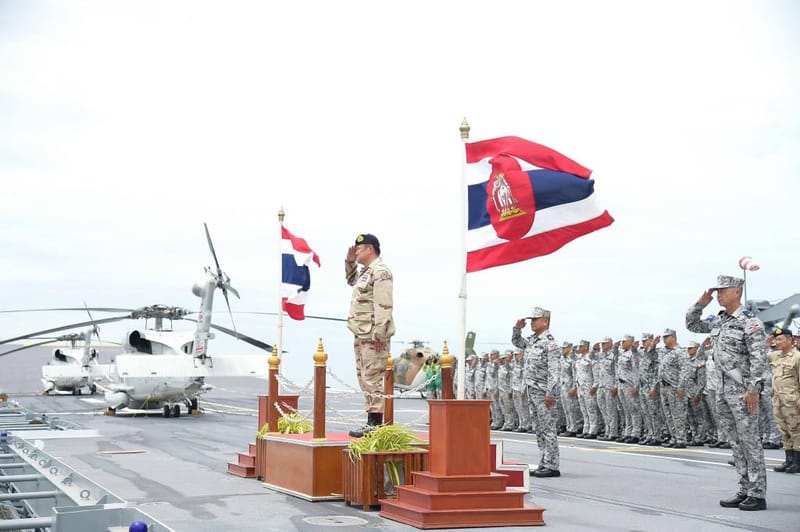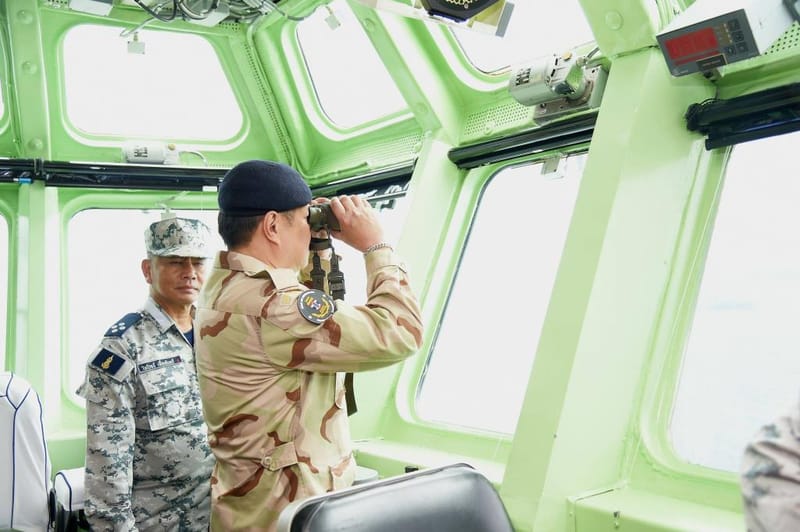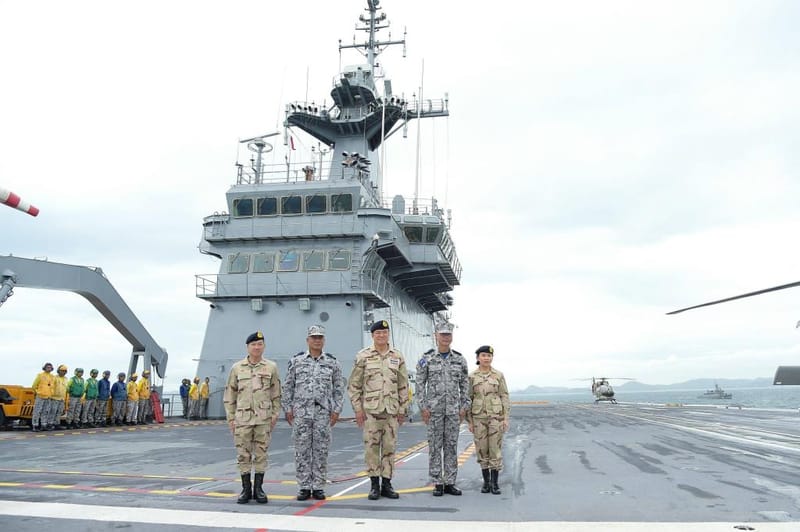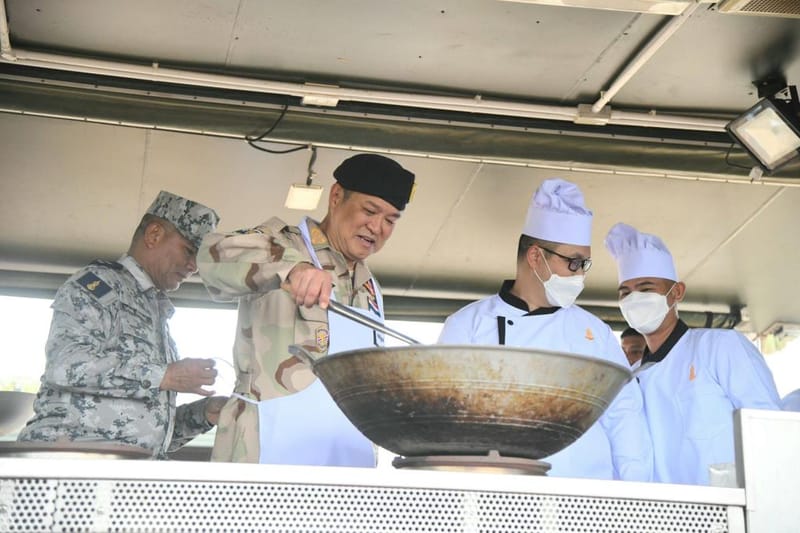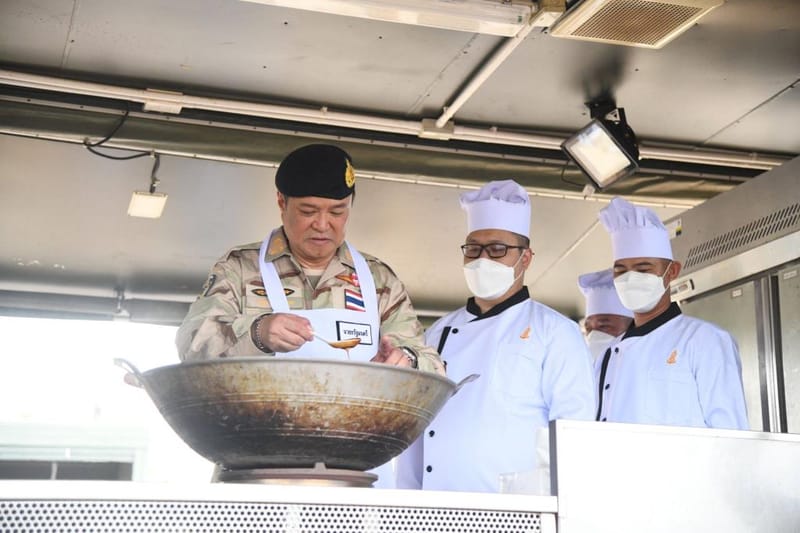
"Anutin" boards HTMS Chakri Naruebet to inspect Royal Thai Navy combat readiness in the middle of the Gulf of Thailand, observes the capabilities of frigate forces, eyes procurement of additional weapons and military equipment to replace decommissioned assets and strengthen the armed forces — following the Thai-Cambodia confrontation — while keeping mum on what will be purchased, hoping to "surprise the neighbours." He also donned a chef's hat, showing off his stir-fried minced pork with holy basil to feed the troops.
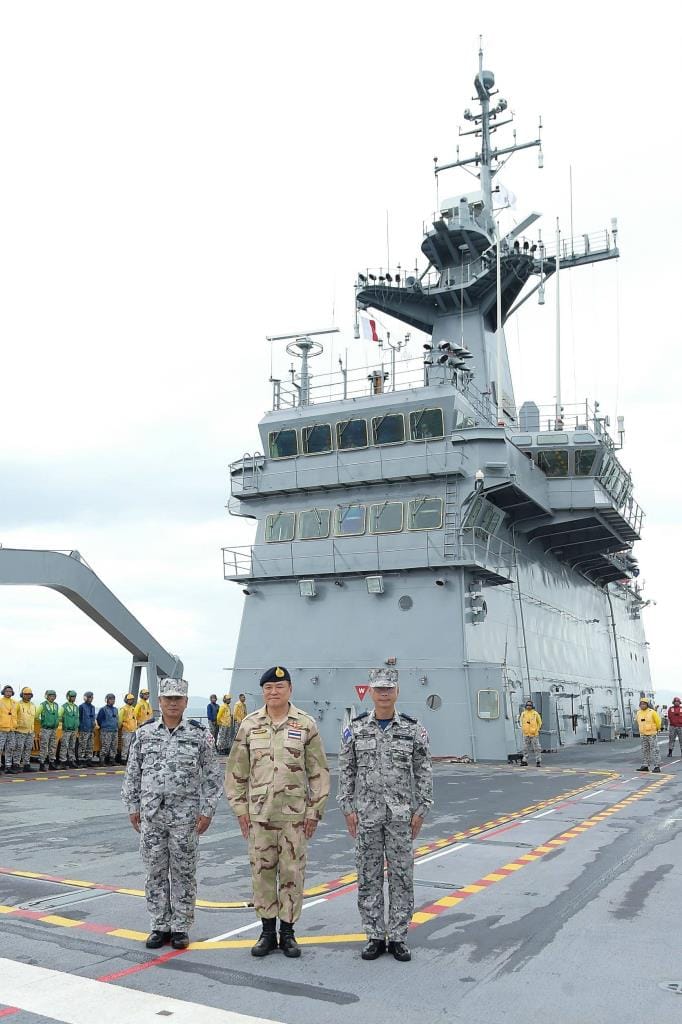
Today (27 Aug 2026), Mr Anutin Charnvirakul, Prime Minister and Minister of Interior, dressed in a Volunteer Defence Corps (อส.) uniform in his capacity as Grand Corps Commander, travelled to inspect the exercises of a special task force fleet in the upper Gulf of Thailand and at Naval Training Ground No. 15 (Hat Yao), Sattahip District, Chonburi Province. Admiral Pairoj Fueangchan, Commander-in-Chief of the Royal Thai Navy, and senior naval commanders were on hand to receive him.
The Prime Minister flew by police helicopter from Bangkok to the Royal Thai Navy Aviation Division, Fleet Command, U-Tapao, Sattahip District, to inspect an honour guard parade and receive honorary special combat qualification badges and honorary naval parachutist insignia, presented in recognition and tribute to his contributions to the Royal Thai Navy.
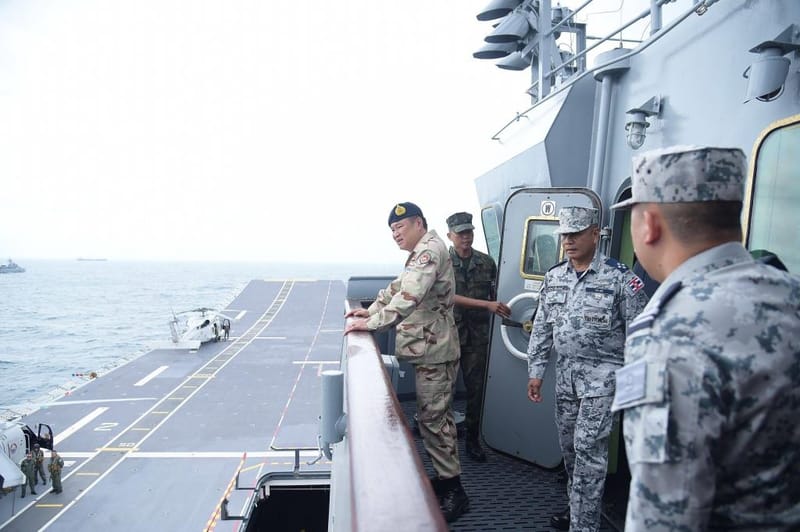
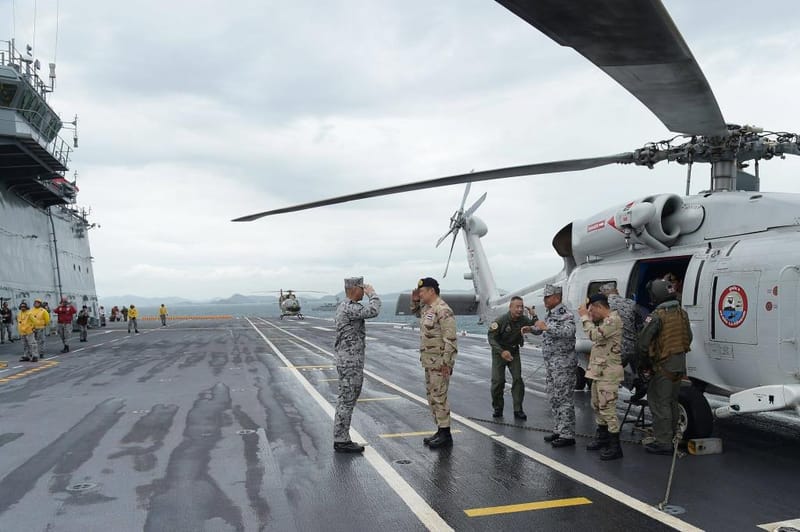
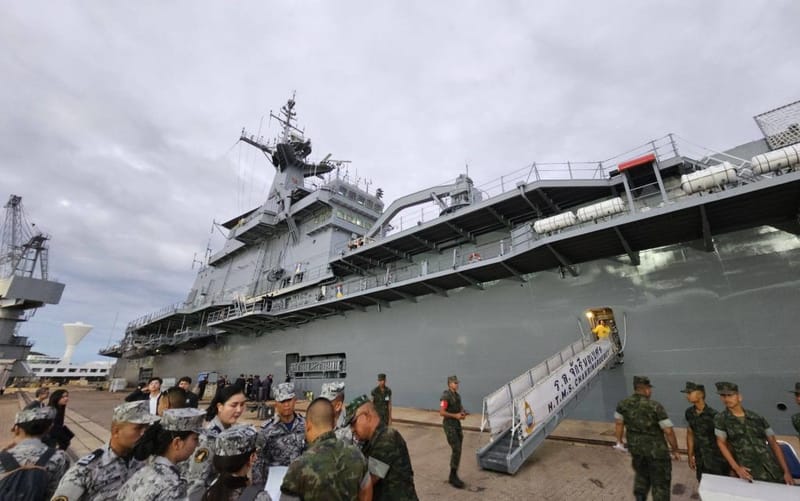
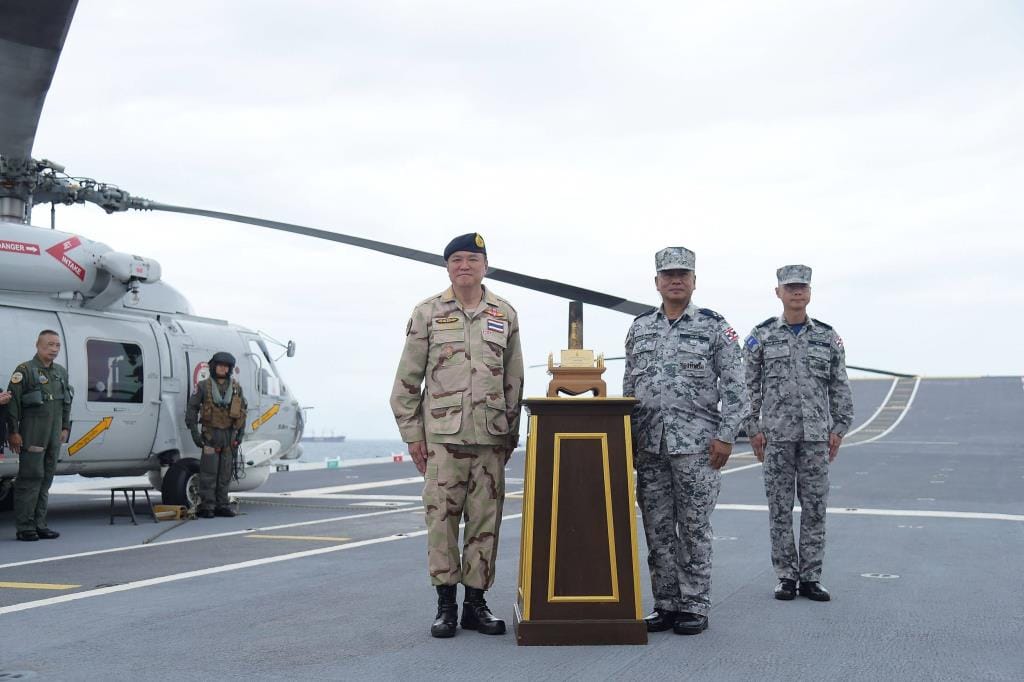
He then boarded a helicopter from U-Tapao Airport and flew out to HTMS Chakri Naruebet, which was anchored in the middle of the Gulf of Thailand, to inspect operations aboard the vessel and receive a situation briefing and an overview of force employment concepts at the Combat Operations Centre, where he was received with a 19-gun salute fired by HTMS Chao Phraya alongside HTMS Chakri Naruebet.
The Prime Minister then proceeded to the flight control tower to observe a demonstration of shore fire support using naval guns and aircraft, as well as the use of HTMS Chakri Naruebet as a control platform for unmanned vehicles on reconnaissance, target designation, and attack missions (UXV Carrier). He subsequently visited an exhibition of unmanned aerial vehicles (UAVs) and unmanned surface vehicles (USVs) on the hangar deck, reflecting the integration of modern technology to enhance the efficiency of military operations and maritime security.
Reporters noted that according to the original schedule, after the Prime Minister had completed his inspection of HTMS Chakri Naruebet and observed the naval exercises, he was to proceed to HTMS Ang Thong to board a landing craft to reach the shore at Naval Training Ground No. 15 (Hat Yao). However, due to continuous rainfall and strong winds and waves, boarding the landing craft proved impossible, and the plan was cancelled. Instead, he took a helicopter directly from HTMS Chakri Naruebet and landed at Hat Yao.
The Prime Minister then visited the Incident Command Centre (ICC) for large-scale disaster relief operations and observed a demonstration of equipment readiness and inter-unit integration, showcasing the Royal Thai Navy's capabilities in national defence, the protection of sovereignty and national maritime interests, and assistance to the public during disasters or emergencies.
At one point during his visit to the Incident Command Centre, the Prime Minister demonstrated his cooking skills to feed the troops who had been training that day, using a field kitchen vehicle. He prepared a menu of "stir-fried minced pork with holy basil," wearing an apron embroidered with the word "Prime Minister" across the chest.
Following the inspection of the special task force fleet exercises, the Prime Minister gave an interview to the media, saying that he had come today to observe the readiness of the Royal Thai Navy at the invitation of the Commander-in-Chief of the Navy, adding that he would try to visit every branch of the armed forces because they work together with mutual understanding and support, with the objective of defending national sovereignty.
As for the naval equipment he had seen, he said it was in a state of readiness, but that there were some items that needed to be procured additionally, as some of the equipment previously held was nearing decommissioning. At present, the country is sensitive on matters of security and sovereignty, and he and the commanders of all branches would need to sit down and discuss how to procure items to strengthen the armed forces.
Regarding today's training inspection, he said he viewed the Royal Thai Navy's capabilities as second to none, with Prince Chumphon Khet Udomsak (Sadet Tia) having laid an excellent foundation. The various naval bases are strong, and the Navy has expanded the scope of its role in serving the public — not only fighting at sea, but also capable of conducting land operations, assisting the public, including disaster relief and defending national sovereignty. These are things that must be supported to ensure that all branches of the armed forces are strong, ready, and able to maintain peace.
When asked whether the Navy's vessels were all old and worn out, the Prime Minister said they would need to be replaced gradually. He also pointed out: "People used to say there are no wars anymore — how did that turn out? Less than a year ago, the Navy had to carry out missions in the eastern coastal provinces. So to say that ordinary vessels can be used in combat is simply not possible. There must be readiness. There must be a show of strength and military might — and the word 'military might' carries real weight. If we have strong military might, any adversary will have to think twice about engaging us. We must have the readiness and capability that we can muster, and we must support the armed forces to be strong."
As for the Prime Minister's inspection of combat readiness at the border, which drew expressions of displeasure from Cambodia, the Prime Minister said he was acting in accordance with the Joint Statement, which stipulates that each side remains in its current position. If Cambodia also abides by the Joint Statement, it will lead to talks; but if it does not, there is no basis for discussion.
When asked whether there was anything that urgently needed to be added to enhance the Navy's military might, the Prime Minister said detailed questions should be directed to the Commander-in-Chief of the Navy, as he himself was unsure what could be disclosed. "We must not reveal everything we have — let people come and then go, 'Oh! You have this too?'"
The exercise forms part of the development of concepts for employing HTMS Chakri Naruebet as a "UXV Carrier" — a command, control, and support platform for multi-dimensional unmanned system operations encompassing patrol, surveillance, search, and target designation. This enhances the range and continuity of operations, reduces risk to personnel, and boosts the effectiveness of the Navy's principal combat forces.
Furthermore, some of the unmanned systems used in this exercise are the result of research and development by Royal Thai Navy researchers, who have applied knowledge and experience from real operational use to develop systems aligned with tactical requirements. Testing in realistic training conditions will lead to further improvements and enhancements to system effectiveness, consistent with the approach of promoting the defence industry and increasing self-reliance capabilities.
Also participating fully in the exercise was HTMS Bhumibol Adulyadej, a high-performance frigate and one of the Navy's principal combat forces, demonstrating its capabilities in surveillance, identification and engagement of targets, command and control, and joint operations with other ships, aircraft, and forces.
The exercise also highlighted the important role of high-performance frigates as the backbone of the fleet — in air defence, anti-surface warfare, anti-submarine warfare, data-linking, and control of maritime operations. However, the Royal Thai Navy currently has a limited number of frigates at this level of capability, while neighbouring countries and others in the region are rapidly advancing their naval forces and military technology.