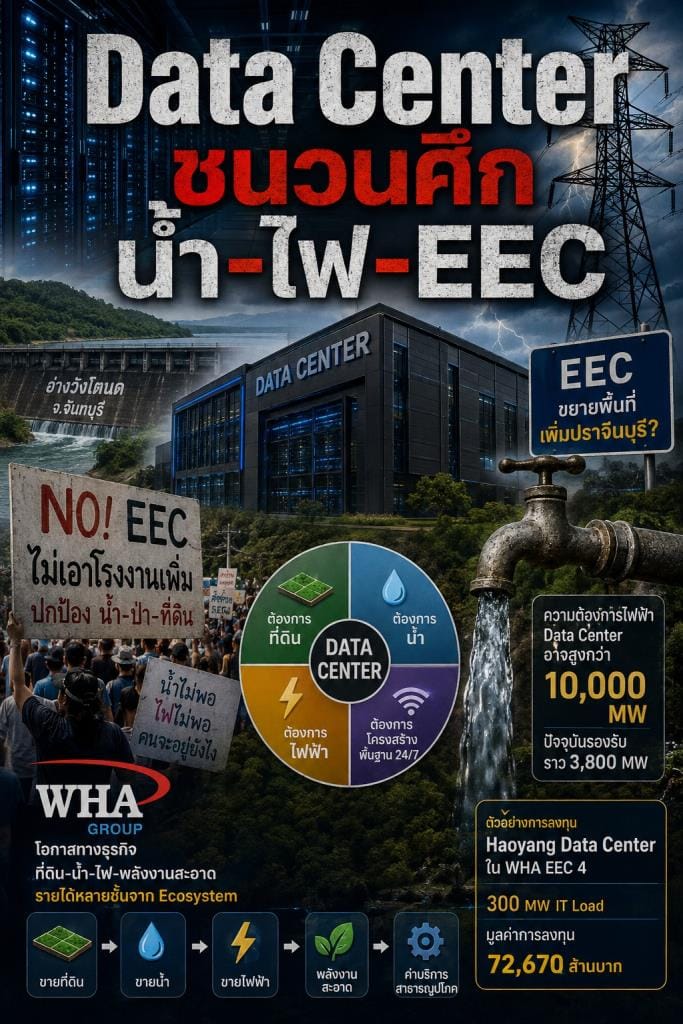
The government's push to develop Data Center projects in the Eastern Special Economic Zone (EEC) is transforming the development equation of the Eastern Economic Corridor — shifting it from its original role as a manufacturing industrial base toward becoming the region's digital infrastructure hub. But behind investment opportunities worth enormous sums, a pressing question is being raised: "Where will the vast quantities of water and electricity consumed by Data Centers actually come from?"
This question means that Data Centers do not end with simply constructing server buildings. They are linked to the expansion of the EEC zone, land acquisition, the creation of new water sources, and the expansion of the electricity grid — generating resistance from residents in certain areas, particularly in Prachin Buri and Chanthaburi provinces.
At the same time, industrial estate developer WHA Corporation Public Company Limited (WHA) sees Data Centers as a major opportunity — because they are a business that creates not only demand for land, but also long-term demand for water, electricity, and utilities, all of which sit within WHA's own business ecosystem.
In the era of AI and Cloud computing, Data Centers have become critical infrastructure for the digital economy. Global technology companies need land on which to build large-scale data centers, while Thailand is seeking to attract these investments in order to elevate the country from a manufacturing base to a digital economy base.
The EEC area has therefore been designated as one of the key locations for this purpose. The EEC Office is promoting Thailand as the regional hub for Green Data Centers, alongside clean energy, energy-efficient technology, and water recycling management systems, with a target Power Usage Effectiveness (PUE) of no more than 1.3 for Data Centers.
But the more Data Centers grow, the greater the demand for infrastructure becomes — because Data Centers do not merely need "land." They require stable electricity, water for cooling systems, communications infrastructure, roads, and utilities available around the clock. This is precisely what raises the question: if Thailand wants to become a Data Center Hub, will existing resources be sufficient?
Because when it comes to establishing Data Centers, "water and electricity" have become the central challenge. Server equipment requires continuous temperature control, and certain types of cooling systems consume 12 to 16 times more water than ordinary industries. The question therefore immediately follows: where will the water come from?
At the same time, the government is pressing ahead with the Khlong Wang Tanot Reservoir project in Chanthaburi province, for which the Cabinet approved a budget of 7,200 million baht to support an irrigation area of 87,700 rai. The project aims to strengthen water security in the Eastern region, serving consumption, agriculture, industry, and EEC development — representing the preparation of infrastructure to support economic growth.
But from the perspective of local residents, a question has arisen: "If water is limited, and when the EEC and Data Centers demand more of it, how will water be allocated…?"
That said, the concern that has emerged does not mean everyone believes the Wang Tanot Reservoir is being built directly for Data Centers. Rather, it stems from the fact that water source development projects, EEC expansion, and Data Center promotion are all happening around the same time — and so they have been connected to one another.
Meanwhile, on another front, the government has passed a resolution approving in principle that Prachin Buri be added as an EEC area, beyond the original three provinces of Chon Buri, Rayong, and Chachoengsao, with further details to be drawn up before proceeding with the next steps. The government views Prachin Buri as having potential in terms of location, infrastructure, industrial supply chains, and its capacity to accommodate new investment.
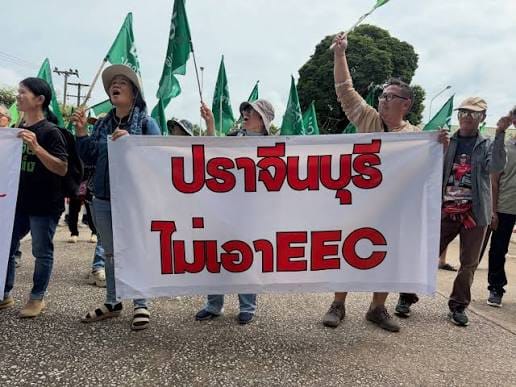
But some residents have raised the question of whether incorporating Prachin Buri into the EEC will truly make it "an area ready for industrial expansion." That question, however, has not received a concrete answer or resolution — leading to the emergence of the Prachin Buri People's Network, which has gathered more than 11,207 signatures opposing the EEC expansion, out of concerns over land, water, forests, industrial waste, and impacts on livelihoods.
The opposition that has arisen, however, did not originate from the EEC issue alone. It stems from a fear that once the EEC expands, what follows will be more factories, more land use, more electricity consumption, more water consumption, and more waste — and that ultimately the environmental burden may fall on local communities.
So what do Data Centers have to do with the EEC? This is a crucial piece of the puzzle. Data Centers are one of the new industries that require high-level infrastructure, and the EEC needs to attract exactly this type of investment. Therefore, if the EEC expands its territory, the space available to accommodate Data Centers increases. As Data Centers increase, demand for land, water, and electricity rises. As resource demand rises, the government must prepare additional infrastructure. And when that infrastructure affects agricultural land, forests, water sources, or communities, resistance emerges. It is therefore not surprising that some people view Data Centers not merely as "high-tech buildings," but as the endpoint of a large-scale transformation in resource use.
Beyond that, "electricity" is a problem causing as much concern as the water supply issue — because residents feel its impact directly. Electricity is the infrastructure underpinning Data Centers. Large-scale data centers require enormous quantities of electricity and must maintain very high stability, as their systems cannot easily be shut down. The EEC Office estimates that long-term electricity demand from Data Centers could exceed 10,000 megawatts, while the current accommodation plan stands at around 3,800 MW. This means that if investment proceeds as targeted, the country must prepare additional power generation capacity, transmission systems, substations, and reserve energy — which raises yet another question: "Who will invest in this infrastructure, and who will bear the cost?"
Nevertheless, it must be acknowledged that the reasons the public and private sectors are pressing ahead with promoting Data Centers are not without substance. Data Centers are infrastructure tied to AI, Cloud computing, and the digital economy, and they are capable of drawing vast amounts of investment into the country while generating long-term demand for infrastructure services.
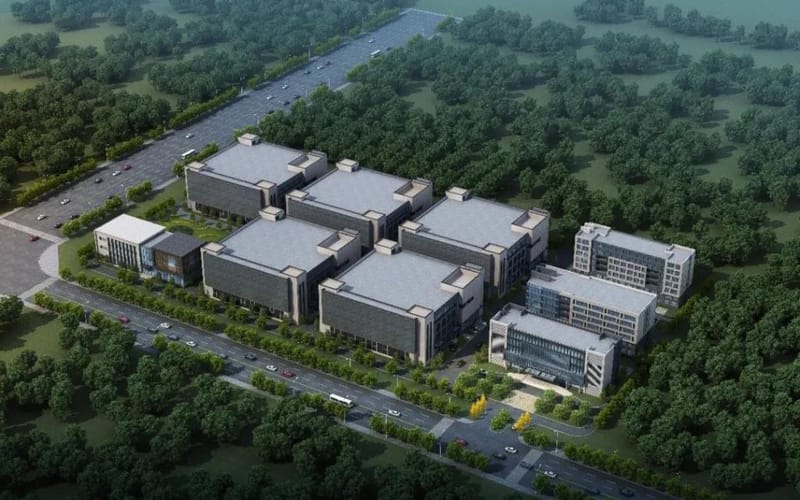
A clear example is the Haoyang Data Center project at WHA Eastern Seaboard Industrial Estate 4, which has an IT load capacity of 300 MW and an investment value of more than 72,670 million baht.
For the government, this represents a major investment sum. For industrial estate owners, it represents a major client. And for utilities businesses, it represents long-term demand for water and electricity — and enormous revenues to be generated in the future.
This, then, is the answer to why the government and private sector are working so hard to push Data Center projects forward — particularly WHA, the major industrial estate developer, which views Data Centers as a key opportunity to generate revenue for the organization.
Because if a Data Center is established, WHA does not only have the opportunity to earn revenue from "selling land" — it can also extend revenue streams to utility services, encompassing land sales, water sales, clean energy electricity sales, and revenue from utility service fees. This makes Data Centers far more important to WHA than an ordinary industrial estate customer.
Previously, in the first quarter of 2026, WHA recorded land sales of nearly 1,000 rai, with major Data Center customers reserving more than 900 rai, and the company is currently in negotiations with other Data Center clients. For the full year, WHA has set a land sales target of 2,500 rai.
Meanwhile, WHAUP — which oversees the water and electricity businesses — is also moving ahead with investment specifically to accommodate demand from the Data Center industry.