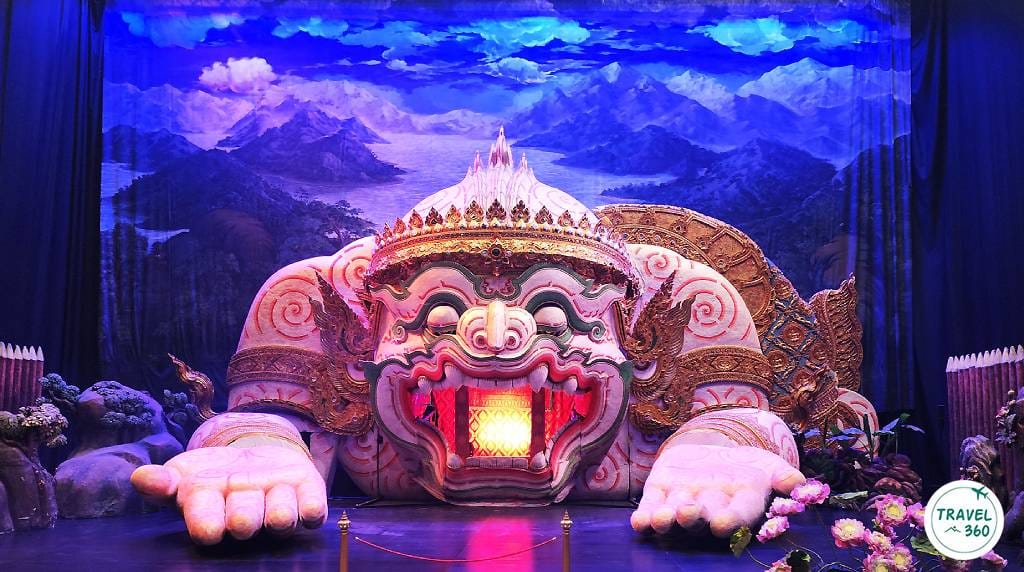
"…Staging a khon performance is no simple matter. The team of expert khon teachers, National Artists, performers, and organizers all pour their skills, ideas, and physical and mental energy to the utmost, making each khon production entertaining, exciting, and beautiful, with grandly constructed sets that leave audiences deeply impressed — such as the scene of Hanuman swallowing the royal pavilion, to name but one.
Every time a khon performance is organised, the committee selects a new generation of young performers to take part, giving youth the opportunity to train directly in Thailand's finest performing art under the guidance of master teachers, so that the country may continue to have skilled performers to carry on the tradition.
At the same time, new costumes and sets are continually being created, resulting in a growing number of highly skilled craftspeople of various kinds — as well as piphat orchestras, singers, and narrators. There is now genuine hope that khon, Thailand's pre-eminent performing art, will not be lost…"
Royal speech of Her Majesty Queen Sirikit, the Queen Mother, delivered to a group of individuals presenting themselves on the occasion of her birthday, at Sala Dusit Dalai, Chitralada Garden, Dusit Palace, Thursday, 11 August 2011.
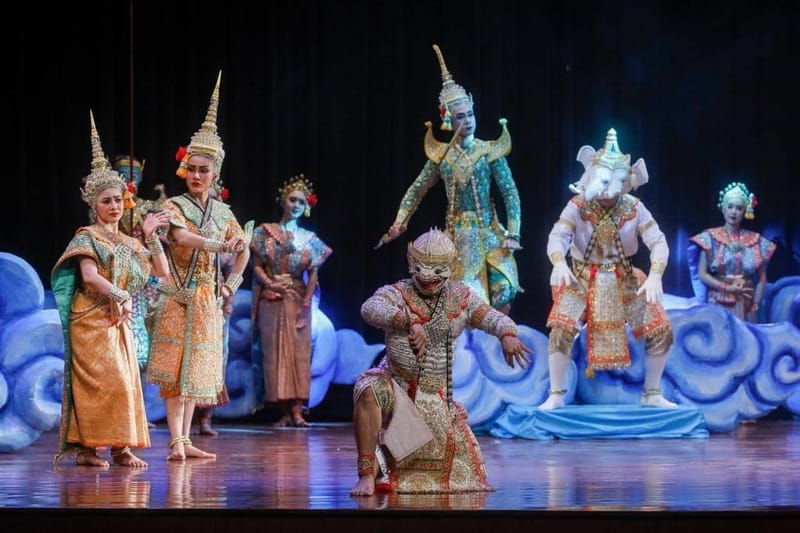
"Khon" is Thailand's highest form of performing art, integrating numerous disciplines and arts, including literary art, dance, music, handicraft, painting, sculpture, and architecture.
Thai khon has a long history dating back to the Ayutthaya period, and was once enormously popular during the early Rattanakosin era, before it gradually fell out of favour about a hundred years ago, until it reached the point of barely surviving.
Thai Khon Under the Royal Patronage of the Queen Mother
In 2003, Her Royal Highness Princess Maha Chakri Sirindhorn became concerned that in the future, the performing art of khon would decline due to a lack of both producers and audiences. She conveyed this concern to Her Majesty Queen Sirikit, the Queen Mother, who responded with the words: "If no one watches, I will watch myself" — a declaration that led to khon performances being staged in royal presence across various regions of the country.
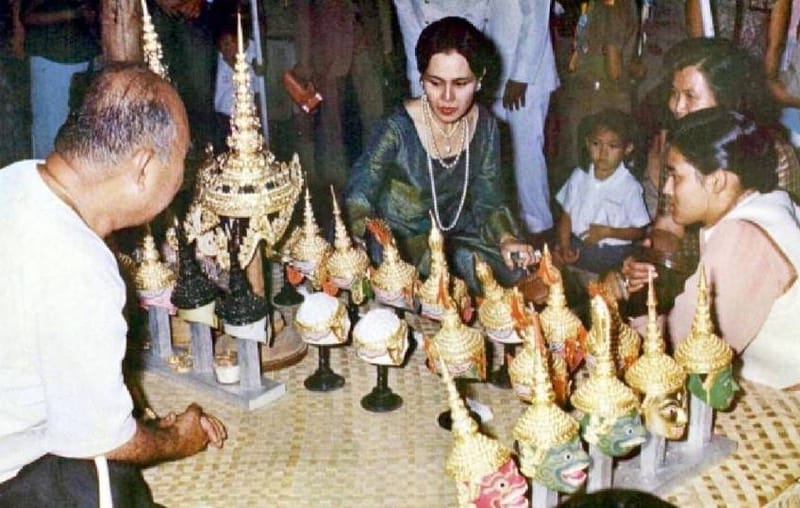
In addition, the Queen Mother extended her patronage and granted personal funds to support research into the development of khon costumes and make-up to accord with ancient traditions. She actively promoted and supported khon performances with wholehearted attention across every dimension, and issued a directive for a number of expert teachers and artists to be brought together to study and research the knowledge and artistry embodied in the khon tradition.
She then graciously granted the Foundation for the Promotion of Supplementary Occupations and Related Techniques (SUPPORT Foundation) permission to stage a grand annual khon performance in 2007, under the title "The Battle of Intharachit: The Brahma Missile Episode," at the Thailand Cultural Centre, which met with tremendous success.
Following that success, the Queen Mother issued a directive for the "SUPPORT Foundation Khon" to be staged regularly every year thereafter. It subsequently became widely known as the "Royal Command Khon" (Khon Phra Ratchathan), and has continued to be performed to this day.
Through the Queen Mother's immense royal grace towards khon, the dramatic art that is integral to the Thai nation, she led Thai khon to be recognised by the United Nations Educational, Scientific and Cultural Organization (UNESCO) in 2018 as an "Intangible Cultural Heritage of Humanity." This marked the first item of Thai cultural heritage to be inscribed on the list — a distinction that ensures this precious national performing art will be preserved and transmitted for many generations to come.
The Rian-Ru-Rueang Khon Building: A Magnificent Display of Thai Khon Dance-Drama
One of the finest learning destinations in Thailand dedicated to "khon" — presenting exhibitions on the history and background of the Royal Command Khon under the royal patronage of the Queen Mother — is the "Rian-Ru-Rueang Khon Building" (literally, "the Building to Learn and Know about Khon"), located within the Ko Kret Artisan Centre, Bang Pa-in District, Phra Nakhon Si Ayutthaya Province.
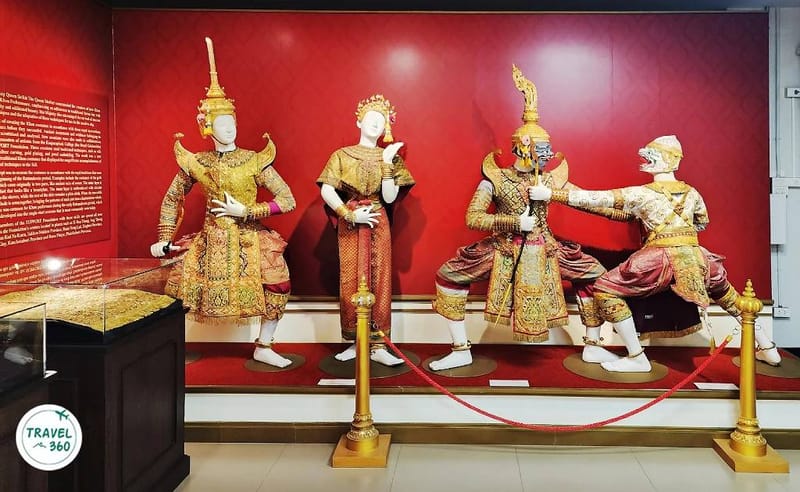
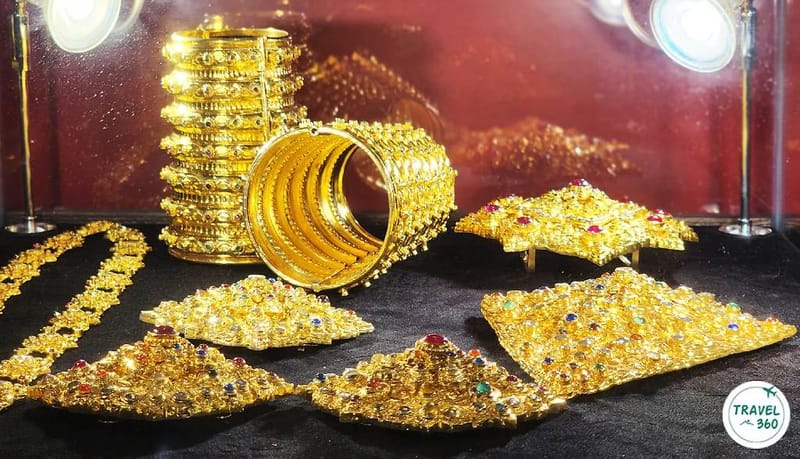
The Rian-Ru-Rueang Khon Building is the SUPPORT Foundation's learning centre for khon dance-drama. Inside, it displays works of art across the various disciplines associated with khon performance, including the body of knowledge about khon, the fine art and decorative arts used in khon productions — such as khon masks (hua khon), khon costumes (phatsaraphon), and ornamental accessories (thanim phimphaphon) such as bracelets, necklaces, and the thapthuang breast ornament — as well as "Pha Yok Noen Thammang," a gold-woven silk fabric from Nakhon Si Thammarat, in which raised patterns are woven to stand out with exquisite and beautiful craftsmanship.
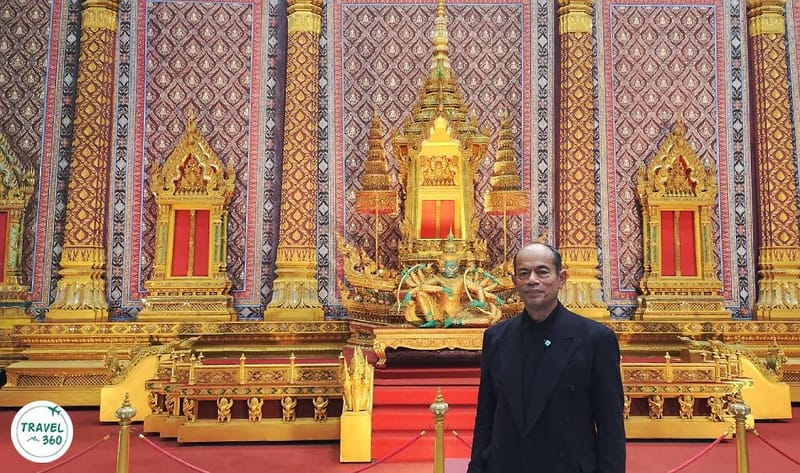
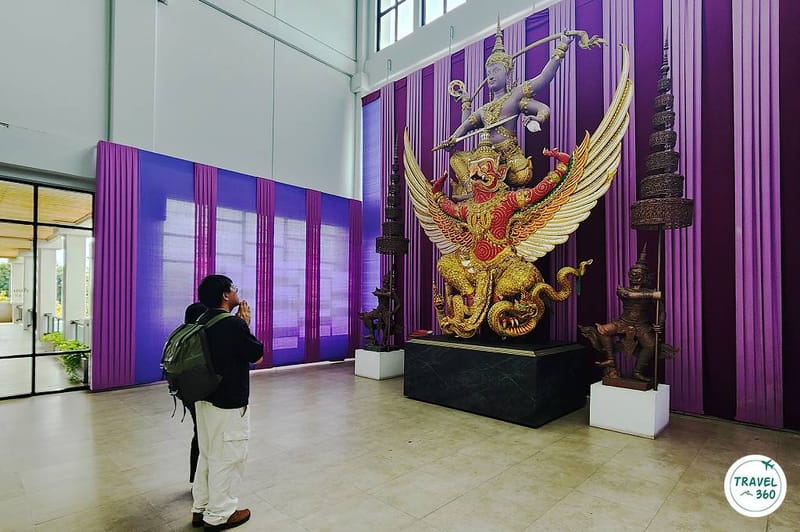
Another must-see highlight within the Rian-Ru-Rueang Khon Building is the collection of stage properties and sets used in SUPPORT Foundation khon performances, spanning from the very first production, "The Battle of Intharachit: The Brahma Missile Episode" (2007), through to the present day.
It can truly be said that the breathtakingly beautiful sets of the Royal Command Khon have not been discarded, but are preserved here — making this the largest and most comprehensive khon set exhibition venue in Thailand. Some of the sets are periodically adapted for use in future productions.
The SUPPORT Foundation khon sets blend three principal art forms — painting, sculpture, and architecture — and were designed and created with magnificent artistry by Ajarn Sudsakhon Chaiseam, National Artist in the Field of Visual Arts 2023 (Decorative Arts — Stage Properties), together with his team and students.
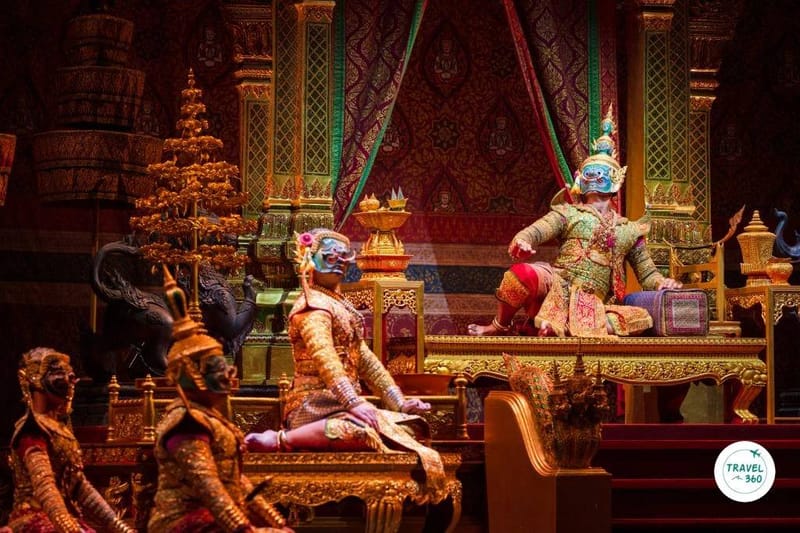
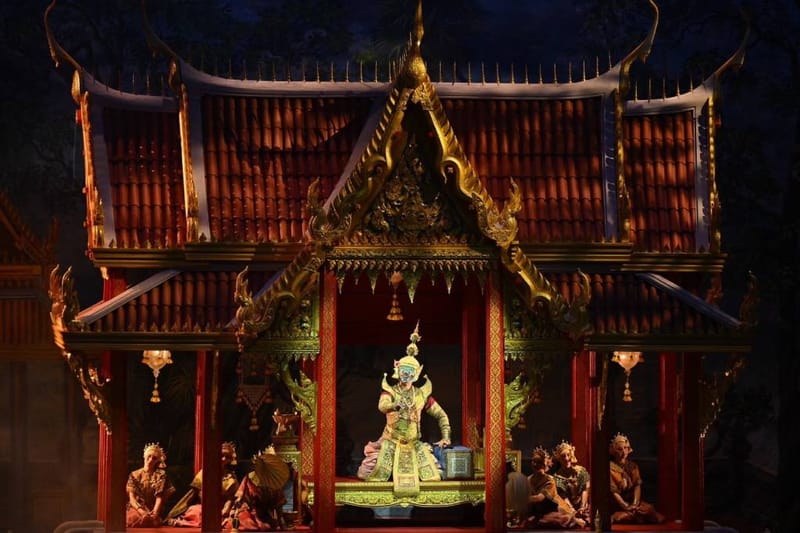
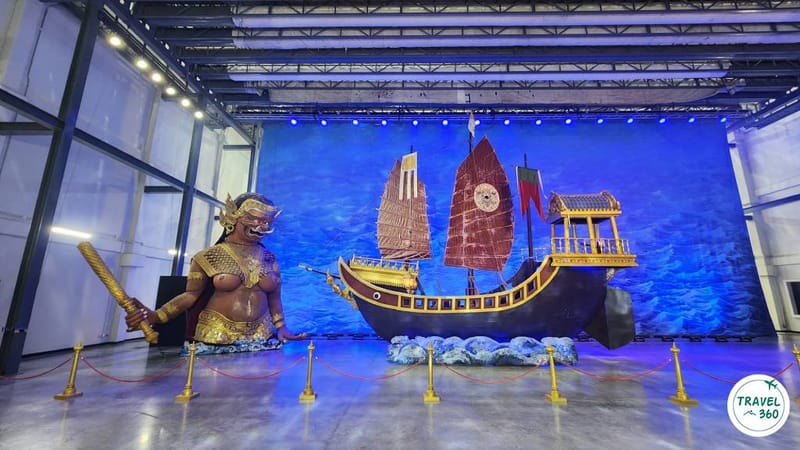
Many of the sets are capable of moving, emitting light, or creating moments of surprise for the audience in truly spectacular fashion. These include the Royal Vessel of Lanka set, depicting a demon ship with sails in the shape of demon faces within circles; the Female Yaksha Butterfly of the Sea (Nang Yak Phisuea Samut) set from the "Searching for the Path" episode; the Hanuman Swallowing the Royal Pavilion set from the "Battle of Maiyarap" episode; the Hanuman Conjuring His Body set from the "Searching for the Path" episode; and the Throne Hall of Lanka set, which is used across multiple episodes.
Also housed at the Rian-Ru-Rueang Khon Building is a magnificent sculpture of "Narayana Riding Suban" (Narai Song Suphan), a creation by Ajarn Sudsakhon, who drew his inspiration from a line-drawing of the royal seal "Phra Khrut Pha" (Garuda) executed by His Royal Highness Prince Naris (Somdet Phra Chao Borommawong Thoe Chaofa Krom Phra Yamarajadhirajanurak) during the reign of King Rama V.
The building also offers demonstrations of khon mask-making and khoi paper-making, khon rehearsals by performers, and khon performances on special occasions during festivals and significant events.
For those who love khon or Thai arts and culture, the Rian-Ru-Rueang Khon Building is among the finest venues in Thailand for exploring the world of khon. In particular, the sets from the various episodes of the Royal Command Khon are truly exceptional — many of them are legends in their own right that have left a lasting impression on all who have seen the performances, as well as on visitors to this building.
########################
The Rian-Ru-Rueang Khon Building is located within the Ko Kret Artisan Centre, Bang Pa-in District, Phra Nakhon Si Ayutthaya Province. Open Wednesday–Sunday (closed every Monday and Tuesday), 09:30–16:00. Admission: general public 150 baht; children 120 cm tall or under, free; students 75 baht; elderly aged 60 and above 75 baht; monks and persons with disabilities, free.
For further enquiries, contact the Rian-Ru-Rueang Khon Building at: Tel. 0 3535 2991 (Wednesday–Sunday, 09:30–15:30), 0 3535 2990 (Monday–Friday, 08:30–16:30), or via the Facebook page: อาคารเรียน-รู้-เรื่องโขน All about Khon.