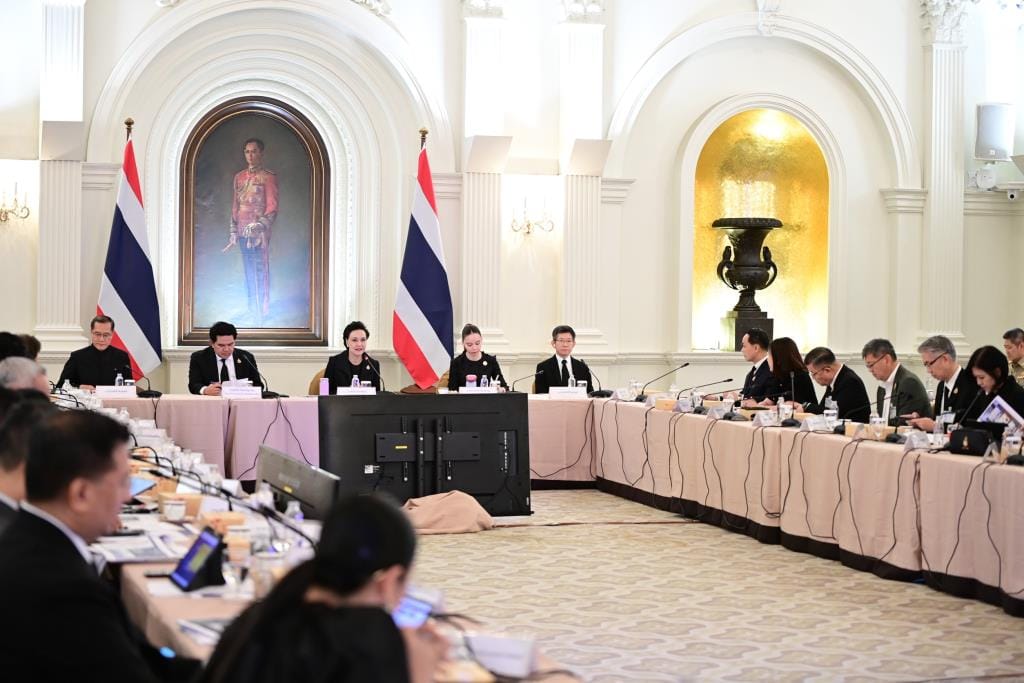
"Supajee" chairs the Subcommittee on Trade Development, Tourism, and Community Economy, establishing 4 specialized working committees to drive the creative economy, agricultural goods, food security and high-value agriculture, community economy and SMEs, and international trade — with "Weerasak" and "Kobsak" each chairing 2 committees. The aim is to set Quick Big Wins with results achievable within 6 months to 1 year, and to lay out Big Wins with results expected in 2–4 years, in order to enhance the country's competitiveness.
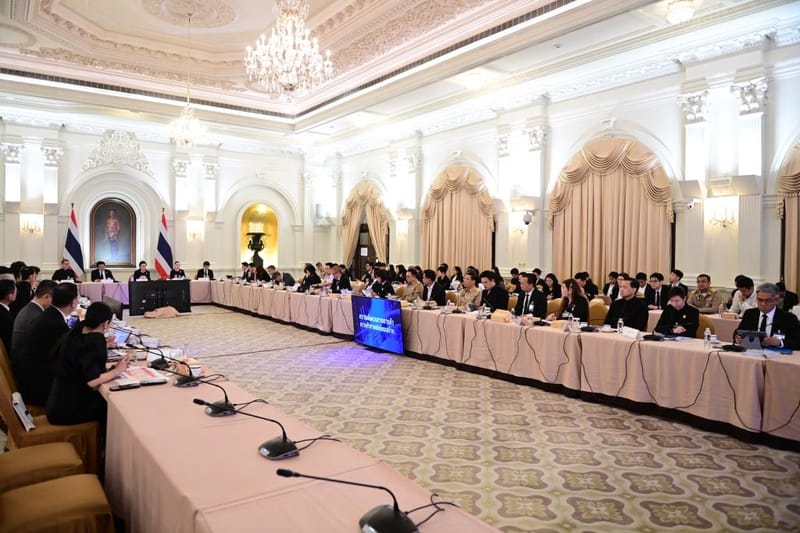
Mrs. Supajee Suthumpun, Deputy Prime Minister and Minister of Commerce, disclosed after presiding over the 1st meeting of the Subcommittee on Trade Development, Tourism, and Community Economy (Meeting No. 1/2026) at Santimitr Building, Government House, that this subcommittee is responsible for driving trade and services, covering quality tourism and wellness, the creative economy, agriculture and food security, as well as retail, wholesale, and international trade. It will lay out both a short-term problem-solving framework and a long-term structural reform framework to elevate the country's competitiveness, in line with the Prime Minister's policy on structuring economic stimulus measures.
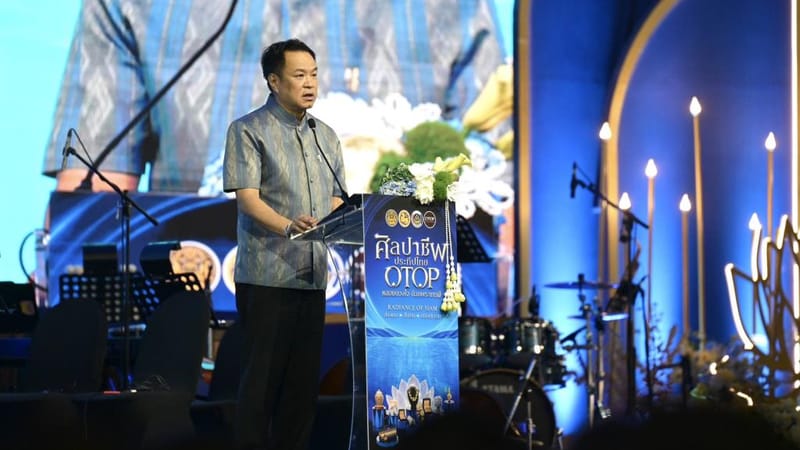
To advance this work, 4 specialized working committees have been established as follows: 1. The Working Committee on Creative Economy Development and Visitor Economy, chaired by Mr. Weerasak Kowsurat, focused on building upon Thailand's cultural capital, identity, and experiences to create added value from visitors, and linking secondary cities, communities, goods, and services. 2. The Working Committee on Agricultural Goods, Food Security, and High-Value Agriculture, chaired by Dr. Kobsak Pootrakool, focused on upgrading the agricultural sector across the entire value chain — from production and processing to markets — increasing product value, linking industry and investment, and building food security. 3. The Working Committee on Community Economy and SMEs, also chaired by Dr. Kobsak Pootrakool, focused on nurturing the business ecosystem for entrepreneurs from start-up through to growth, reducing burdens and improving licensing, increasing knowledge, upgrading goods and services, and promoting scale-up and fair competition, with retail and wholesale trade included as one of the interconnected dimensions. And 4. The Working Committee on International Trade, chaired by Mr. Weerasak Kowsurat, focused on building trade balance, expanding into new markets, leveraging FTAs, responding to the global trade environment and geopolitical pressures, increasing the share of SMEs in the export structure, and reducing the risk of over-reliance on any single market.
"The key heart of all 4 working committees is the formulation of Quick Big Wins with results achievable within 6 months to 1 year, emphasizing the review and unlocking of regulatory obstacles, facilitation of business operations, and enhancement of competitiveness — without requiring large budget expenditures — alongside laying out Big Wins for structural reform and capability elevation over a 2–4 year period. All 4 committees will work in continuous coordination, with clear leads and clear targets, before presenting proposals to the subcommittee and pushing them forward for consideration by the Joint Public-Private Consultative Committee on Economic Problems (JPPCC)," said Mrs. Supajee.
Mr. Weerasak Kowsurat, Chair of the Working Committee on Creative Economy Development and Visitor Economy and the Working Committee on International Trade, said that the work will focus on finding new opportunities for the creative economy and Visitor Economy as a mechanism to enhance competitiveness, while on the international trade front, efforts will be accelerated to find new spaces and opportunities for Thai entrepreneurs and supply chains to connect with global markets amid the competitive dynamics of major economic powers.
Dr. Kobsak Pootrakool, Chair of the Working Committee on Agricultural Goods, Food Security, and High-Value Agriculture and the Working Committee on Community Economy and SMEs, said that he will gather input from all sectors and bring on-the-ground problems into policy solutions. The agricultural sector will be steered toward modern and high-value farming, with oversight from upstream all the way to the market. The community economy and SME sector will be attended to comprehensively — from reducing licensing burdens and increasing knowledge to supporting scale-up — so that businesses can compete on the global stage.
Ms. Sabeeda Thaisate, Minister of Culture, said that the Ministry of Culture is ready to leverage cultural capital to build upon it as a creative economy, generating value, livelihoods, and income for local communities, including promoting experiential tourism through Thai traditions, arts, culture, and identity.
Mr. Surasak Phancharoenworakul, Minister of Tourism and Sports, said that the work of the working committees will align with the tourism mission, including building confidence and safety, developing tourist attractions, and supporting secondary cities — of which there are more than 50 provinces — and distributing income to communities. Discussions will be held on approaches to stimulate domestic tourism and support the service sector, as well as on approaches to collecting tourist fees to fund the development of tourist attractions and ensure sustainability.