"Phiphat" chairs the first meeting of the committee for coping with floods and drought in the South, orders integration across all sectors, prepares readiness before, during, and after disasters, and stresses that vulnerable groups must be the first priority.
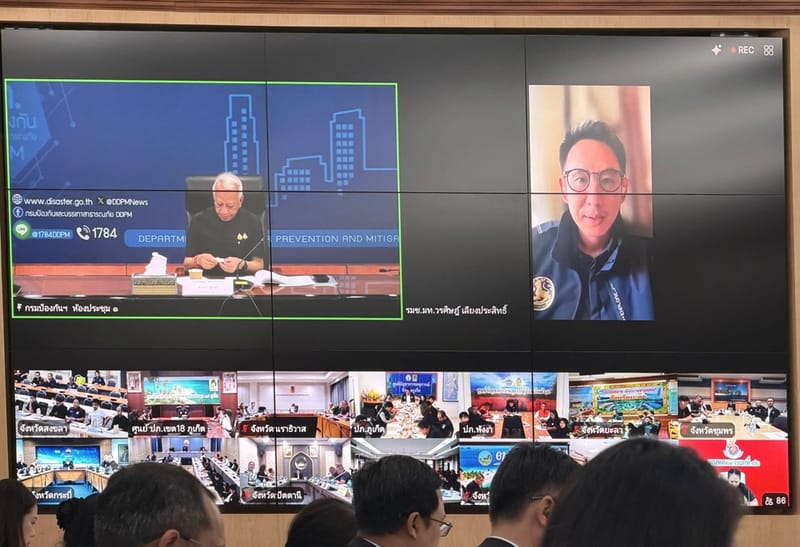
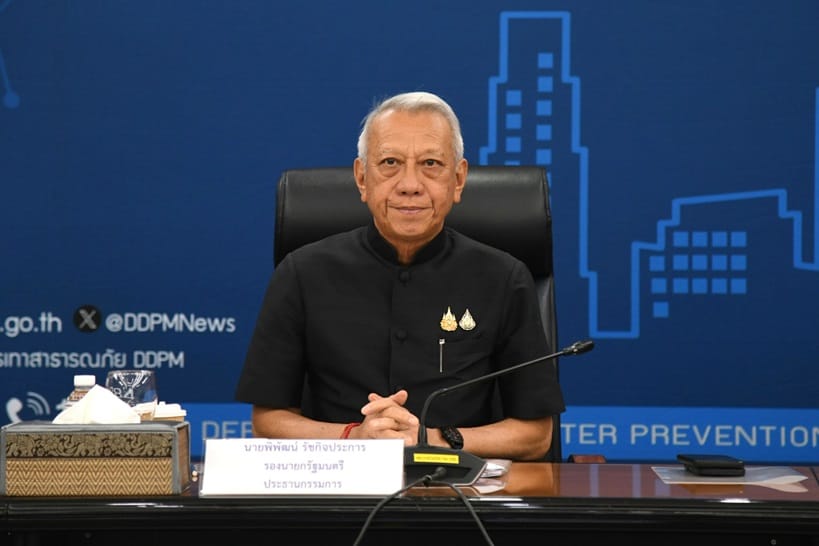
On 7 August 2026, Mr. Phiphat Ratchakitprakarn, Deputy Prime Minister and Minister of Transport, in his capacity as Chairman of the Committee for the Prevention and Resolution of Flood and Drought Problems in the Southern Region, presided over the committee's 1st meeting of 2026 at the Department of Disaster Prevention and Mitigation (DDPM) and via electronic media (Zoom Meeting), together with Mr. Worasit Liangprasit, Deputy Minister of Interior, in his capacity as Vice Chairman. Also in attendance were Mr. Jiraphong Thepphitak, Deputy Permanent Secretary of the Ministry of Transport, provincial governors and provincial representatives from the Southern Region, the Commander of the Fourth Army Region, committee members, and representatives of relevant agencies.
Mr. Phiphat said that Prime Minister Anutin Charnvirakul attaches great importance to disaster preparedness — covering both seasonal hazards and the impacts of climate variability — and has therefore issued an order appointing five regional committees for the prevention and resolution of flood and drought problems, covering the North, the Northeast, the Central Region, the East, and the South. This is aimed at elevating disaster management to a unified level, reducing duplication, and enabling rapid and effective responses to situations.
The South has a distinctive climate, as the Andaman Sea coast and the Gulf of Thailand coast have different rainy seasons, while flood risk and water scarcity also vary from area to area. Management must therefore be carried out according to "area – time period – type of hazard," with preparedness covering the period before a disaster, management during a disaster, and assistance, relief, and recovery after a disaster. This constitutes the core mission assigned to the committee.
The meeting received a weather forecast report. During August and September, certain chronically drought-prone areas around Prachuap Khiri Khan and Chumphon still need to be monitored, before rainfall begins to increase toward the end of October and the South enters a heightened flood-watch period running from November through January — particularly in areas from Surat Thani southward.
From around February onward, relevant agencies must prepare to manage water for the dry season, covering consumption, agriculture, and economic activities, in order to maintain sufficient water reserves and reduce the risk of water shortages in 2027.
The purpose of dividing management into these time periods is to enable each province to prepare measures that match its own area's risks; it does not mean that every part of the South will simultaneously face both floods and drought.
On preparedness, the DDPM reported on the deployment of personnel, machinery, and relief equipment, as well as public alert systems via SMS and Cell Broadcast, and the preparation of evacuation shelters for people in at-risk areas.
In addition, data from water-management agencies, the meteorological service, and technology platforms are being integrated through a War Room to forecast and assess situations in real time, linking information between the central level and local areas so that when risk signals are detected, the public can be alerted and relief forces mobilized rapidly.
The National Water Resources Office reported on the situation and water management approaches, noting that heavy rainfall toward the end of the year could trigger flash floods and forest runoff, and that water management must balance drainage with retention in order to have sufficient water reserves for the 2027 dry season.
Meanwhile, Songkhla and Yala provinces reported on their local preparedness measures, including improvements to waterways, evacuation shelters, evacuation points, and safe parking areas for vehicles, in order to accommodate potential situations and reduce impacts on the public.
Mr. Phiphat instructed all provinces and relevant agencies to use the mechanism of the Provincial Disaster Prevention and Mitigation Command Center / Operations Center as the primary mechanism for managing the situation, while integrating government agencies, the private sector, volunteers, and local units to ensure that command decisions and public assistance are swift and timely. The directives stipulate that provincial governors must coordinate directly with government agencies, the private sector, and volunteers in their respective areas.
He also assigned the Royal Irrigation Department to oversee drainage operations in line with the situation; directed provinces to prepare an adequate number of evacuation shelters; instructed the military, police, and administrative authorities to look after the safety of people's homes and evacuation shelters; and directed public health agencies to prepare life-saving services, medicines, ambulances, and necessary equipment — giving vulnerable groups the first priority.
In addition, provinces were directed to accelerate the preparation of area-specific measures such as installing water pumps, opening waterways, clearing obstructions from drainage channels, and developing water-retention areas. Should a disaster occur, they must follow the Provincial Disaster Prevention and Mitigation Plan and incident-response plans, and must accelerate public assistance in a manner that is rapid, fair, and comprehensive.
Mr. Phiphat also asked each area to consider establishing "mentor homes" (baan phi liang) within at-risk communities to serve as a community assistance network in cases where a disaster occurs and officials cannot reach the area immediately. These homes would stockpile rice, dried food, drinking water, and essential supplies, and would assist with the movement of patients, the elderly, children, and vulnerable groups. A single mentor home may look after approximately 5–10 neighboring households.
For flood-prone areas, safe parking zones for vehicles should be prepared, and local administrative organizations should be coordinated to survey the areas and notify residents in advance. Care must be taken to ensure that moving vehicles to high ground or onto bridges does not obstruct the routes of rescue vehicles, ambulances, and machinery entering the area to assist people.
If a safe zone or evacuation shelter has problems with access routes, the Department of Highways and the Department of Rural Roads should be coordinated to urgently fix and facilitate access, because a safe area must not only be situated on high ground but must also be genuinely accessible for entry and exit.
For agricultural areas — especially those around the Songkhla Lake basin, which connects Songkhla, Phatthalung, and Nakhon Si Thammarat provinces — animal feed such as grass and dry straw should be stockpiled in advance to accommodate cases of prolonged flooding and to reduce impacts on farmers.
Mr. Phiphat said provinces must also prepare to cope with fires that may pose increased risk during the dry season — particularly fires at landfill sites, as well as fires in peat swamp forest areas such as Khuan Kreng Peat Swamp in Nakhon Si Thammarat province and To Daeng Peat Swamp in Narathiwat province, which could have impacts on both people and ecosystems. Vigilance and advance countermeasures are therefore necessary.
Finally, if any province or agency faces limitations or obstacles in carrying out its work, it should urgently report them to the committee so that solutions and operational support can be found together without delay.