Following the case of Mr. Weera Thiraphattharanon, a senior journalist widely known as "Weera Thiraphatt," who, in his capacity as a member of the special committee examining the draft Annual Budget Expenditure Act for fiscal year 2027, delivered a speech criticising the quality and services of national park accommodation, describing them as "extremely terrible," and drawing on his own personal experience during a visit to Mu Ko Similan National Park four years ago (in 2022).
After that, Mr. Weera subsequently came out and admitted that his memory had been mistaken, stating that his trip to stay at Mu Ko Similan National Park had most likely taken place around 2016–2017, which was before the park announced the cancellation of overnight stays on the island in 2018.
Once the matter was made public, it became a heated drama on social media, splitting internet users into two opposing camps, each taking a different side.
The episode also prompted a great many people to take a keen interest in the story of Mu Ko Similan National Park — the origin of the whole affair.
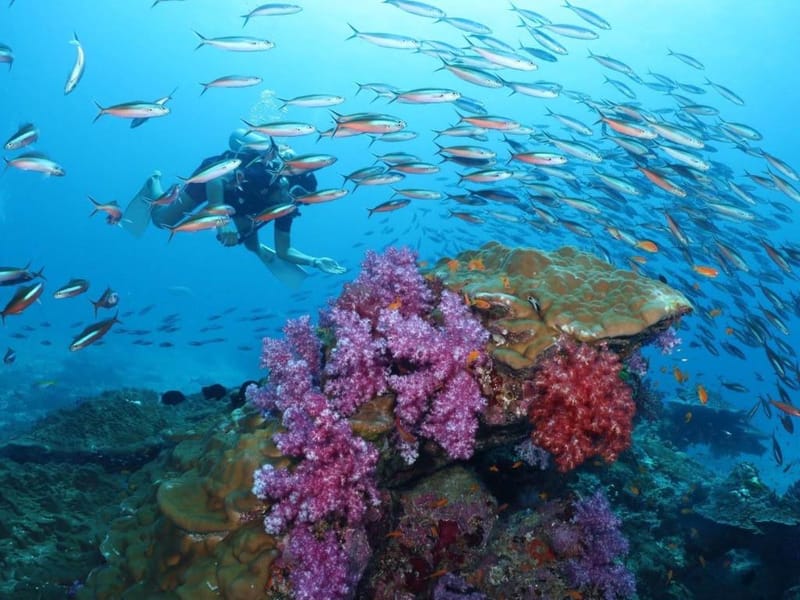
We therefore take this opportunity to introduce Mu Ko Similan National Park, which is not only one of Thailand's most famous tourist destinations but is also a diving destination renowned worldwide for its breathtaking underwater world.
The name "Ko Similan" comes from the Yawi language, where "Similan" means nine islands — hence the origin of the Similan Islands, which are today administered by Mu Ko Similan National Park. The Similan Islands consist of: Ko Nueng (Hu Yong), Ko Song (Pa Yang), Ko Sam (Pa Yan), Ko Si (Miang), Ko Ha, Ko Hok (Pa Yu), Ko Jet (Hin Pusar), Ko Paet (Similan), and Ko Kao (Ba Ngu).
Later, the Department of National Parks added two more islands located in the same waters: Ko Bon and Ko Tachai.
At present, the two main highlight attractions of the Similan Islands are Ko Paet (Island Eight) and Ko Si (Island Four).
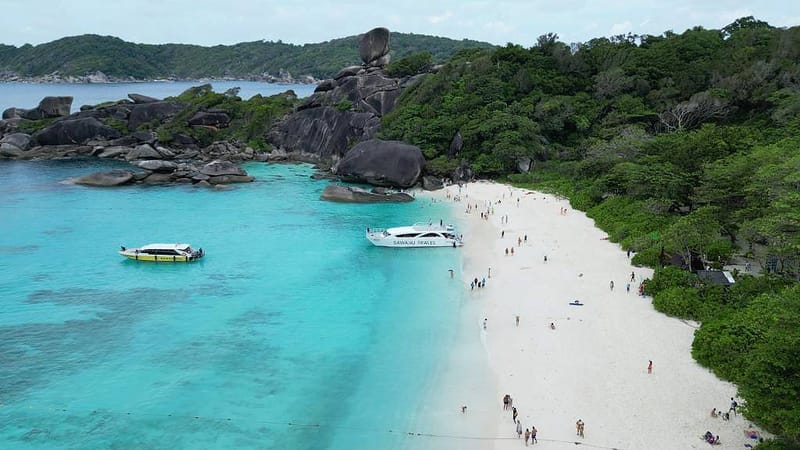
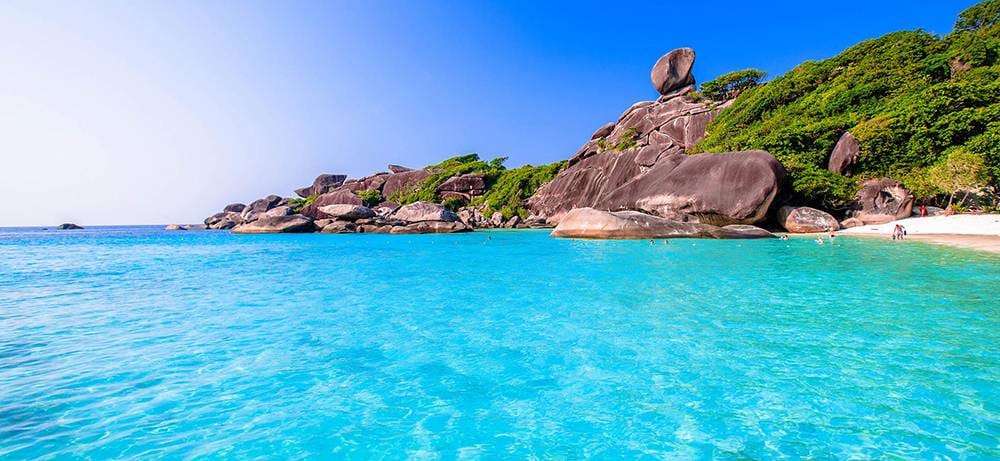
Ko Paet, or Ko Similan, is the largest island in the Similan Islands. Its defining highlight is "Hin Rua Bai" (Sail Rock), which stands prominently in the area of "Ao Kueak" — a world-renowned bay of remarkable beauty that has claimed a place in the Top 10 Best Beaches in the World for 2026 (World's 50 Best Beaches 2026), further affirming the richness of the island's ecosystem.
"Ao Kueak," or Donald Duck Bay, is located on the front side of Ko Paet. It features a long, curving shoreline with fine, smooth white sand and crystal-clear blue water through which fish can be seen swimming.
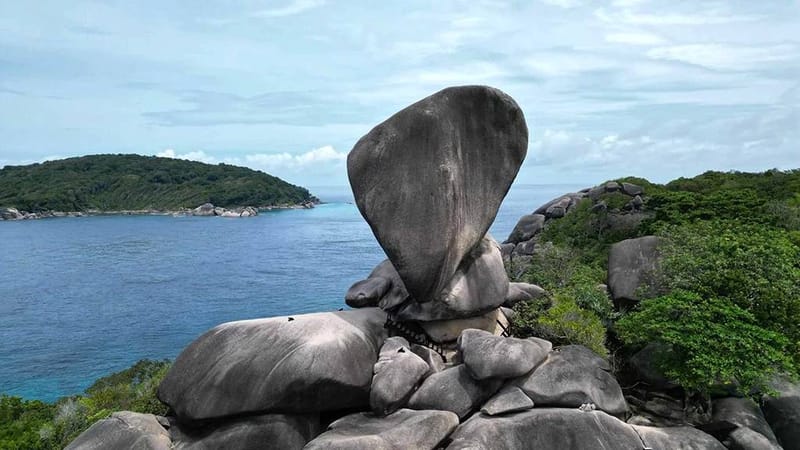
There is also "Hin Rua Bai" — Sail Rock — standing prominently on the cliff's edge as the iconic symbol of this island group.
The location of Sail Rock serves as a viewpoint. Visitors who climb up there can enjoy a sweeping, beautiful view of Ko Paet and the Andaman Sea, and can clearly see the difference in colour between the shallow and deeper sections of the sea.
Ko Miang, or Ko Si (Island Four), features key attractions including "Hat Jao Ying" (Princess Beach) and "Hat Lek" (Small Beach). It is also the location of Park Ranger Unit SL.1 (Ko Miang), which houses a park welfare shop, a Phang Nga Naval Base security unit, and a medical assistance unit.
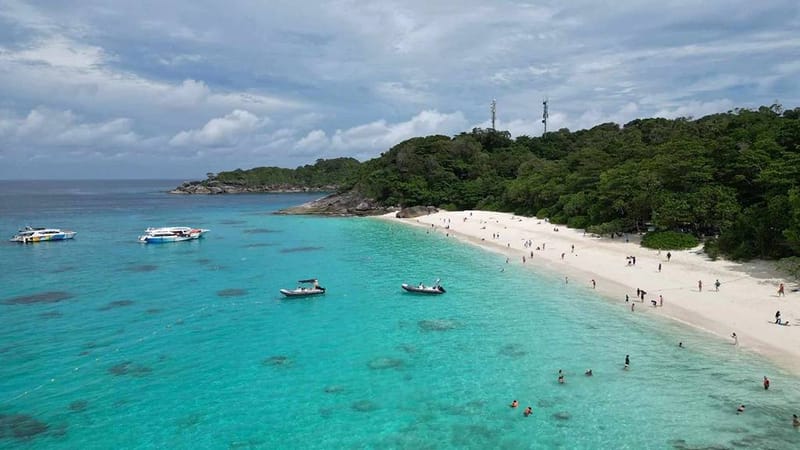
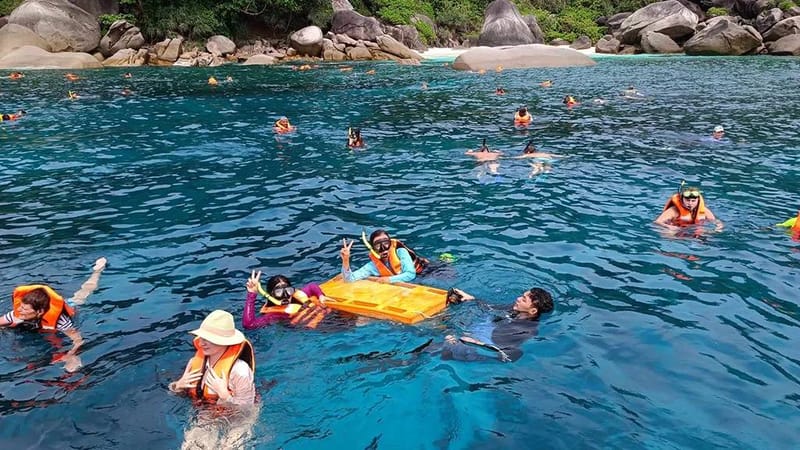
Hat Jao Ying is the beach at the front of Ko Miang, with fine white sand stretching approximately 400 metres — considered one of the most beautifully white beaches in Thailand. The sea is blue, making it a popular spot for swimming and snorkelling, with coral reefs scattered in clusters extending to the rocky shoreline.
Hat Lek, situated on the eastern side of the island, can be reached on foot from Hat Jao Ying along a 300-metre nature trail that passes through tropical rainforest.
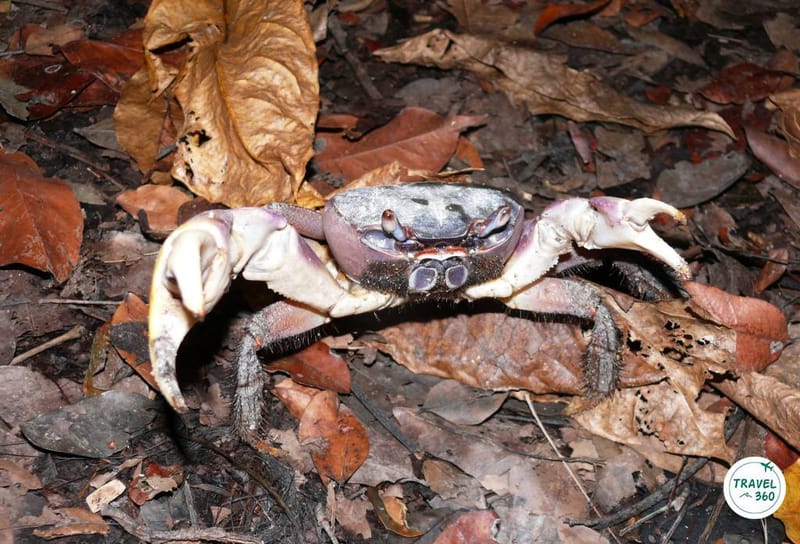
Along the way, if you are lucky, you may encounter the coconut crab — the resident crab of the Similan Islands. The Hat Lek area also has small patches of coral reef scattered about, with beautiful marine fish along the reef.
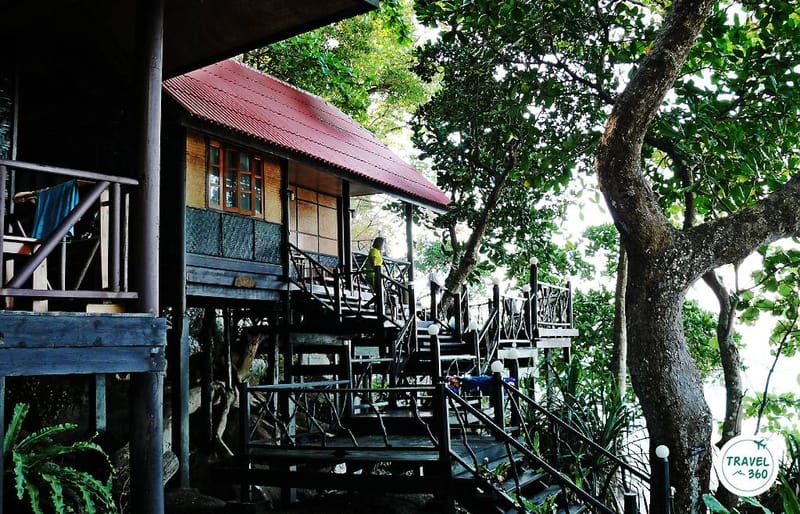
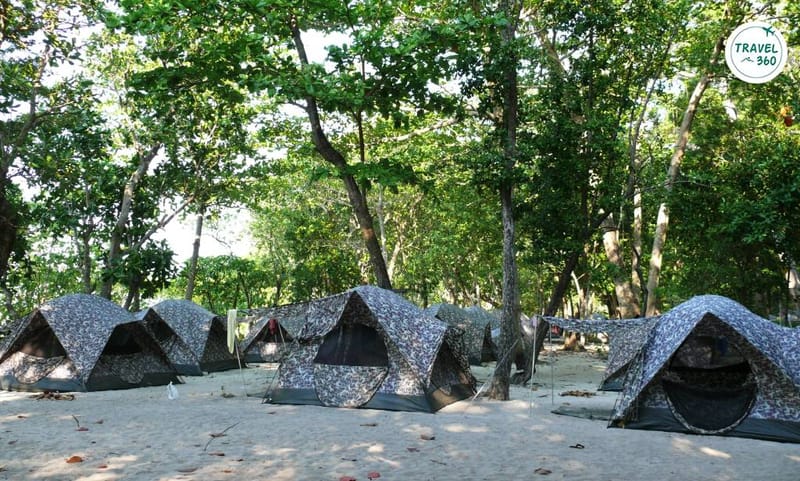
In the past, Mu Ko Similan National Park used to allow tourists to stay overnight on Ko Miang, so they could experience the immersive feeling of being surrounded by the sea on all sides. The park provided both bungalows and tents in limited numbers for visitors.
In those days, those who visited Similan National Park and managed to stay in the park's bungalows were considered very fortunate, as bookings were extremely difficult to secure (along with widespread rumours that VIP tour companies snapped up all the reservations ahead of ordinary tourists).
Later, in 2018, during the tenure of Mr. Thanya Netithammakul as Director-General of the Department of National Parks, Wildlife and Plant Conservation, a notification was published in the Royal Gazette closing overnight accommodation within the Mu Ko Similan National Park zone — or, in other words, cancelling overnight stays on Ko Miang. The Department of National Parks designated the tourism model within the Mu Ko Similan National Park zone as a day-trip-only format (One Day Trip), a policy that remains in place to this day.
The Department of National Parks gave as its reason that overnight tourism within the Mu Ko Similan National Park zone had previously generated wastewater, causing damage to coral reefs, marine life, and the ecosystem within the park.
In addition, the Department of National Parks has also capped the number of day-trip visitors to Mu Ko Similan National Park at 3,850 people per day, broken down as 525 per day for scuba diving and 3,325 per day for beach tourism and snorkelling. Vessels with a capacity exceeding 100 persons are also prohibited from entering the Mu Ko Similan National Park zone.
Mr. Sasin Chalermlap, an environmental conservationist and academic who is the former president and secretary-general of the Seub Nakhasathien Foundation, posted a comment on Facebook in response to Mr. Weera, addressing the matter as follows:
"…Similan National Park has been a One Day Trip destination for a long time already, to address the problems of too many tourists, too much rubbish, and too many rats — if it were still open for overnight stays. This measure has been in place for seven or eight years. This shows that something went wrong and Mr. Weera was not properly briefed beforehand.
Furthermore, complaining that there was not enough water and no hot water at accommodation on a remote island like Similan is a bit much. And as for there being no internet — I think that's really going too far. Similan is in the middle of the sea, and it is a conservation area, even if it does have a service zone. He probably doesn't know about such things because he once said that environmental matters are trivial issues — which reflects how much he actually understands about things like this.
I don't really take issue with what he said. What I'm more curious about is who took him there and who gave permission."
Mu Ko Similan National Park is located in Ko Phra Thong Sub-district, Khura Buri District, Phang Nga Province. Every year, the park opens its tourist season from 15 October to 15 May.
Visitors to Mu Ko Similan National Park, or any other national parks across Thailand that permit overnight stays, should keep in mind that they are visiting a natural site within a conservation forest — one that is not abundant in comfort or convenience, and is nothing like staying at a luxury 4- or 5-star hotel or resort.
It should also always be remembered that the world does not revolve around us.