"Suphajee" advises Thailand to adapt and brace for a world shifting toward a multipolar economy, saying the country must pursue an open, diversified, and balanced trade policy while creating new options for itself. She reveals Thailand should leverage its strengths to add value across agriculture and food, future industries, tourism, and the creative economy, and is preparing to unlock three gaps — targeting the value gap, the market gap, and the SME participation gap.
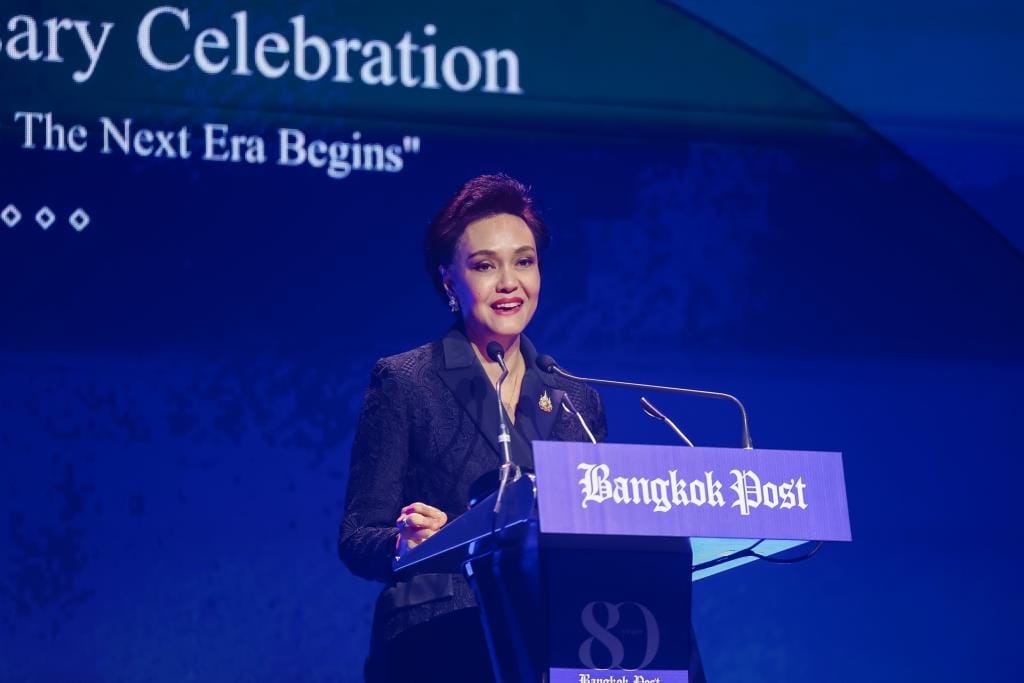
Mrs. Suphajee Suthumpun, Deputy Prime Minister and Minister of Commerce, delivered a keynote address at the Bangkok Post Forum 2026, held to mark the 80th anniversary of the Bangkok Post newspaper, under the theme "Vision Thailand: Driving Trade, Unlocking Sustainable Growth," at the Centara Grand and Bangkok Convention Centre at CentralWorld on the evening of 14 August 2026. She stated that driving trade in today's world requires looking beyond simply increasing export value, and that trade must be used as a tool to create value, open new opportunities, and support the country's sustainable growth — amid rapidly shifting challenges from geopolitics, technology and AI, trade protectionism, sustainability, and supply chain security.
Thailand, she said, must adapt to a world that is moving into a multipolar economy, by pursuing a trade policy that is open, diversified, and balanced, while creating new options for the country. Thailand must remain open to working and partnering with all countries, while at the same time diversifying its dependence on export markets — since currently approximately one-third of Thailand's total export value comes from just two main markets, which poses a risk if the country continues to rely on such a concentrated base. Thailand must therefore accelerate its efforts to open new markets and build cooperation with various countries through FTAs, trade negotiations, trade missions, and other forms of collaboration.
"We must be open, diversify our markets, and maintain balance. Because Thailand is a medium-to-small country compared to the great powers, we must create options for ourselves and work with all sides," Mrs. Suphajee said.
Mrs. Suphajee said Thailand has many strengths and a great deal of potential that can be built upon to add value, including: the agriculture and food sector, which is a fundamental pillar of the country; the manufacturing sector, which must be upgraded toward technology and future industries such as next-generation vehicles and advanced semiconductors; the services sector, tourism, and healthcare; as well as culture and the creative economy. Thailand also has a locational strength — situated at the heart of Asia, it can connect trade from north to south and from east to west — giving it the opportunity to develop its logistics capabilities and supply chain connectivity. At the same time, Thailand has a large number of entrepreneurs whom the public sector must support so that doing business becomes easier.
Building on those strengths, Thailand needs to unlock three gaps in order to generate growth. The first is the Value Gap — shifting from a focus on volume to a focus on creating value, by placing importance on branding, intellectual property, design, standards, and experience. The second is the Market Gap — seeking out new markets, new channels, and new engines to drive growth. The third is the Participation Gap — ensuring that SMEs and smaller entrepreneurs have a greater share in the country's growth. SMEs are important to the Thai economy, accounting for approximately 35% of GDP, yet that share has barely changed for many years. What must be done is not merely to protect SMEs, but to equip them with the necessary tools, skills, and support so they can compete and grow. Thailand currently has approximately 30,000 registered exporters, of whom around 7,000 are large enterprises while approximately 22,000 are SMEs and MSMEs — yet this latter group generates only around 12% of export value, meaning there is considerable room to enhance the capacity of smaller operators to expand their businesses and add greater value to the Thai economy.
As for the approach to unlocking growth, there are four key areas. The first is Unlocking Markets — diversifying dependence on export markets and opening new ones. While FTAs are an important instrument, opening markets does not have to wait solely for FTA negotiations, which can take time; trade negotiations, trade missions, and various forms of cooperation must all be used to create opportunities in new and high-potential markets. At the same time, advantage must be taken of the fact that Thailand's exports this year are growing at a record high level, in order to broaden the trade base further.
The second is Unlocking Values — shifting from looking only at what Thailand has, to asking "what does the world want?" and identifying what value the global market is seeking. This means moving from production-led markets to market-led production, so that Thai goods and services better meet the needs of the world and can generate added value through branding, intellectual property, design, standards, and experience.
The third is Unlocking Opportunities — extending opportunities to SMEs, MSMEs, and smaller entrepreneurs so they can access the skills, knowledge, capabilities, and support they need to elevate their potential and compete more effectively in the market. The goal is not merely to protect small operators, but to enable them to grow and contribute more to building national prosperity.
The fourth is Unlocking Trust and Resilience — building cooperation with trading partners by seeking mutual benefit rather than one-sided gain, while fostering the trust and partnership needed to navigate a world of growing barriers and uncertainty.
As for translating this into concrete results, implementation will proceed through a public-private cooperation mechanism responsible for trade and services, working through four task forces: (1) Creative Economy and Visitor Economy; (2) Agriculture and Food Security; (3) Community Economy and SMEs; and (4) International Trade. Work will not be conducted in silos; instead, coordination across agencies and the private sector will be linked to achieve shared outcomes, guided by the principles of unlocking constraints, working as one team, shifting value creation from volume to quality, seamlessly connecting operations, and delivering measurable results. Quick Big Wins will be identified and delivered within 6–12 months, alongside Big Wins for structural transformation and the creation of new long-term national growth engines.