Early this week, two significant events took place in succession in China: the ceremony marking the 100th birth anniversary of former President Jiang Zemin on Monday, 17 August, and the funeral of former Premier Zhu Rongji on Tuesday, 18 August.
The memorial ceremonies for these two individuals, who brought about momentous change in China, ignited a sense of nostalgia for the era of reform and opening-up — during which Zhu Rongji served as premier and Jiang Zemin as president, from 1998 to 2003 — while at the same time raising questions about the country's future.
Analysts view the act of looking back at the past while asking about the future ahead as a reflection of the stress, discomfort, and pressure present in Chinese society, which surfaced during the memorial ceremonies.
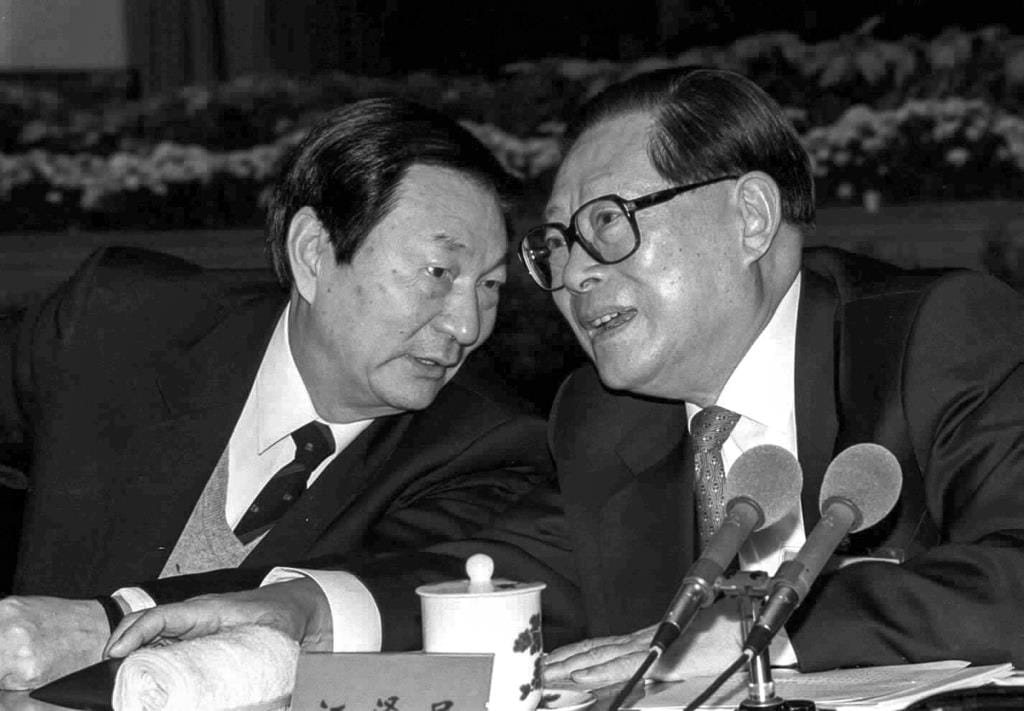
On Chinese social media, old photographs and videos of the two figures were recirculated. Some posts showed the two leaders leaning toward each other and smiling, while others highlighted Jiang Zemin's vivid personality and Zhu Rongji's straightforward manner.
Comparisons emerged between that past era — distinguished by China's rapid economic expansion and its growing role on the world stage — and the present under President Xi Jinping, during which China is grappling with slowing economic growth, a crisis in the property sector, local government debt, and ongoing tensions with the major Western economies.
Many netizens paid their respects to the two former leaders using subtle references or nicknames — such as "the elder," referring to Jiang Zemin — in order to evade internet censorship.
Prominent economist Zhao Jian wrote a piece about the passing of Zhu Rongji, lamenting a current sense of emptiness and anxiety, and contrasting it with the feeling of security and being able to "see the future" that existed some 30 years ago.
The article, however, was swiftly deleted from the messaging platform WeChat within a single day.
The holding of a memorial ceremony for Jiang Zemin followed long-established political norms in China.
In addition, commemorative stamps were issued, and a 12-episode documentary series recounting his life and legacy was broadcast every evening on national television in the lead-up to the anniversary.
Such a grand occasion came as no surprise given Jiang Zemin's former stature — much like the centenary celebrations for Deng Xiaoping in 2004.
What was different, however, was that the Jiang Zemin memorial coincided by chance with the death of Zhu Rongji on 12 August.
Lee Jong-hyuk, an associate professor at Sungkyunkwan University in South Korea who studies Chinese politics, noted that this made the Jiang Zemin celebration all the more significant and inevitably prompted deeper reflection on the reform era that both men represented.
Even so, China had ways of managing the situation to prevent the glorious past of these two leaders from being used to unfavourably compare against Xi Jinping's shortcomings. Analysts observed that Jiang Zemin's legacy has been officially framed by Chinese authorities as that of one of the leaders who contributed to the historic mission and the continuous achievements of the Chinese Communist Party — with Xi Jinping at its core today.
At the memorial ceremony for Jiang Zemin held at the Great Hall of the People, Xi Jinping praised a number of the late leader's qualities — such as his loyalty to the Communist Party, his dedication to the well-being of the people, his spirit of innovation, and his far-sightedness — while calling on the Communist Party to carry forward the former president's aspirations, in order to boost the nation's morale in facing ever-increasing economic and geopolitical challenges.
The case of Zhu Rongji was handled similarly: the official obituary stated that he had given "unwavering support" to the Central Committee of the Chinese Communist Party during the period when former President Hu Jintao served as General Secretary, and during Xi Jinping's tenure as General Secretary thereafter, up to the present day.
Source: "Quiet tension surfaces as China remembers reform era titans Jiang and Zhu" in The Straits Times.