The Deputy Government Spokesperson reveals the government is moving forward with "Visitor Economy," linking tourism to the economy as a whole, championing safety, standards, and cultural capital toward sustainable growth.
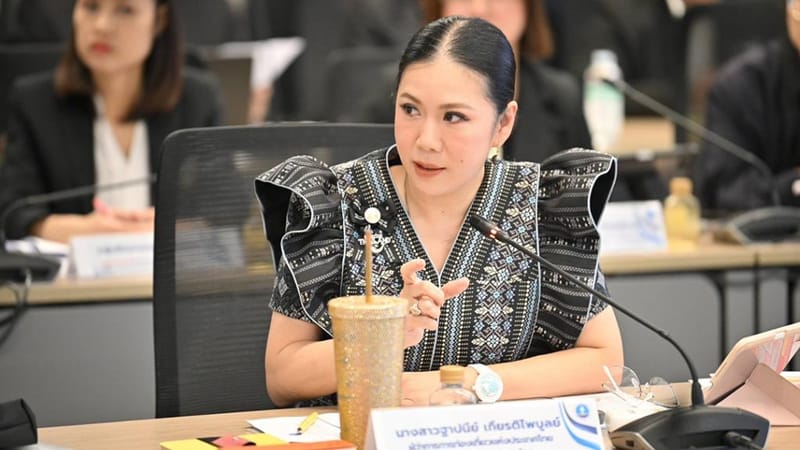
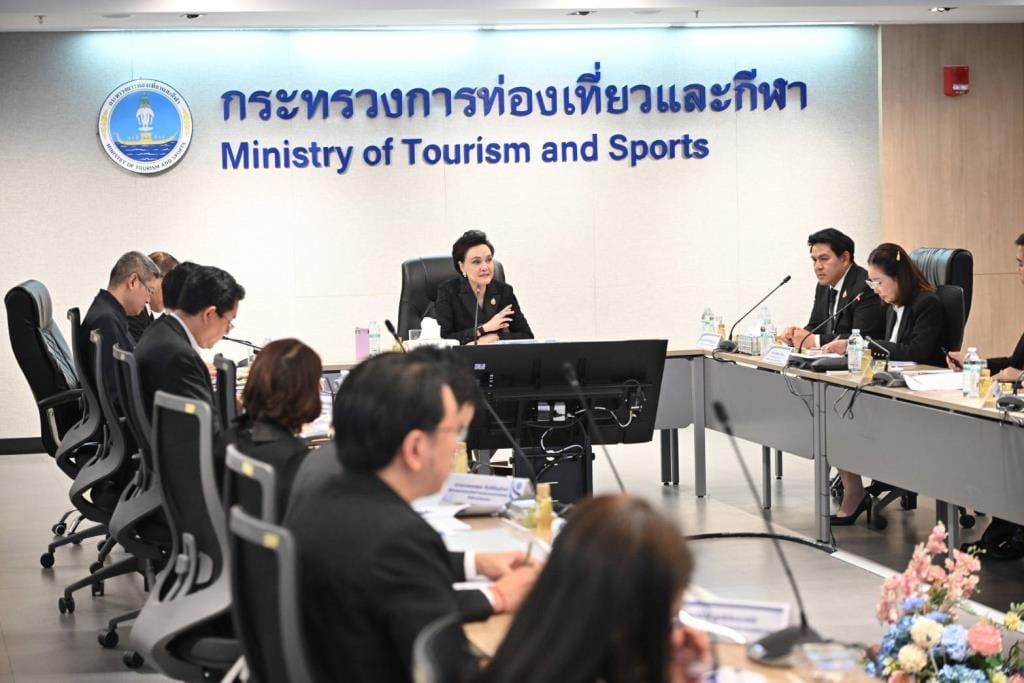
Today (14 August 2026), Miss Lalida Phoeritwiwattana, Deputy Spokesperson of the Prime Minister's Office, disclosed that Mrs. Supajee Suthamphan, Deputy Prime Minister overseeing the Ministry of Tourism and Sports, made her first visit to the Ministry of Tourism and Sports to monitor operations and discuss approaches to drive the tourism sector together with relevant agencies. The visit focused on reframing Thailand's tourism development toward the concept of "Visitor Economy" — a holistic view of the economy generated by visitors, covering the entire journey from pre-departure, through the period of stay, to the return home — while elevating the goal from simply emphasising tourist numbers to increasing economic value, extending length of stay, boosting spending, and distributing income to communities and local operators.
The Deputy Spokesperson of the Prime Minister's Office said that this site visit included monitoring the use of the budget in an integrated manner across agencies, in order to review operational results, key performance indicators, problems and obstacles, and approaches to improving operations so that goals are met efficiently. It also included a meeting of the National Tourism Policy Committee (NTPC) to set the direction for tourism development in line with the current situation.
Mrs. Supajee said that the tourism sector is facing challenges from the global energy situation and conflicts in various regions of the world, which are affecting international travel. Thailand must therefore prepare and drive its work systematically, without viewing tourism in isolation from other economic sectors, but instead linking it to trade, services, production, agriculture and food security, communities, and SME operators.
"We are not looking merely at the word 'tourism,' but at the Visitor Economy, which requires managing the entire system — from the origin, through the visitor's time in Thailand, all the way to their departure — so as to create a memorable experience and bring them back to visit Thailand again," said Mrs. Supajee.
The Deputy Spokesperson said the government will use the public-private cooperation mechanism, known as the Joint Public-Private Consultative Committee (JPPCC), as another important channel for driving tourism and the creative economy, so that the private sector can participate in reflecting problems, obstacles, and needs, as well as jointly developing tourism products and services that respond to the market and channel more of the benefits of tourism to various economic sectors.
The Visitor Economy approach will place importance on the visitor's experience throughout the entire travel chain, with key components including safety, convenience, and the creation of new experiences, so as to give tourists reasons to travel to Thailand, stay longer, spend more, and return for repeat visits — thereby increasing economic value without competing solely on tourist numbers.
In addition, the NTPC meeting discussed approaches to improving regulations, standards, and laws related to the tourism sector, including upgrading standards for accommodation and businesses currently operating outside the formal system, as well as reviewing approaches to the collection of fees from foreign tourists to ensure they are appropriate to the current situation. Various issues are still under consideration and detailed formulation, and therefore do not yet constitute new measures or new rates that are in force.
On the subject of sustainable tourism, the meeting monitored approaches to the care and development of special areas, namely the Mu Ko Chang archipelago, the Songkhla Lake Basin, Chiang Rai Province, and Khung Bang Kachao, as well as the push to make the areas of Sukhothai, Si Satchanalai, and Kamphaeng Phet a model for the management of World Heritage Sites, alongside the leveraging of each area's cultural capital, identity, and resources into tourism experiences that generate income returning to communities.
"The government's goal is to make tourism grow with quality — it is not measured only by how many tourists enter the country, but also by whether tourists are staying longer, whether they are spending more, and how widely income is distributed to communities and local operators. Driving the Visitor Economy is therefore about connecting every sector together, in order to create a great experience for visitors while at the same time building economic value and long-term sustainability for Thailand," said Miss Lalida.