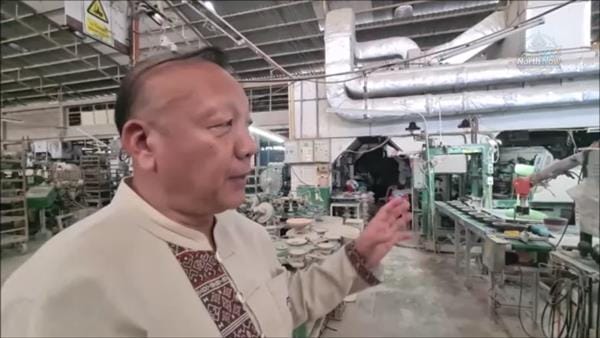
Lampang — Chinese goods, benefiting from both reduced import tariffs and flat-rate container shipping fees, with some suppliers issuing invoices below actual value, have been dumped onto the market at prices as low as 10–15 baht, devastating Lampang's ceramics industry — one of the country's top three production centres. An industry that once generated 2–3 billion baht a year has been reduced to just one billion. More than half of its factories have already closed, while larger operators have turned to robots to replace workers in a chain-reaction impact. The latest blow: the government has cut the annual ceramics fair budget as well.
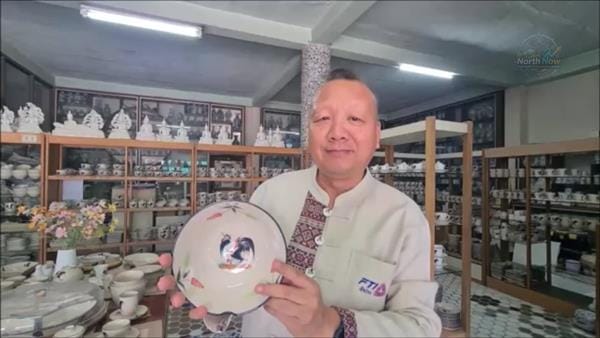
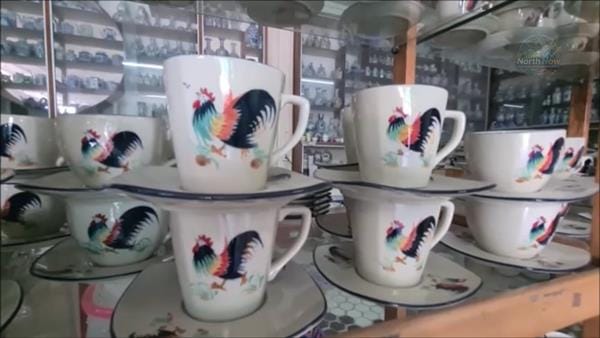
The Rooster Brand bowl is considered an iconic and celebrated product of the province. Over the past several years it has faced crisis after crisis — rising energy costs, higher wages, and most recently the economic downturn. The most severe blow has come from Chinese imports sold at cheaper prices, causing factories with little financial resilience to begin shutting down in numbers exceeding half of the total, as they can no longer bear the burden of operating costs.
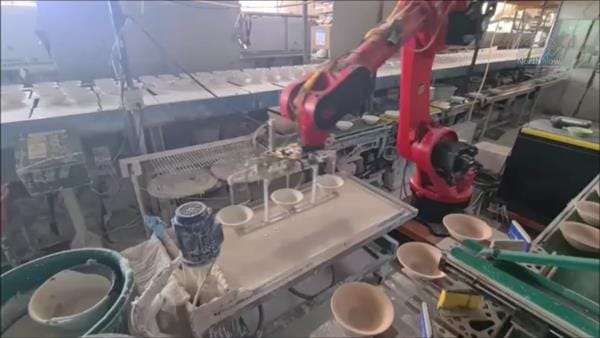
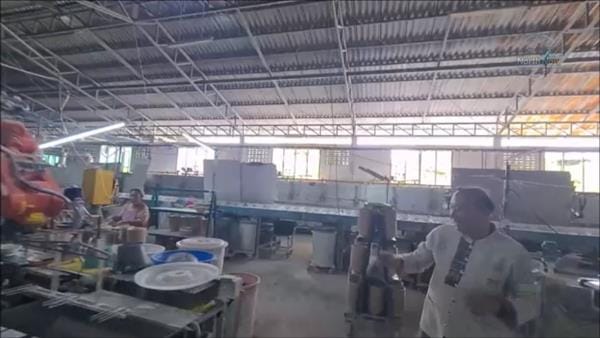
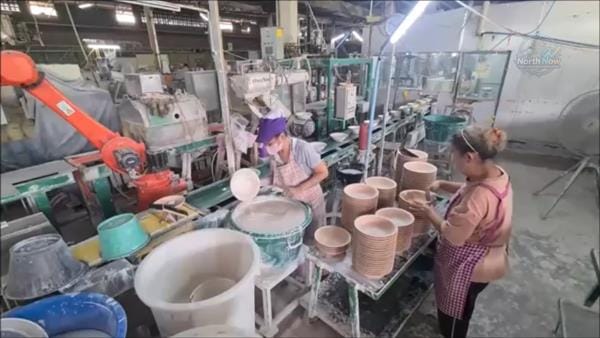
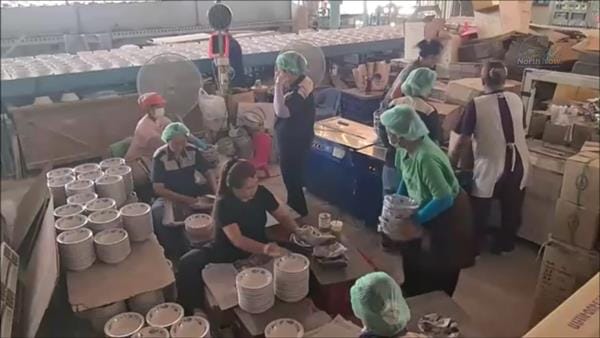
Lampang Silapanakhon Factory, operated by Lampang Silapanakhon Co., Ltd., is one of Lampang's oldest and largest factories. It formerly employed more than 200 workers. Today, the factory has had to completely overhaul its operations — reducing its workforce to cut costs, shutting down kilns when there are no purchase orders, and scaling back to only a handful of on-site workers. In their place, robots are being used in increasing numbers, with all operations from midnight onwards run entirely by robots.
Mr. Kittisak Sinwanasap, Managing Director of Lampang Silapanakhon Co., Ltd. and President of the Lampang Pottery Association, said that Lampang previously had 220 ceramic factories across all sizes — large, medium, and household-scale — accounting for more than one-third of all ceramic factories in the country, the highest proportion of any province in Thailand. The industry has faced crises on multiple fronts, particularly since the COVID-19 pandemic, when many factories were forced to close because they could not ship goods, and their costs became sunken. Nonetheless, operators managed to keep the industry afloat throughout that period by devising new marketing strategies.
However, he acknowledged that purchase orders have declined, and at times there are no orders at all, leaving finished goods sitting in stock. On top of that, the industry was hit by an energy crisis — its primary cost driver — which has pushed expenses significantly higher, while Chinese goods have been dumped onto the market at nearly half the price.
"Lampang's Rooster Brand bowls are still produced by hand — every piece is hand-painted. The production cost is around 20 baht per piece, but Chinese products sell for just 10–15 baht. This has hit Lampang's Rooster Brand bowl business hard. Small and medium-sized factories have had no choice but to retreat and temporarily shut down — more than half have done so — leaving fewer than 100 factories still operating. This affects both factory owners and workers alike. Silapanakhon Factory, one of Lampang's original large-scale factories, currently has its kiln section shut down due to a lack of purchase orders," he said.
Regarding the causes, Mr. Kittisak revealed that following the liberalisation of trade, importers have seen duties reduced to 30%, and more recently have been allowed to pay a flat-rate tax of just 15% per entire container. Some operators also have Chinese manufacturers issue invoices below the actual price, further lowering the declared value of goods. This has resulted in extremely low product prices, causing ever-greater harm to Thai producers.
Lampang's ceramics industry previously generated revenue of approximately 2,000–3,500 million baht per year. That figure has now fallen to just around one billion baht — a loss of roughly two-thirds. What the industry most urgently wants from the government is assistance in finding overseas markets, a campaign encouraging Thai consumers to support Thai-made products, and a reduction in production costs — the primary factor — especially LPG for kilns and fuel oil.
Because if no assistance is forthcoming from this point on, operators are expected to be unable to continue absorbing losses, and more factories will gradually close one after another.
He also called on the government to reconsider the matter of budget allocation. Every year, the association organises the Ceramic Fair as a regular annual event to move stockpiled goods. But for 2026, the government has cut the budget for this event — a move that further compounds the hardship for small operators who had been waiting for the chance to sell off their stockpiled goods at the year-end fair, making the loss all the more regrettable.