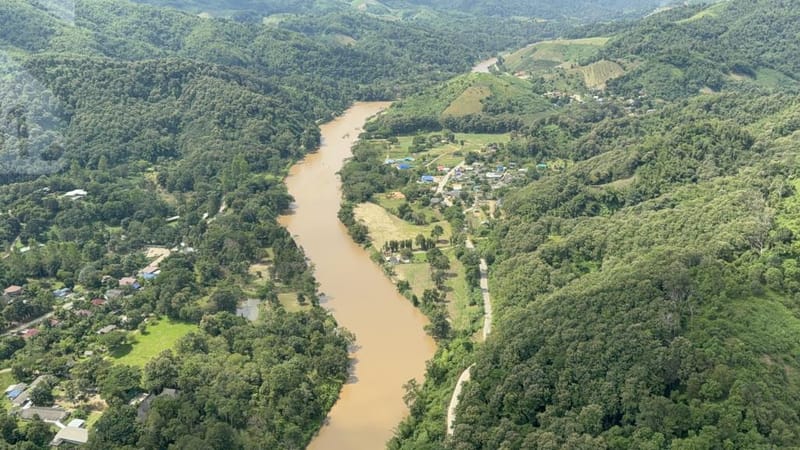
Chiang Mai/Chiang Rai — Thailand first reported toxic contamination in a cross-border waterway at the beginning of 2024. The Mae Sai River was found to contain copper, nickel, manganese, zinc, cadmium, chromium, lead, mercury, and arsenic. In April 2026, the Kok River at Mae Ai was found to be contaminated with arsenic both in the water and in sediment — before it was discovered that the upstream areas on the Myanmar side had been riddled with gold, zinc, manganese, and rare earth mines. That is the fate that downstream communities have been living with to this day.
The Mae Sai River is a natural waterway that originates in the Shan Yoma mountain range, in Tachileik Township, Myanmar, located to the northwest of Mae Sai District, Chiang Rai Province. It flows through Myanmar, passing through the villages of Cho Tada, Doi To Kham, and Ban Sai in Tachileik, covering a distance of approximately 20-plus kilometres.
It then forms the Thai-Myanmar border as it passes through the Hua Fai community in Wiang Phang Kham Subdistrict, Mae Sai District, over a distance of approximately 12.8 kilometres, before joining the Ruak River at Ko Chang Subdistrict, Mae Sai District, and flowing into the Mekong River at the Golden Triangle, Chiang Saen District, Chiang Rai Province.
However, the first sign of abnormality in the Mae Sai River appeared in December 2023, during the dry season, when the water turned unusually turbid in a way that had never been seen before. Narongphon Khit-an, the district chief of Mae Sai at the time, notified the Mae Sai branch of the Provincial Waterworks Authority, which conducted an inspection and found that the turbidity showed a tendency to increase.
Subsequently, in February 2024, the Environmental and Pollution Control Office No. 1 (Chiang Mai) of the Pollution Control Department announced the results of water sample testing at five points: the Hua Fai community, the canal mouth, Ban San Phi Ki, the confluence of the Mae Sai and Ruak rivers, and a water pumping station. Heavy metals were found, including copper, nickel, manganese, zinc, cadmium, chromium, lead, mercury, and arsenic. Although the values did not exceed the standard, iron levels were higher than in typical waterways. At that point, no one yet knew the cause of the turbidity in the Mae Sai River.
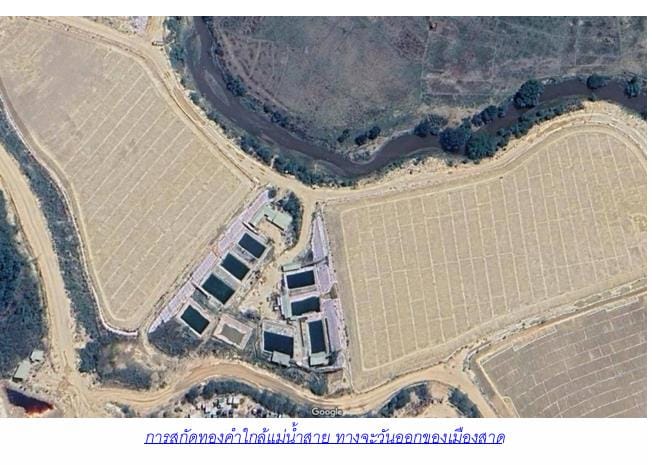
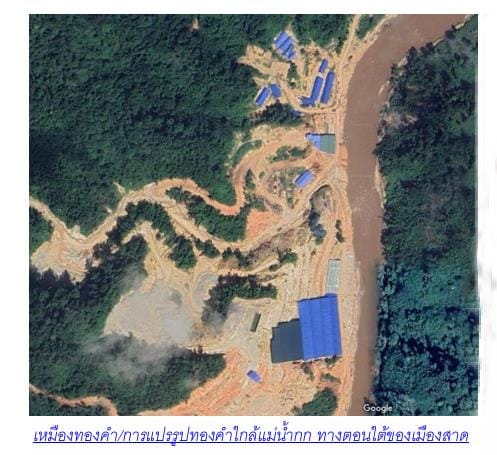
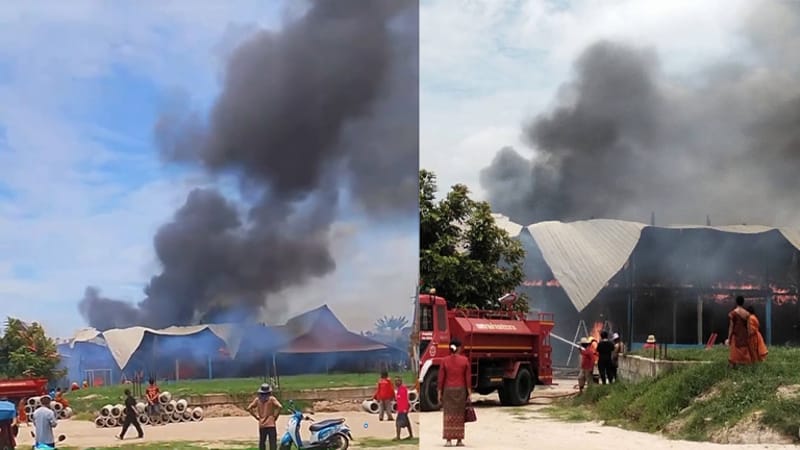
Eventually, through investigation via border-area sources, gold and manganese mines were found to be located adjacent to several tributaries that flow into the Mae Sai River — at least four sites. The first two are situated in Ban Mae Chok and Ban Na Yao, Mong Hsat Township. Since 2023, outside access has been prohibited, and water from the tributary has been pumped in to spray the soil and rock before being discharged back into the same tributary. The other two sites are manganese and zinc mines located in Ban Nam Pung Mai and Nam Phu Ron, adjacent to the Nam Pung and Nam Phu streams, which also flow into the Mae Sai River.
All investigations, however, had to be halted when Typhoon Yagi swept through the upper Mae Sai River basin in early September 2024 — less than a month before District Chief Narongsak was due to retire. Water levels began to rise on 8 September, and the Mae Sai River surged and flooded the border communities of Mae Sai and Tachileik heavily from 9 to 14 September 2024.
At the same time, the Kok River — which originates in Mong Kok, Mong Hsat Township — also rose and overflowed along its entire banks, from Mae Ai District, Chiang Mai Province, to Mueang Chiang Rai District, particularly affecting homes in Mae Yao Subdistrict, Mueang Chiang Rai District, and the Chiang Rai City Municipality. Water levels peaked on 12 September, rendering every bridge over the Kok River impassable, before gradually receding over the following two to three days.
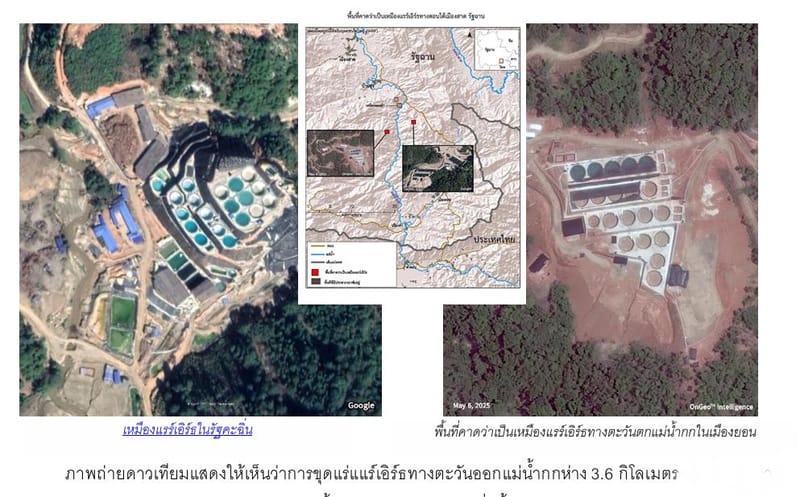
Questions over the turbidity of the Mae Sai River, compounded by the major flooding, prompted academic institutions, private organisations, and civil society groups to search for answers. Eventually, the Shan Human Rights Foundation examined satellite imagery and discovered rare earth mines in Mong Yawn, in the southern part of Mong Hsat Township, just approximately 25 kilometres from Mae Ai District, Chiang Mai Province.
The mines are located on the eastern side approximately 3.6 kilometres from the Kok River, and on the western side approximately 2.6 kilometres from the Kok River. In addition, mining operations for tungsten, gold, manganese, antimony, tin, and rare earths were found in the same area at no fewer than 10 sites.
Villagers in Mae Ai District who have relatives in Mong Hsat Township — Special Region No. 2 (United Wa State), or Wa Dang — reported that in Ban Hung, which borders Mong Hsat Township, Chinese investment groups have entered to operate various mining ventures, particularly gold mines, with more than 23 companies involved.
What is alarming is that when satellite images of rare earth mines in Kachin State were compared with those of mines in Mong Hsat Township, they were found to share the same characteristics: in the excavation areas, circular ponds are arranged in concentric rings at multiple layers. In Kachin State, the method used involves pumping chemicals through pipes to dissolve rare earth minerals underground, then pumping the solution up through pipes into these ponds for another round of chemical processing to extract the rare earths — a method that has caused severe environmental damage in Kachin State.
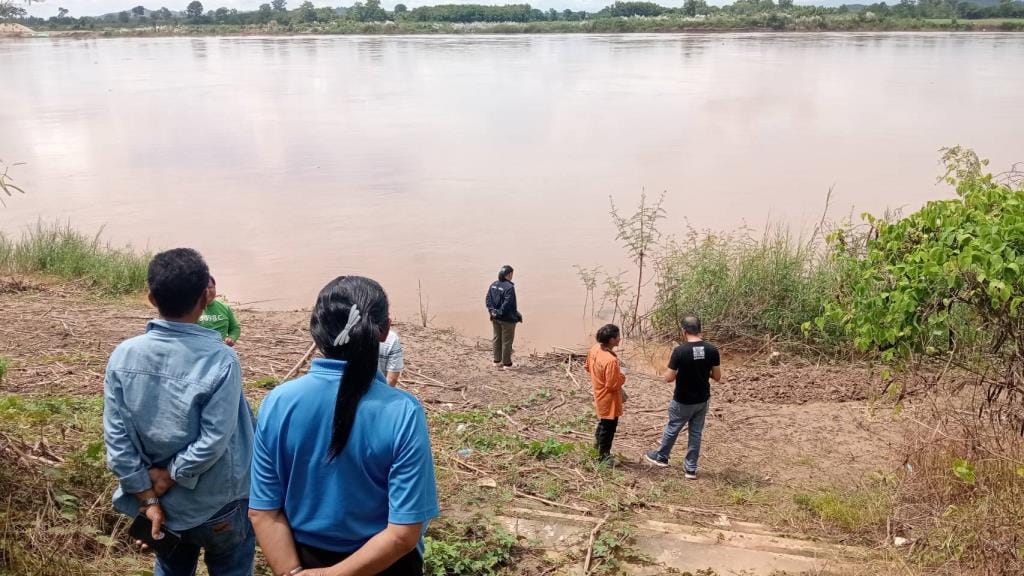
Meanwhile, the Environmental and Pollution Control Office No. 1 (Chiang Mai) went into the field to collect water samples for testing and published the results of Kok River water quality assessments to the public for the first time on 4 April 2026. It was found that water samples from Mae Ai District, Chiang Mai Province — only approximately 500 metres from the Myanmar border — contained arsenic contamination as high as 0.026 milligrams per litre, exceeding the standard of 0.01 milligrams per litre. Contamination has been detected continuously both in the water and in sediment to the present day.
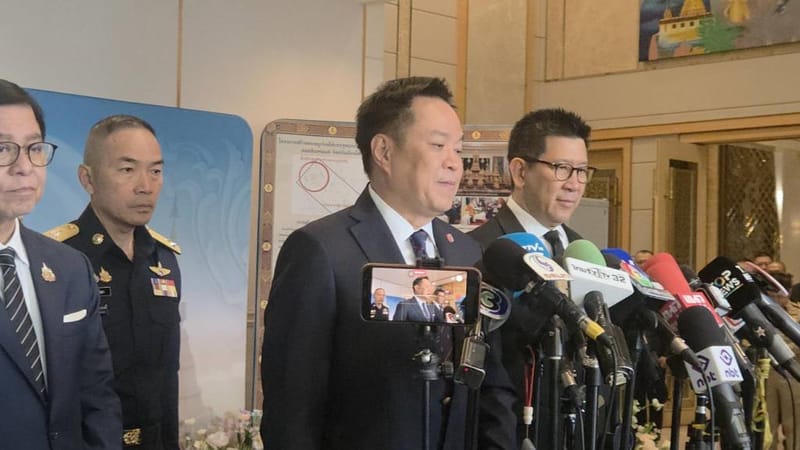
The Thai government subsequently established a Thai-Myanmar Water Quality Inspection Committee, held negotiations with the Myanmar government on 22 August 2025, and assigned the Environmental and Pollution Control Office No. 1 (Chiang Mai) of the Pollution Control Department to conduct inspections at 15 points from Mae Ai District, Chiang Mai Province, to Chiang Saen District, Chiang Rai Province, as well as at 3 sites along the Mae Sai River.
Most recently, a Terms of Reference (TOR) for managing water quality in rivers flowing between Thailand and Myanmar was signed on the occasion of Senior General Min Aung Hlaing, President of the Republic of the Union of Myanmar, visiting Thailand on 6–7 August 2025. The content of the TOR involves joint inspection of water quality and the drafting of a remediation plan within a three-year timeframe.
Nevertheless, from the perspective of academic institutions, private organisations, and civil society, the TOR does not yet cover the management or control of mining operations, which are widely believed to be the root cause of the heavy metals being discharged into the various rivers. They have therefore called for a review of the TOR.