CRPD urges ECT to promptly order prosecution of Senate election fraud cases before the Supreme Court's Election Division, reveals PM gives green light if matter concerns individuals rather than political parties.
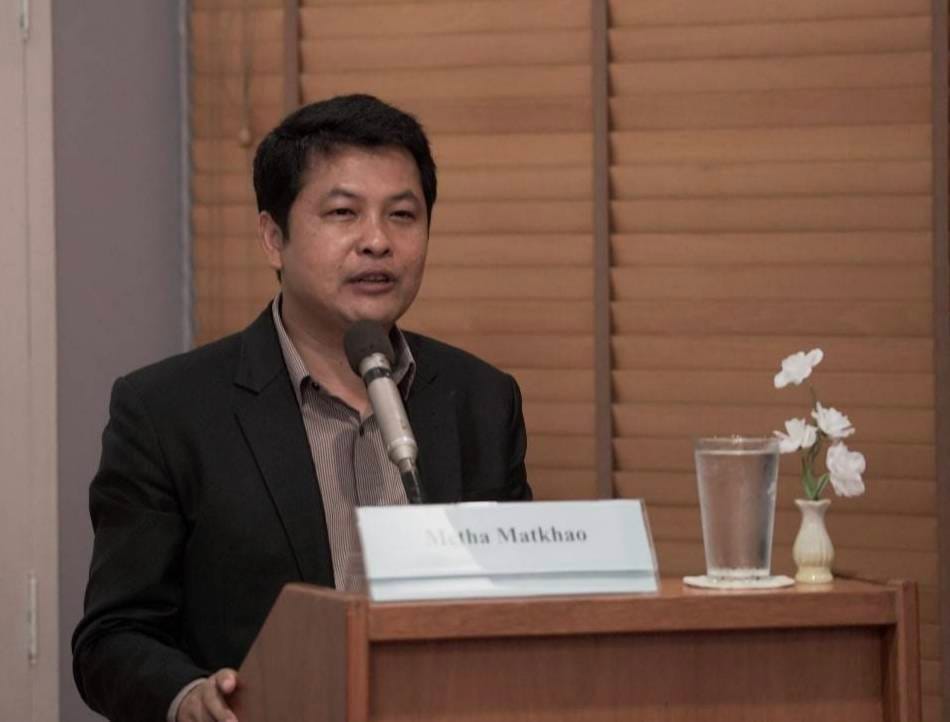
Today, 19 August 2026, Mr. Metha Maskhao, Secretary-General of the Campaign Committee for Democracy (CRPD), stated that regarding the investigation into the Senate election fraud cases, the Election Commission of Thailand (ECT) is expected to complete its summary of the fraud case files by the end of August or, at the latest, in early September 2026, in order to reach a resolution on whether to order prosecution and to forward the matter to the Supreme Court for further consideration. On this matter, the Department of Special Investigation (DSI) received complaints and officially commenced its fraud investigation more than two years ago, with the ECT and DSI jointly establishing the 26th Central Investigation and Inquiry Committee to gather in-depth evidence — including financial trails, video clips, and connections to lists of names — an investigative process that took nearly one year.
Subsequently, on 17 July 2025, the 26th Committee concluded its case summary for the first time, resolving to recommend prosecution and to indict all 229 accused individuals — comprising 138 senators and 91 members of a politician network — and forwarded the matter to the ECT for consideration and transmission to the court. However, the ECT instead established the 36th Sub-committee on Problem and Dispute Resolution to conduct a re-examination, thereby extending the timeline in a manner that appears aimed at assisting the political parties involved, and there is currently no sign of whether the ECT will proceed according to the law.
The CRPD calls upon all seven ECT commissioners to consider this matter in light of the substantial and irrefutable body of evidence, and to promptly forward it to the Supreme Court's Election Division so that the court may conduct fact-based proceedings. This would serve as a way out for both the country and the ECT itself, because if the ECT fails to forward the matter, it would fall within the scope of offences under Sections 69 and 149 of the Organic Act on the Election Commission, as well as Section 157 of the Criminal Code on dereliction of duty — repeating the fate of former ECT commissioners who were previously sent to prison one after another.
Regarding Prime Minister Anutin Charnvirakul's statement that Bhumjaithai Party is not involved in the Senate fraud matter, the CRPD says that if it is considered not to be the action of the party but rather a matter of individuals, then the government and Bhumjaithai Party must dissociate themselves from those individuals' conduct and fully open the door to investigation of all involved persons in order to hold them individually accountable for actions that have damaged and brought reproach upon the party — so as to set an example that organised, systematic fraud in Senate elections must never occur again. An internal party investigation should also be conducted to demonstrate sincerity.
This damage has affected the rule of law and the separation of sovereign powers. This case is enormously detrimental to democratic development, because allowing political parties to exert influence over the Senate in its scrutiny of legislation — in order to support the government and select independent organisations — constitutes a destruction of the rule of law and a direct loss of legitimacy in the checks and balances of governance, in violation of both the Constitution and the Criminal Code.
Furthermore, the current collusion of both political and economic power in Thailand has, to varying degrees, been forged through the special training programmes of various independent organisations, which give rise to a patronage system for mutual benefits, political-business dealings, and assistance in legal cases — by bringing together politicians, government officials, military officers, police, prosecutors, judges, civilians, financiers, and business people to build connections. All special training programmes of independent organisations must be abolished, including the National Defence College (NDC) programme that the Ministry of Defence is operating outside its mandate.
Upon examining the data, it is found that all seven ECT commissioners, the ECT Secretary-General, and deputy secretaries-general have previously attended senior executive training programmes and special programmes of independent organisations, courts, the King Prajadhipok's Institute, and the NDC — with some individuals having attended as many as five programmes. Members of Parliament and key leaders of Bhumjaithai Party have also attended NDC programmes, mini-NDC programmes, and various other programmes, using state budgets for trips and study visits abroad. Of particular note are the ECT's Advanced Political and Electoral Development Programme (APEDP), the Constitutional Court's Rule of Law for Democracy Programme (RLDP), and the National Anti-Corruption Commission's Senior Strategic Executive for Anti-Corruption Programme (SSAC). In the future, should a new constitution be drafted, the Senate — a legacy of the 1947 coup — should be abolished, because a unicameral parliamentary system already has Members of Parliament performing legislative functions, and there is no need for senators to duplicate those roles, a duplication that has turned the system into a half-democracy.
Thailand has now reached a point where the government is on the verge of failure. If it does not urgently correct course and demonstrate a firm, sincere commitment to genuinely reforming the country — including on matters of the grey economy, scammer protection rackets, and corruption across various ministries under the political party system — then tomorrow (20 August), civil society groups, together with the Committee of Relatives of May 1992 Heroes, will co-host the "Third Parliament" forum, a people's parliament, to debate the agenda of government failure and to advance the reform of Thailand, at the Rattanakosin Hotel on Ratchadamnoen Road, Bangkok.