In this July, the author joined a programme to visit the economic development of the Guangdong–Hong Kong–Macao Greater Bay Area (GBA). The development of economic zones in Guangdong Province is regarded as China's new high-quality development approach, and with Shenzhen hosting the APEC Summit this coming November, China has presented its domestic modernisation development model as an example for Asia-Pacific development that will bring shared prosperity to the region. For this particular programme, the author was invited by Xinhua News Agency, which organised visits to the most advanced development sites in the cities of Guangzhou and Shenzhen.
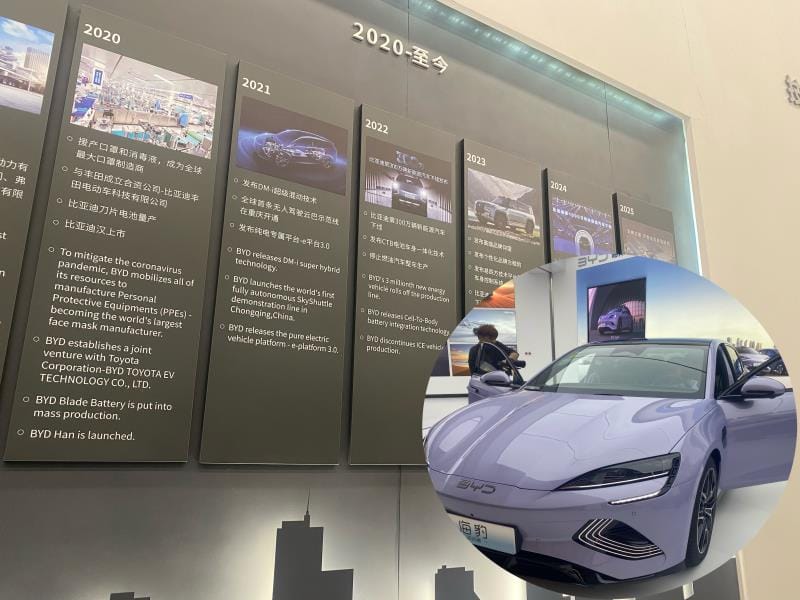
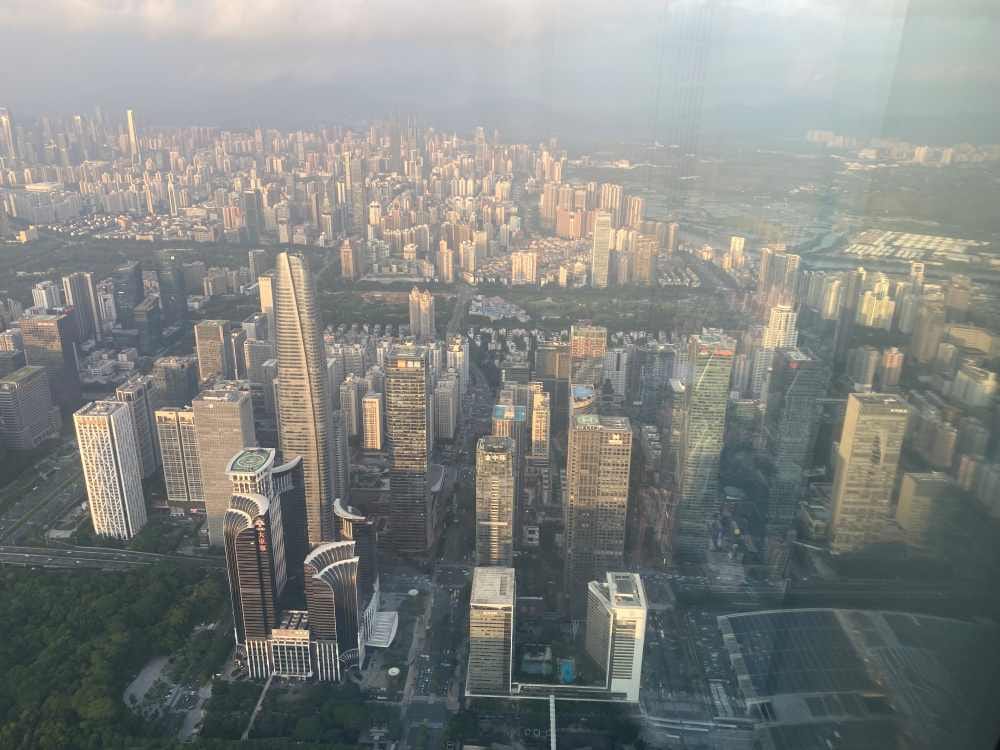
Shenzhen has changed unbelievably since the author's last visit here, more than a decade ago. Shenzhen today has risen to prominence as a centre of modern commerce and technology — a hub for the world's leading technology companies of Chinese origin, including internet giant Tencent, electric vehicle manufacturer BYD, smartphone maker Oppo, Huawei, as well as the technology startup promotion institution Shenzhen InnoX.
In this report, the author recounts the legend of economic development that propelled Shenzhen to become one of the world's most advanced technology cities.
Shenzhen and its earth-shattering economic reform
Forty-eight years ago, Shenzhen — a small coastal border town in the south, situated directly across from Hong Kong Island — was a poor, impoverished village.
That all changed when China, under the leadership of Deng Xiaoping, pursued its policy of economic reform and opening up.
In July 1978, Xi Zhongxun, the Party Secretary of Guangdong Province (1978–80), travelled to Bao'an County — present-day Shenzhen — to conduct a survey and study of the area. Zhang Hanqing, an assistant editor of the Nanfang Daily who accompanied the survey delegation, described the conditions in Bao'an at the time: "Green leaves year-round, but nothing to eat. Situated along a riverbank by the sea, yet no fish to eat. The other side [Hong Kong] was thriving and prosperous. Just look at the state of our side! Wherever you looked, there was only desolate wasteland, empty of people. Secretary Xi [Zhongxun] saw this situation and simply could not bear it." Xi Zhongxun then brainstormed and pioneered the economic zone, playing a crucial role in building Shenzhen.
"Bao'an and Hong Kong are separated by only a river, yet they are worlds apart. Back then, there was a four-line saying: 'The young have all fled, the land lies abandoned, local officials face desperate hardship, the elderly are left with only sorrow and loneliness.' The village of Luofang on the Shenzhen side had an annual per-capita income of 134 yuan, while 'the new world of Luofang village' [on the Hong Kong side] had an annual per-capita income of 13,000 Hong Kong dollars."
In 1979, Xi Zhongxun proposed a draft plan to use an international development model to establish economic trade zones in Shenzhen, Zhuhai, and Shantou, which received the approval of Deng Xiaoping. However, when the question of funding for the pioneering effort arose, Deng Xiaoping told Xi Zhongxun: "The government has no money. All we can give you is policy. You go and do it — find your own way to blaze the trail."
Subsequently, in 1980, China's National People's Congress approved the establishment of Shenzhen as the country's first special economic zone.
From that point on, Shenzhen rose rapidly to become a large-scale special economic zone, and became the primary engine that created China's world-renowned economic miracle. During the first thirty years of China's economic reform and opening up, Shenzhen recorded an economic growth rate of 25.8 percent, compared to the national growth rate of 9.8 percent.
How far has Shenzhen come in 48 years — from what it was then to what it is today? The following key economic indicators, past and present, offer a comparison: In 1980, Shenzhen's GDP stood at 270 million yuan (180 million US dollars), the population was approximately 30,000, and the economic zone covered an area of just 396 square kilometres.
Today, 2025 statistical data shows that Shenzhen's GDP has reached 3.873 trillion yuan (557 billion US dollars), ranking it as the third-highest GDP city in China. The population stands at 17.5 million, and the economic zone has expanded to cover 1,953 square kilometres.
At present, Shenzhen has become a global hub for trade and technology — a concentration of the world's major Chinese-origin IT giants, a base for nurturing technology startups, and a testing ground for cutting-edge new economic sectors, such as the low-altitude aviation industry, where it serves as a centre for the development of delivery drones and services, as well as electric vertical take-off and landing aircraft (eVTOL).
Across Shenzhen as a whole, there are more than 25,000 high-tech companies — an average of 12 per square kilometre. The Yuehai Road area in Nanshan District in particular, covering approximately 22.99 square kilometres, averages 90 nationally recognised high-tech companies per square kilometre, along with thousands of small and medium-sized tech startups, earning it the nickname "China's Silicon Valley."
Shenzhen's current development is guided by the new GBA economic zone development framework, which has been in place since 2022. During the visit, a Chinese official noted: "Chinese cities are transformed with new development every five years, in accordance with the Five-Year National Economic and Social Development Plan. We are currently in the 15th such plan."
How large is Shenzhen's GDP — as an administrative unit at the provincial level? Nearly as large as that of Thailand as a whole. Data as of the end of 2025 shows that Shenzhen's GDP stands at approximately 557 billion US dollars, while Thailand's GDP is at 577 billion US dollars.
In terms of urban development… one must accept the reality that the Dragon is the Dragon — and it never sleeps when it comes to developing its own cities.