Chiang Mai/Chiang Rai – Who would dare buy and eat shrimp, shellfish, crab, or fish like this? The Pollution Control Department has tested riverbed sediment along the Kok River from Mae Ai in Chiang Mai through to Chiang Rai, finding contamination by arsenic, lead, and chromium exceeding standards at multiple points, while the Ruak and Mekong rivers have reached levels severely hazardous to aquatic organisms. Meanwhile, the Thailand-Myanmar Terms of Reference (TOR) agreement carries no legal binding force.
The Pollution Control Department (PCD), under the Ministry of Natural Resources and Environment, has released the results of the 12th round of sediment quality monitoring in the Kok River, its tributaries, the Sai River, the Ruak River, and the Mekong River, based on samples collected between 7–10 July 2026, to track the situation involving abnormal turbidity in the Kok River in Chiang Mai and Chiang Rai provinces, covering a total of 21 monitoring points.
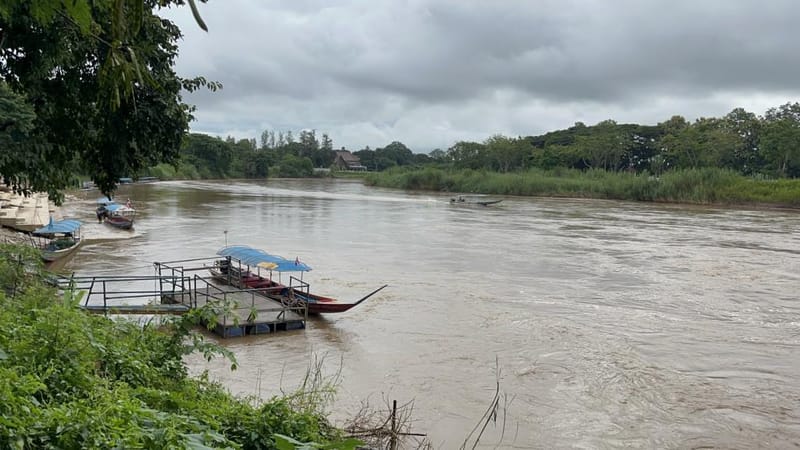
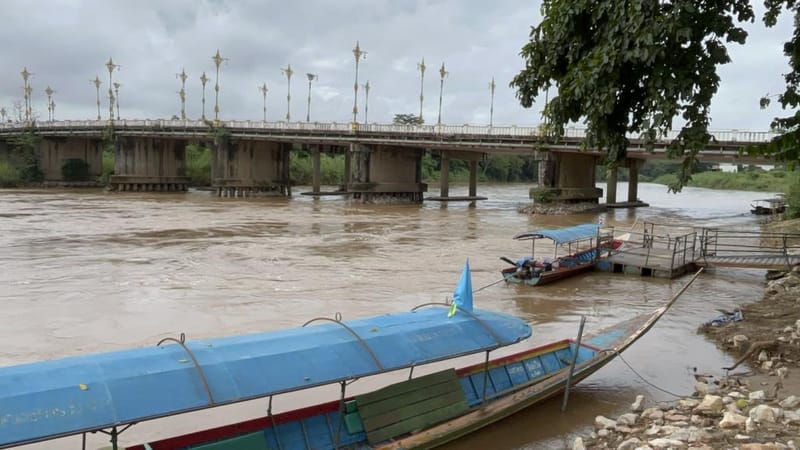
The results show that in the Kok River, arsenic was found exceeding the sediment quality standard for the safe level for benthic organisms — set at no more than 10 milligrams per kilogram (mg/kg) — at 6 points: Point KK01 at the Thai-Myanmar border, Ban Kaeng Tum hamlet, Moo 4, Tha Ton sub-district, Mae Ai district, Chiang Mai province, where arsenic was found at 23 mg/kg; Point KK05 at the Mae Yao–Doi Hang Friendship Bridge, Mueang Chiang Rai district, Chiang Rai province, where arsenic was found at 11 mg/kg and mercury at 0.21 mg/kg, exceeding the safe-level standard for benthic organisms set at no more than 0.2 mg/kg; Point KK07 at the bridge over the Kok River, Mueang Chiang Rai district, where arsenic was found at 15 mg/kg; Point KK10 near Chiang Rai Weir, Mueang Chiang Rai district, where arsenic was found at 13 mg/kg; Point KK11 at the Rim Kok–Wiang Nuea Ruam Jai Bridge, Mueang Chiang Rai district, where arsenic was found at 16 mg/kg and mercury at 0.27 mg/kg, exceeding the safe-level standard for benthic organisms; and Point KK12 at the Yonok Nakhon Bridge, Mueang Chiang Rai district, where arsenic was found at 16 mg/kg.
In addition, arsenic exceeding the standard at the level severely hazardous to benthic organisms — set at no more than 33 mg/kg — was found at 1 point: Point KK09 near the Chalerm Phra Kiat Bridge 1, Mueang Chiang Rai district, where arsenic was found at 45 mg/kg, nickel at 26 mg/kg exceeding the safe-level standard for benthic organisms set at no more than 23 mg/kg, lead at 46 mg/kg exceeding the safe-level standard for benthic organisms set at no more than 36 mg/kg, and chromium at 66 mg/kg exceeding the safe-level standard for benthic organisms set at no more than 43.4 mg/kg.
For the Sai River, arsenic exceeding the safe-level standard for benthic organisms was found at 2 points: Point SA01 at Ban Hua Fai, Mae Sai district, Chiang Rai province, at the Thai-Myanmar border, where arsenic was found at 25 mg/kg; and Point SA03 at Ban Pa Sang Ngam, Mae Sai district, at the Thai-Myanmar border, where arsenic was found at 13 mg/kg.
In the Ruak River, arsenic exceeding the standard at the level severely hazardous to benthic organisms was found at both monitoring points: Point RU01 near the Ko Chang pumping station of the Provincial Waterworks Authority, Mae Sai branch, Ko Chang sub-district, Mae Sai district, where arsenic was found at 49 mg/kg, mercury at 0.24 mg/kg exceeding the safe-level standard for benthic organisms, and chromium at 45 mg/kg exceeding the safe-level standard for benthic organisms; and Point RU02 in the Wiang area, Chiang Saen district — the mouth of the Ruak River — where arsenic was found at 55 mg/kg, nickel at 46 mg/kg exceeding the safe-level standard for benthic organisms, and chromium at 61 mg/kg exceeding the safe-level standard for benthic organisms.
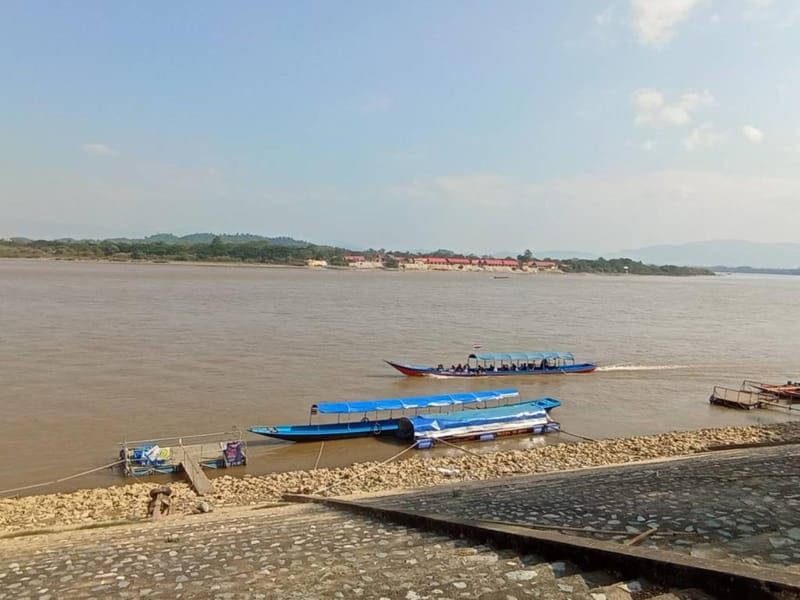
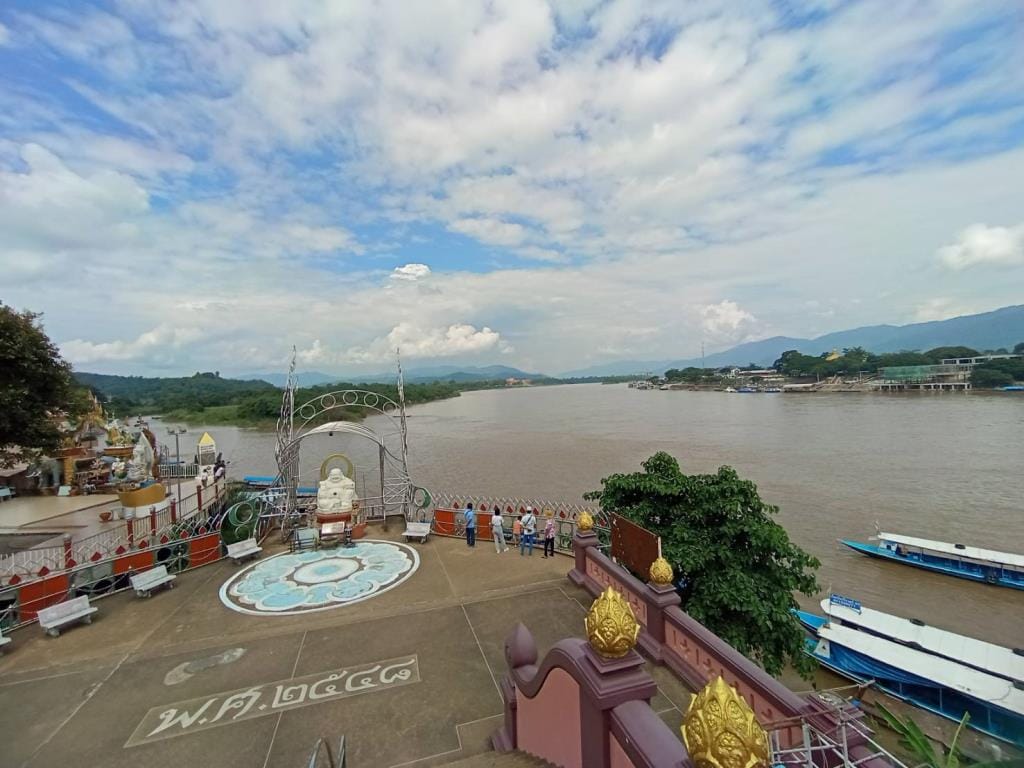
In the Mekong River, arsenic exceeding the standard at the level severely hazardous to benthic organisms was found at all 4 monitoring points: Point NK01 at the Golden Triangle permanent border crossing, Wiang sub-district, Chiang Saen district, Chiang Rai province, where arsenic was found at 66 mg/kg; Point NK02 in Wiang sub-district, Chiang Saen district, where arsenic was found at 80 mg/kg; Point NK03 at Ban Sob Kok, Ban Saeo sub-district, Chiang Saen district, where arsenic was found at 50 mg/kg, mercury at 0.22 mg/kg exceeding the safe-level standard for benthic organisms, and chromium at 45 mg/kg exceeding the safe-level standard for benthic organisms; and Point NK04 at Ban Hua Wiang, Wiang sub-district, Chiang Khong district, Chiang Rai province, where arsenic was found at 68 mg/kg.
The analytical results indicate that the Kok River still shows arsenic exceeding standards at some points, while the Ruak River and the Mekong River show arsenic at levels severely hazardous to benthic organisms. Most other heavy metals are within standards, but some were found exceeding standards at certain monitoring points.
The abnormally elevated values may be associated with the rainy season, during which increased water volume and current cause greater transport of suspended sediment and accumulation on the riverbed. The Pollution Control Department will continue to monitor and keep watch over environmental quality, while disseminating the monitoring results and coordinating with relevant agencies to safeguard public safety. Further information is available on the Pollution Control Department's website.
Dr. Suebsakul Kitnukorn, an academic from the School of Social Innovation at Mae Fah Luang University and a member of the People's Network to Protect the Kok, Sai, Ruak, and Mekong Rivers, revealed that inspections are conducted every two months, and every round has found heavy metal contaminants that are severely hazardous to benthic organisms — such as shrimp, shellfish, crabs, and aquatic insects — which will impact the food chain and the health of local residents if such aquatic animals are caught and consumed.
This problem has been accumulating chronically since 2024. The Prime Minister and the government must elevate it to a "national agenda" by going into the area, establishing a national-level committee, opening opportunities for academics, civil society, and local residents to participate, and at the same time taking decisive measures by halting the import and export of minerals across the border from Myanmar to China, in order to increase bargaining power and pressure the Myanmar and Chinese authorities to come to the negotiating table to jointly resolve the problem.
This is because the Thailand-Myanmar TOR framework agreement, signed recently, places Thailand at a severe disadvantage: Myanmar has insisted on each side conducting its own inspections while rejecting the involvement of international organisations, and the agreement also stipulates that disclosure of information requires consent from both parties — which amounts to concealing information from the public — and it carries no legal binding force whatsoever.