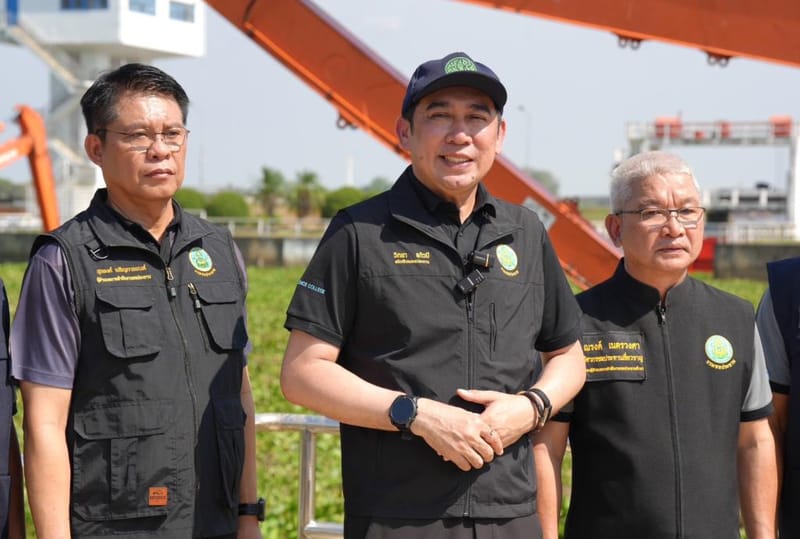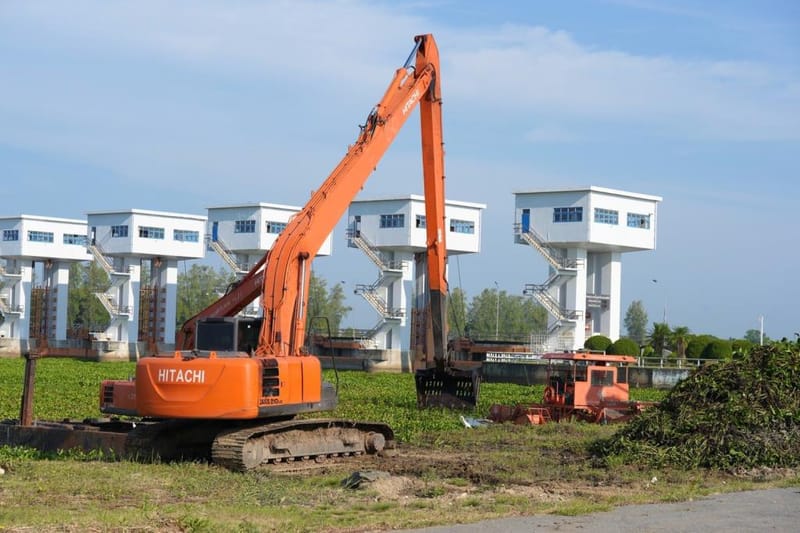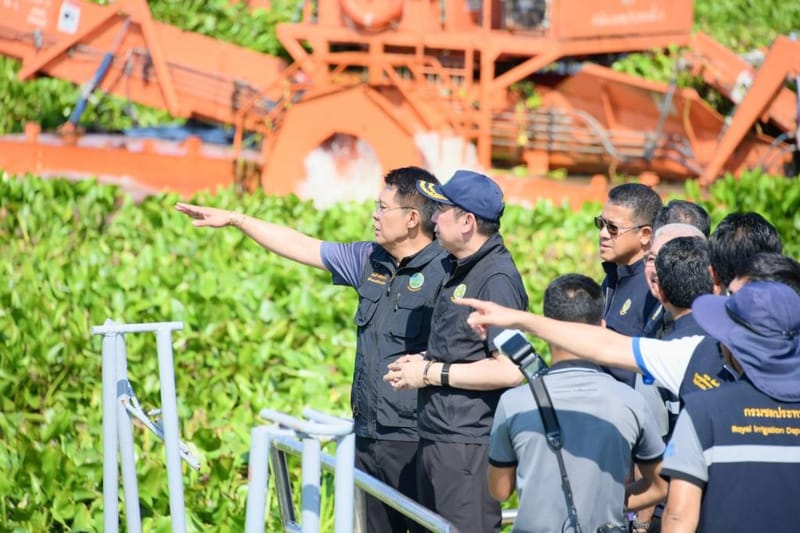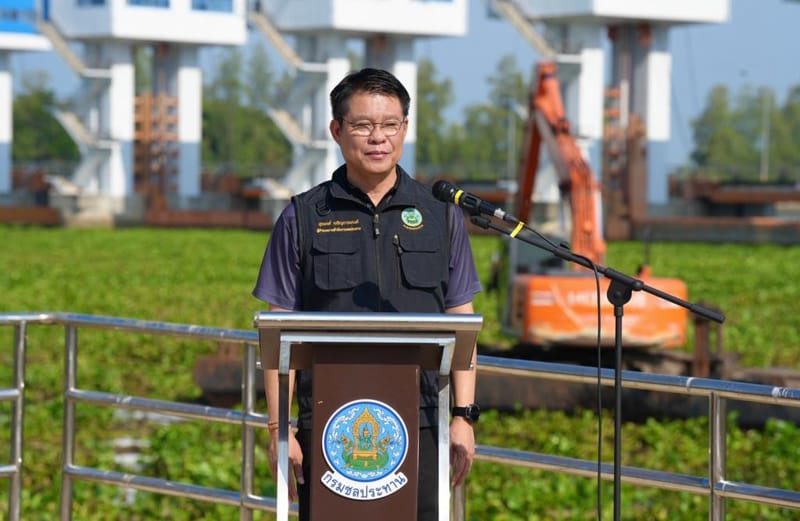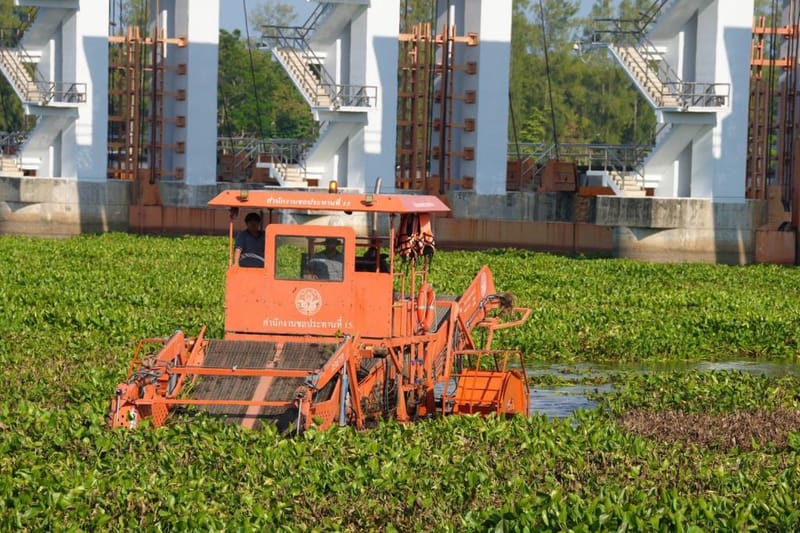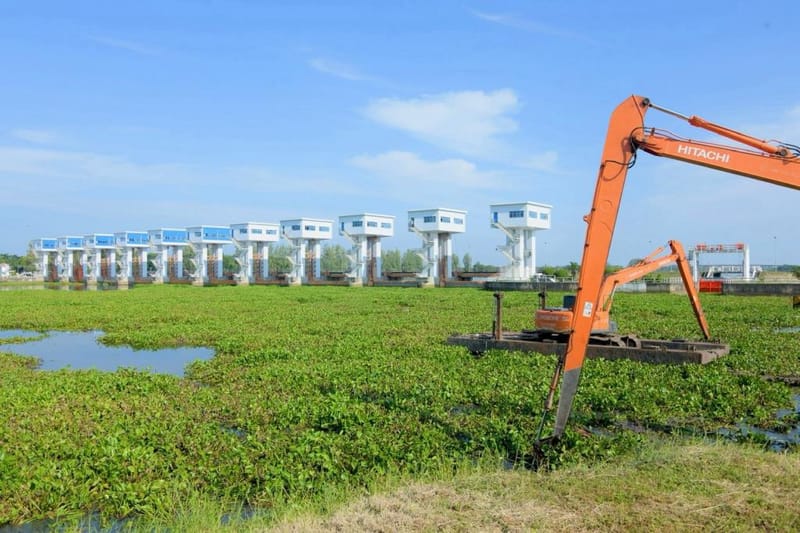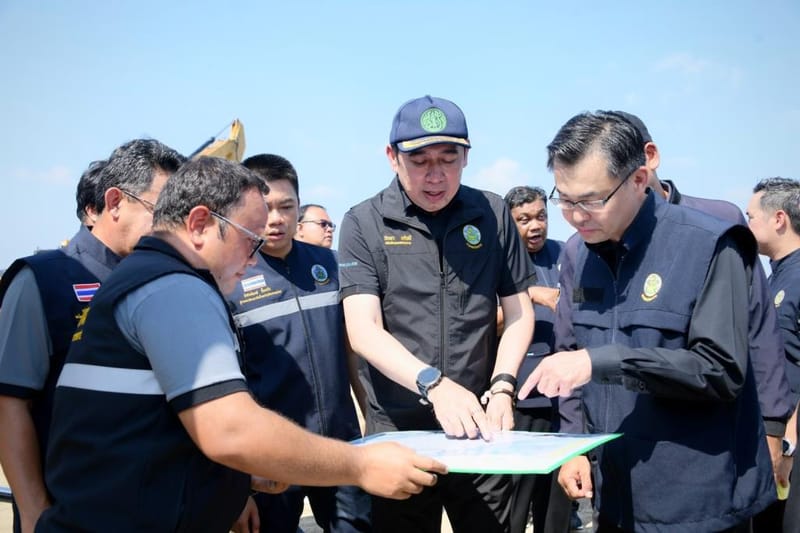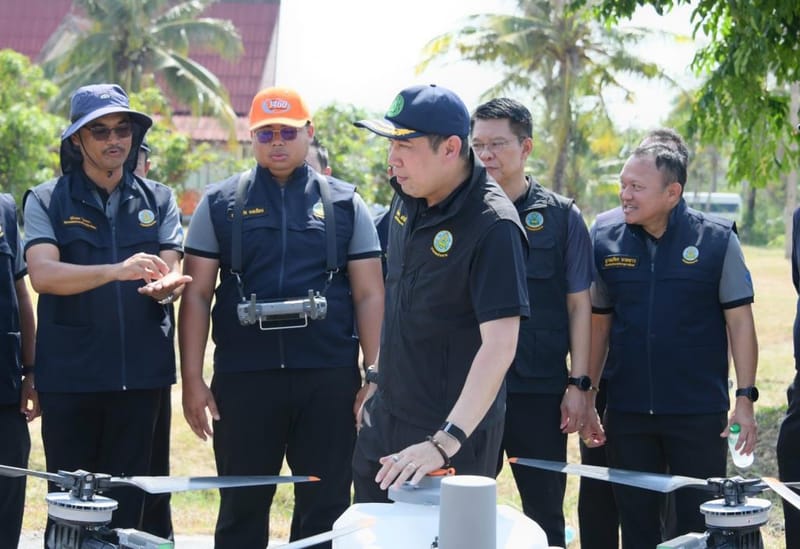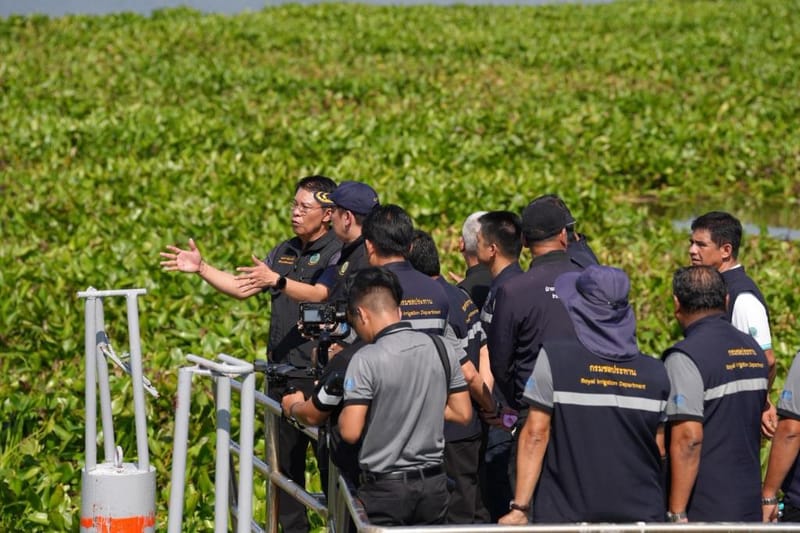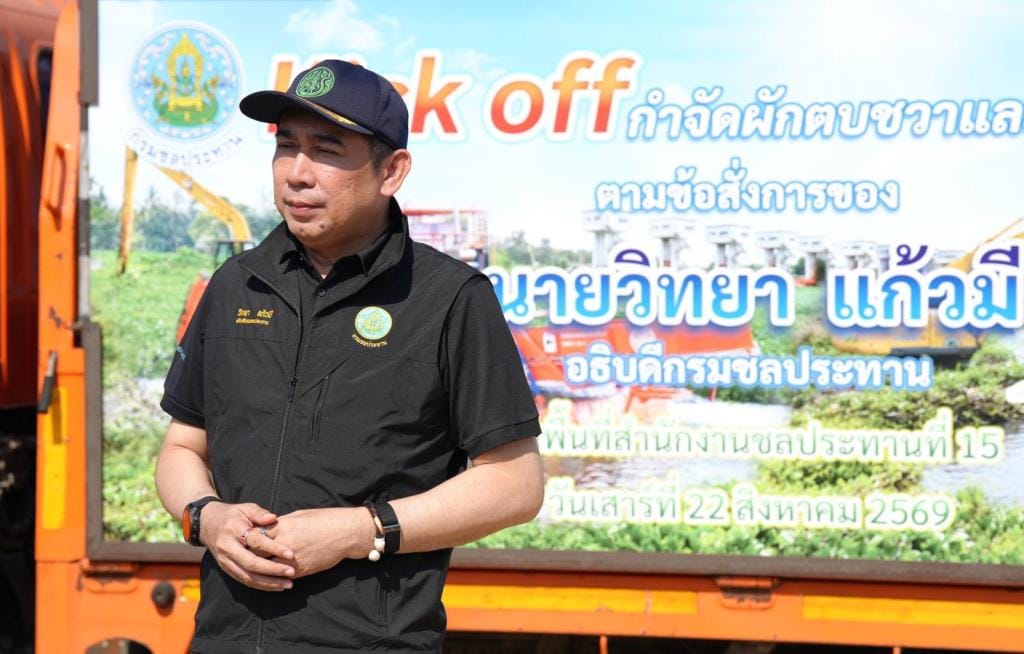
Today (22 August 2026), at the Uthokawipha Prasit floodgate, Pak Phanang District, Nakhon Si Thammarat Province, Mr. Witthaya Kaewmee, Director-General of the Royal Irrigation Department, presided over the opening of the "Kick-off: Nationwide Simultaneous Water Hyacinth and Waterway Obstruction Removal" activity. Mr. Suraphong Charoenkarayont, Director of Irrigation Office No. 15, together with executives and relevant officials, participated in the event. The activity was held simultaneously across all 17 Irrigation Offices nationwide, with the aim of urgently and continuously addressing the problem of water hyacinth and aquatic weeds obstructing waterways, in the hope of increasing water management efficiency.
Mr. Witthaya Kaewmee, Director-General of the Royal Irrigation Department, stated that the problem of water hyacinth and aquatic weeds does not affect only specific areas, but is a significant issue impacting water management efficiency across rivers and irrigation waterways throughout the country. In addition to obstructing water flow, they also hinder water delivery for agriculture and drainage during the flood season, and have an adverse effect on water quality and the overall ecosystem. The Royal Irrigation Department has therefore been continuously removing water hyacinth and waterway obstructions throughout the year. This kick-off activity, held simultaneously nationwide, is intended to demonstrate the Royal Irrigation Department's resolve and commitment to integrating its personnel, machinery, and innovations to address the problem effectively and on a sustained basis, while applying proactive operational approaches suited to conditions in each area. This includes the use of environmentally safe compound innovations together with high-capacity machinery, which significantly enhances the efficiency of weed removal and substantially reduces the re-accumulation of water hyacinth in waterways.
Regarding Irrigation Office No. 15, two main methods of water hyacinth removal have been established: removal using the SWPI 62-RID 1 compound mixture, which has been trialled by spraying across 11 plots in the Pak Phanang river basin since 7 April 2026 up to the present, with results showing that the water hyacinth dries and dies naturally without environmental impact; and mechanical removal in the Pak Phanang river basin, which has a total of 673 canal channels with a combined waterway length of approximately 1,800 kilometres. Of these, 349 channels — totalling approximately 800 kilometres — are irrigation and drainage canals under the responsibility of the Royal Irrigation Department. A survey assessing the volume of water hyacinth obstructing waterways within the irrigation waterway zones alone found an amount as high as approximately 920,000 tonnes, and when including natural canal areas outside the irrigation zones, the accumulated volume is estimated at approximately 1.2 million tonnes. Continuous removal operations are therefore necessary to reduce the potential impact on the public.
On this occasion, the Director-General of the Royal Irrigation Department instructed all units to carry out weed and waterway obstruction removal operations at full capacity and on a continuous basis, placing worker safety as the top priority, in order to restore clarity and cleanliness to water sources, enhance water delivery and drainage capacity, and support water management for the maximum benefit of people throughout the country.