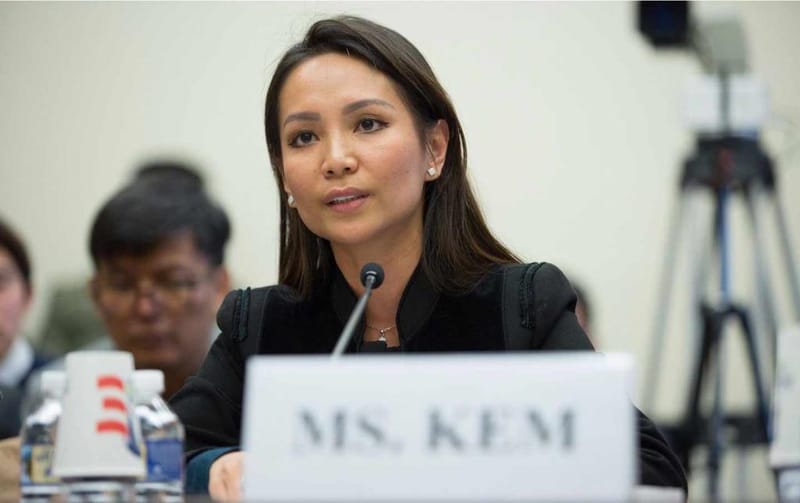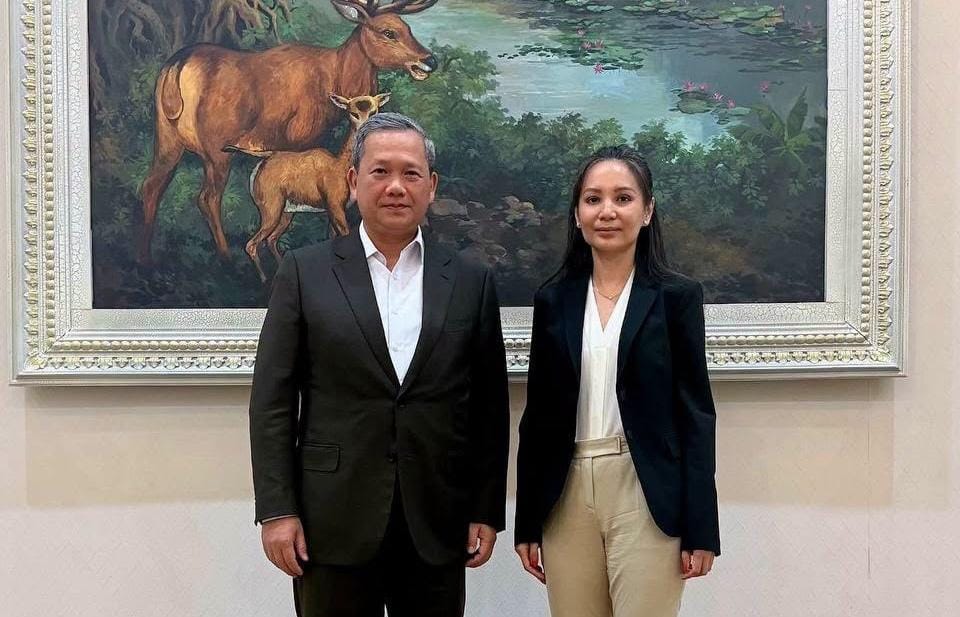
MGR Online — A wave of speculation has surged following the appointment of the daughter of Kem Sokha, the former opposition leader, as a special envoy of Prime Minister Hun Manet. The Cambodian leader said that Kem Monovithya would assist the government on border affairs and trade, citing her expertise in international relations and diplomacy, and claimed that her participation in this national mission reflects the government's commitment to promoting dialogue and national reconciliation.
Analysts in Cambodia said the move signals the Cambodian People's Party's (CPP) "back-door" strategy to strengthen its international standing by leveraging Monovithya's diplomatic experience, while simultaneously projecting unity among the younger generation of leaders. Nevertheless, they remain doubtful about whether Cambodia can transcend a one-party dominant system without a strong opposition.
Kem Monovithya was appointed as special envoy on 17 August, just days after she and her father met with Hun Manet and Senate President Hun Sen.
The meeting and Monovithya's appointment came just months after Kem Sokha received a royal pardon in May, which ended his 27-year prison sentence on treason charges and lifted the travel ban imposed on him. However, restrictions on his political activities remain in place.
The move marks a turning point in Cambodia's political landscape, coming years after the dissolution of the Cambodia National Rescue Party (CNRP), which had subjected the country to intense international pressure over its disregard for democracy and political pluralism.
Ea Sophal, an associate professor at the Thunderbird School of Global Management at Arizona State University in the United States, said this political development appears to be far more deliberate than coincidental.
"I see it as a combination of reconciliation, co-optation, and intergenerational politics," Ea Sophal said.
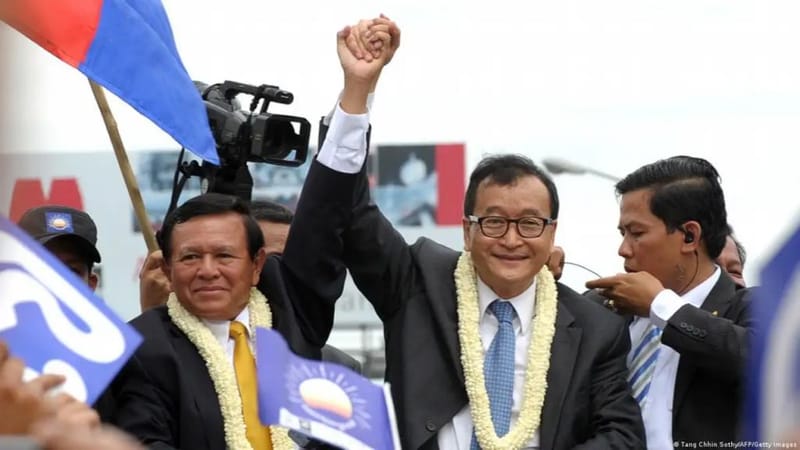
Bringing Monovithya into Hun Manet's circle could deepen the rift between Kem Sokha and Sam Rainsy, while at the same time allowing the government to present the move as political inclusion.
"The key question is whether this opens up political space for others or whether it is simply about drawing a prominent former opposition figure into the existing system — because those are very different forms of reconciliation," Ea Sophal said.
Seng Vanly, an independent geopolitical analyst, echoed Ea Sophal's assessment, noting that the ruling party intends to project an image of goodwill, national unity, and cross-generational participation — particularly toward Western observers concerned about human rights and political space in the country.
Seng Vanly said that for Kem Sokha's family, this approach represents a way out of years of legal restrictions and political isolation, transforming what had been a stagnant status — for both Sokha himself and his family — into a clearly defined position within the current political framework.
"The sequence of events strongly suggests that the ruling party is systematically facilitating Kem Sokha's exit from the political path," Seng Vanly said.
Meach Sovannara, president of the Next Generation Party and a former member of the now-dissolved CNRP, said the episode is a "kill two birds with one stone" strategy by the ruling party, and that both sides may have negotiated secretly before making such gestures publicly.
"This is not reconciliation with any political party — it is a political conspiracy and the strategy of Hun Sen and Hun Manet," Meach Sovannara said.
Ea Sophal said it is highly unusual that Kem Monovithya — who had been a prominent opposition advocate following the dissolution of the CNRP in 2017 — has been appointed to a ministerial-equivalent position as Hun Manet's special envoy.
"For this reason, I am hesitant to view this as just another government appointment. We should be cautious about attributing too much power to a role that has not been clearly defined publicly. A senior-level position may grant Monovithya status and access, but that does not tell us how much independent authority she will actually have," Ea Sophal said.
Hun Manet's engagement — focused on drawing younger politicians into collaborative work at the international level — may hint at a possible future role.
Monovithya's international experience could help strengthen Cambodia's relations with foreign governments and organisations, but her actual assignments will make it far clearer how much policy-shaping influence the position carries, analysts said.
Meach Sovannara, who worked alongside Monovithya in the CNRP, said she is knowledgeable in international affairs, having served as a key opposition figure who championed democracy in Cambodia by lobbying the international community.
He said she could help rehabilitate the current government's reputation by lobbying the international community to regain trust that Cambodia is genuinely working to restore political and civic space, democracy, and human rights.
"We will see whether her position is merely symbolic or whether, in practice, she is empowered to work for the nation and restore Cambodia's standing on the world stage," Meach Sovannara said.
Seng Vanly said the role of special envoy operates directly under the prime minister's directive for specific diplomatic missions, and that for Kem Monovithya, this role would facilitate high-level engagement with international stakeholders, even though her authority ultimately depends on the prime minister's discretion.
"Bringing Kem Monovithya on board will generate significant benefits both domestically and internationally," Seng Vanly said.
However, Vanly said the move could fracture Kem Sokha's original support base, giving rise to feelings of disappointment and alienation.
Principled supporters may view the Kem family's engagement with the CPP as a betrayal, while pragmatic supporters may accept it as a survival strategy within a controlled political environment.
"If the Kem family fully joins the ruling party, Cambodia's political landscape could shift toward single-party dominance, weakening opposition cohesion and leaving the country's small and fragmented domestic political parties without a recognised leader," Seng Vanly said.
"The timing and nature of Kem Monovithya's appointment to a senior executive position indicate that this is a key element of the negotiations over Kem Sokha's legal relief."
In recent years, a number of prominent opposition figures have joined the government or defected to the CPP following their release from prison, typically accompanied by public apologies for critical remarks that had led to criminal charges against them.
Seng Vanly said that by drawing Monovithya into the government, the CPP gains the backing of the Kem family, reduces the risk of Sokha's former political networks re-mobilising, and at the same time opens the door for the family to escape years of legal restrictions and political isolation.
According to Meach Sovannara, Kem Monovithya joining the CPP would disappoint the approximately three million former CNRP supporters and would crush any remaining hope they have of the opposition party making a comeback.
"It will make them feel as though all the sacrifices made over the years have been in vain," Meach Sovannara said.
However, he said the public may gravitate toward a new generation of leaders, hoping that politicians from outside the ruling party will be able to compete on a level playing field.
Ea Sophal said the situation could further fragment an already weakened opposition, noting that Kem Sokha's supporters may view the appointment as an opportunity for political compromise, while others see it as a CPP strategy to co-opt the opposition.
"If Monovithya maintains her credibility among opposition supporters and uses her media access to advocate for meaningful political openness, the dynamics could become far more complex than mere absorption. What happens to political space beyond this particular arrangement therefore matters enormously," Ea Sophal said.